 airbrakecompressor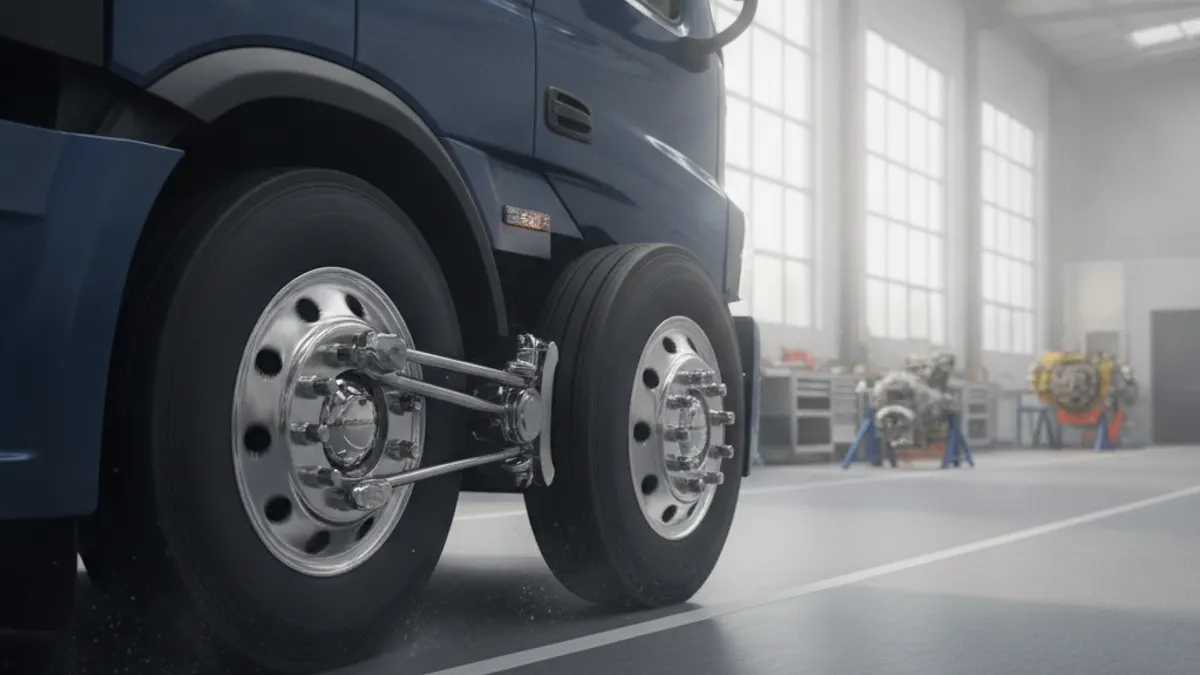
When a truck pulls to one side under braking, it means one wheel end on an axle is generating more braking force than the wheel end across from it. The vehicle steers toward the side that grabs harder. On an air brake system this imbalance is almost always mechanical or pneumatic at the foundation brake, not a fault in the compressor or the charging system, so start your diagnosis at the wheel ends of the axle that is pulling.
The three usual causes are a seized or sticky slack adjuster or S-cam on one side, contaminated linings soaked with oil or grease, and mismatched, glazed, or unevenly worn shoes between the two sides. Uneven air delivery from a lazy relay valve or a restricted air line is a fourth, less common cause. Work through them in order and the pull will point you to the corner at fault.
How a brake pull happens on an air system
Each wheel end on a drum axle has a brake chamber that pushes a pushrod, which rotates a slack adjuster, which turns the S-cam that spreads the shoes against the drum. For the truck to stop straight, the left and right wheel ends on an axle must apply nearly identical torque at the same instant. Anything that makes one side apply sooner, harder, or with more friction than the other creates a side load that steers the truck.
Because the pull is toward the side doing more work, the direction is a clue: a truck that darts left is usually grabbing hard on the left or under-braking on the right. Confirm which by feeling the drums for uneven heat after a few stops and by measuring pushrod stroke at each chamber.
The most common causes, ranked
| Cause | What it does | Typical symptom |
|---|---|---|
| Seized slack adjuster / S-cam | One side applies late or not at all, or drags constantly | Pull away from the seized side; hot drum on the dragging side |
| Contaminated lining (oil, grease, hub seal) | Reduces friction on that wheel end | Pull toward the good side; often a wet, shiny lining |
| Glazed / mismatched / unevenly worn shoes | Uneven friction coefficient side to side | Pull toward the side with better bite |
| Out-of-adjustment pushrod stroke | Long stroke means late, weak apply on that side | Pull away from the long-stroke side |
| Lazy relay valve / kinked or restricted air line | Delivers less pressure or applies later to one chamber | Pull away from the starved side |
| Cracked drum, weak return spring, worn cam bushing | Erratic or dragging apply | Inconsistent pull, sometimes with noise |
Seized slack adjuster or S-cam
This is the number-one cause on high-mileage trucks. If an automatic slack adjuster or the S-cam it drives seizes, that wheel end either fails to apply (truck pulls away from it) or drags constantly and overheats (truck pulls toward it). Check pushrod stroke against the chamber's marked limit with a full brake application; a stroke noticeably longer than its mate points straight to the problem. Grease the slack adjuster and S-cam tubes and confirm the cam rotates freely.
Contaminated linings
A leaking wheel hub seal or an over-greased S-cam tube can throw oil or grease onto the linings, killing friction on that wheel end. The truck then pulls toward the clean, working side. Contaminated linings cannot be cleaned back to spec; the wheel end must be relined and the source of the contamination fixed, or it returns.
Glazed, mismatched, or worn shoes
If someone replaced shoes on only one side, or the two sides wear at different rates, the friction coefficients no longer match and the truck pulls toward the side with more bite. Glazing from overheating does the same thing. This is why brake work is done in axle sets, never one wheel.
How to diagnose a brake pull
- Chock and inspect visually. Look for wet or shiny linings, a weeping hub seal, and any chamber pushrod sitting at a different angle than its mate.
- Measure pushrod stroke at every chamber. Make a full application and compare stroke side to side. A long stroke means late, weak apply and needs adjustment or a slack-adjuster fix.
- Feel the drums after a few moderate stops. A drum much hotter than its mate is dragging; a cold drum is not applying.
- Confirm free movement. With the system charged and released, check that each slack adjuster and S-cam returns fully and rotates without binding.
- Check air delivery. If the mechanical side is clean, look at the relay valve and the air lines feeding the axle for a lazy valve or a kink starving one chamber.
- Verify system pressure first. A truck that is also slow to charge or losing air has a separate problem; rule that out before chasing the pull.
A pull under braking is a safety defect. It will fail a roadside or annual inspection and it lengthens your stopping distance. Take the truck out of service until the imbalance is corrected.
Do not overlook the front axle and steering
Not every "pulls when braking" complaint is a foundation brake fault. Worn steering or suspension parts, a dragging brake on the steer axle, uneven tire pressure, or a bad wheel bearing can all show up under braking because deceleration loads the front end. Rule out obvious tire and steering issues before you condemn the brakes, but on a loaded commercial vehicle the odds still favor a wheel-end brake imbalance.
If the pull is paired with a shudder or vibration, the cause may overlap with why a truck shakes when braking — out-of-round and heat-cracked drums can produce both. Understanding the layout in how air brake systems work helps you trace the apply path from the foot valve to the chamber and find where the two sides diverge.
Fixing it right
Once you have found the offending corner, repair in matched sets across the axle. Reline both wheel ends together with the same friction material, replace both slack adjusters if one has failed, service both S-cams and cam bushings, and confirm pushrod stroke is equal and within limits on both sides after the job. Balanced foundation brakes are the only thing that keeps the truck tracking straight when you get on the pedal, so never leave an axle mismatched.
Because the repair is done in axle sets, both wheel ends need identical friction material from the same source, so order axle-set brake linings in pairs instead of matching whatever happens to be on the shelf.
Need the part, not just the answer?
OE-grade air brake compressors and repair kits, manufactured and tested to commercial-vehicle standards.
Shop VADEN partsPublished by VADEN Original. Product links point to the manufacturer’s official catalogue. Specifications are general — always confirm figures against your vehicle’s service manual.