 airbrakecompressor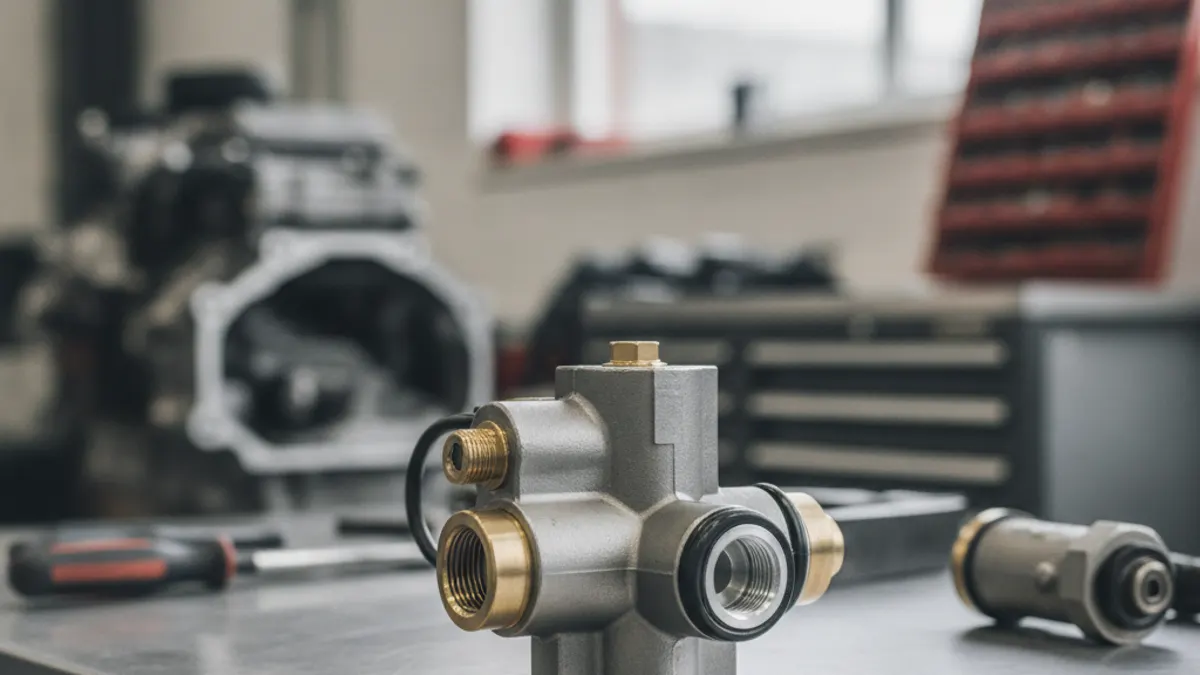
A relay valve is a remote air valve that speeds up how quickly the rear-axle and trailer brakes apply and release. Instead of forcing air all the way from the treadle (foot) valve down the length of the frame to the rear brake chambers, the driver's pedal sends only a small pressure signal to the relay valve, which then meters full braking air into the chambers from a reservoir mounted close by. The result is faster, more even braking, because the air the chambers need travels a short distance rather than the whole length of the truck.
On any tractor-trailer or long-wheelbase truck, that timing difference matters. Without relay valves, the rear and trailer brakes would apply noticeably later than the steer-axle brakes, upsetting balance and stretching stopping distance. Relay valves are one of the components that make a multi-axle pneumatic system respond almost as fast at the back as at the front.
How a Relay Valve Works
Think of the relay valve as a pressure-controlled gatekeeper. It has three main air connections: a service (signal) port that receives the control pressure from the foot valve or the tractor protection system, a supply port fed directly from a nearby air reservoir, and one or more delivery ports that run to the brake chambers. There is also an exhaust port, usually protected by a rubber flap, that dumps air when you release the brakes.
When you press the brake pedal, the treadle valve sends a signal pressure to the relay's service port. That signal pushes on a piston inside the valve. The piston opens the supply passage, letting reservoir air flow through the delivery ports to the brake chambers. The valve delivers air to the chambers at essentially the same pressure as the incoming signal — a 30 psi signal produces roughly 30 psi at the chambers — so the driver still has proportional control over how hard the brakes apply.
When you release the pedal, the signal pressure drops. The piston moves back, closes the supply passage, and opens the exhaust port so the air trapped in the delivery lines and chambers vents to the atmosphere. That local exhaust is the second half of why relay valves matter: the brakes release quickly because the air escapes right at the axle instead of traveling back up to the foot valve to exhaust.
Crack Pressure and Why It Matters
Most relay valves have a rated crack pressure — the minimum signal pressure needed before the valve begins to deliver air, commonly in the range of about 4 psi. This small threshold prevents the rear brakes from dragging on at the slightest pedal touch and helps balance front-to-rear timing. Relay valves are sold in different crack-pressure ratings, and installing the wrong one can throw off brake balance, so the replacement must match what the vehicle was engineered for.
Where Relay Valves Are Used
You will typically find a relay valve mounted on the frame near the drive axles and another on the trailer, close to the trailer's air tank. On a tractor, the relay valve works alongside the tractor protection valve and the trailer supply system so the trailer brakes respond in step with the tractor's. Spring-brake control on the rear often runs through a related valve as well, tying into the parking-brake circuit.
Relay valves are close cousins of quick-release valves. A quick-release valve only speeds up brake release by exhausting air locally; a relay valve does that and supplies fresh air from a local tank to speed application. For a full picture of how these components fit together, see our overview of how air brake systems work.
Symptoms of a Failing Relay Valve
A worn or contaminated relay valve usually announces itself through timing and leak problems. Because the valve sits between the driver's command and the brakes doing the work, its failures are felt directly at the pedal and at the wheels. The symptoms of a bad relay valve and the quick checks that confirm them are covered in more detail separately.
| Symptom | What You Notice | Likely Cause in the Valve |
|---|---|---|
| Slow release / dragging brakes | Rear or trailer brakes stay applied briefly after you lift off; wheels run hot | Exhaust port or piston sticking, often from moisture, rust, or old grease |
| Delayed application | Rear brakes engage a beat after the steer axle; soft or lagging feel | Sticky piston or debris restricting the supply passage |
| Constant air leak at exhaust | Continuous hiss from the valve, brakes applied or released; air system won't hold | Worn internal seals or a damaged exhaust flap letting supply air bypass |
| Uneven or grabby rear braking | Truck pulls or the rear locks earlier or later than expected | Wrong crack pressure or internal wear altering delivery timing |
| Slow air build-up recovery | System pressure drops during repeated braking | Internal leak feeding air past the valve to exhaust |
Many of these symptoms overlap with other faults. A steady leak, for example, can also come from a brake chamber, a relay's supply line, or the foot valve. A quick way to isolate the relay is to apply and hold the brakes, then listen at the exhaust port. If air leaks there with the brakes held (or leaks continuously with the brakes released), the relay valve or its seals are a prime suspect. Persistent moisture and oil carryover are frequent culprits, which is why a healthy air dryer protects relay valves and every other pneumatic component downstream.
Before condemning a relay valve, confirm the signal reaching it is correct. A weak or delayed signal from the foot valve or an upstream restriction can mimic a bad relay. Test the signal pressure at the service port against the delivery pressure at the chamber.
Testing a Relay Valve
A basic field test uses two air gauges — one teed into the service (signal) line and one at a delivery port or chamber. With the reservoir fully charged, make a firm brake application and compare the two readings. Delivery pressure should track the signal pressure closely and rise and fall with it. A large gap, a lag, or delivery pressure that won't bleed off when you release points to an internal fault.
Also inspect for the obvious: cracked or brittle air lines, loose fittings, a torn exhaust flap, and corrosion around the ports. Soapy water on the body and around the exhaust reveals leaks that your ear might miss in a noisy shop. If the valve leaks, sticks, or fails to track the signal, replace it rather than trying to rebuild a moisture-corroded body.
Replacing a Relay Valve
Relay valve replacement is a manageable job for a competent technician, but the details matter because you are working inside the braking circuit. Always drain the system and chock the wheels first.
- Relieve system pressure. Drain the air reservoirs so no line is under pressure before you loosen a single fitting.
- Chock the wheels and secure the vehicle. With the air down, the spring brakes may release depending on the system; never rely on air brakes alone during service.
- Label every line. Mark or photograph the service, supply, delivery, and exhaust connections before removal. Cross-porting a relay valve will cause dangerous brake behavior.
- Remove the old valve. Disconnect the air lines, then unbolt the valve from its bracket. Note the crack-pressure marking or part number stamped on the body.
- Match the replacement. Install a valve with the same port configuration and the same crack-pressure rating. Choosing a quality replacement such as a VADEN relay valve engineered to OE specifications keeps the original braking balance intact.
- Reconnect and seal. Use the correct thread sealant on pipe threads, route each line to its labeled port, and torque fittings to spec — over-tightening can crack the valve body.
- Recharge and leak-test. Build the system to full pressure, then perform a static leak-down test and a brake-application test. Confirm the brakes apply and release promptly with no leak at the exhaust.
Because the relay valve lives in the same circuit as the brake chambers and their delivery plumbing, it is good practice to inspect the connected lines and chambers while you are in there. A new valve on a corroded or leaking line only moves the problem.
When to Replace vs. Repair
Some relay valves accept rebuild kits, but in real-world service most technicians replace the whole valve. Internal corrosion from years of moisture is rarely worth chasing with new seals, and a new valve restores known crack pressure and timing. If a valve is leaking, sticking, or throwing off brake balance and the truck sees hard duty, replacement is the reliable fix.
Keeping Relay Valves Healthy
The single best defense is dry air. Draining the reservoirs regularly and maintaining the air dryer keeps moisture and oil from corroding the relay's piston and seals. During routine brake inspections, listen at the exhaust port for leaks and confirm the rear brakes release cleanly. A relay valve that is fed clean, dry air and inspected on schedule will typically outlast many other wear items in the foundation brake system.
Source (VADEN Original): Truck Air Brake Valves Explained: Types, Functions and Failure Symptoms
Need the part, not just the answer?
OE-grade air brake compressors and repair kits, manufactured and tested to commercial-vehicle standards.
Shop VADEN partsPublished by VADEN Original. Product links point to the manufacturer’s official catalogue. Specifications are general — always confirm figures against your vehicle’s service manual.