 airbrakecompressor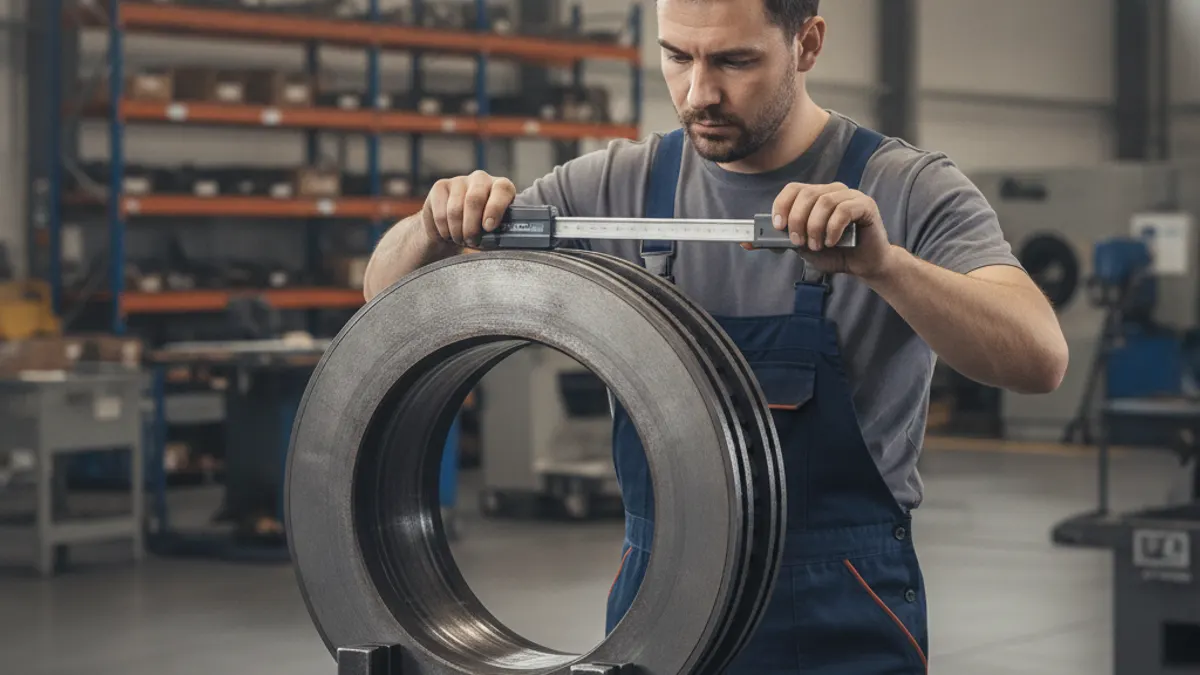
When a truck shakes, shudders, or pulses as you apply the brakes, the problem is almost always in the mechanical foundation brake or the front end — not in the air system. Air pressure decides when the brakes apply; the drums, shoes, S-cams, and steering parts decide whether they apply smoothly. The three causes you'll find most often are out-of-round or warped brake drums, uneven lining contact on one or more wheel ends, and worn or loose steering and suspension components.
The single biggest clue is where you feel the shake. A vibration that comes up through the steering wheel points you at the steer axle. A shake you feel through the seat, floor, or frame points at a drive axle or the trailer. Sort that out first — it cuts the diagnosis in half.
Warped or Out-of-Round Brake Drums
Heavy-truck brakes generate enormous heat. When a brake drum is repeatedly heated and cooled — long downgrades, hard stops, or riding the brakes — the cast iron can distort so it's no longer perfectly round. As the brake shoes contact the high and low spots of an out-of-round drum, braking force rises and falls many times per revolution. That pulsation is what you feel as shaking.
Look for these drum conditions:
- Out-of-round: the drum's inner diameter varies around its circumference, so the shoes grab harder in some spots than others.
- Heat checking: a network of fine cracks on the friction surface from thermal cycling. Light checking is normal; deep or wide cracks are not.
- Hard spots: shiny, raised areas of hardened iron that the shoes can't wear evenly against.
- Bell-mouthing or scoring: a tapered or deeply grooved surface that prevents full-face lining contact.
A drum worn or machined past its maximum diameter (stamped on the drum) is also more prone to distortion because there's less material to absorb heat. When one drum is bad, inspect its axle mate — brakes should be serviced in axle sets so both sides behave the same.
Uneven Lining Wear and a Grabbing Brake
If one wheel end grabs harder than the others, the truck twists slightly under braking and shakes or pulls. On S-cam foundation brakes, several things cause one brake to grab or drag:
- A slack adjuster that's seized or out of adjustment, so that brake applies with different timing or force than its mate.
- A sticking S-cam or dry camshaft bushings that keep the shoes from releasing cleanly.
- Contaminated linings — oil, grease from a leaking wheel seal, or coolant on the friction surface changes how that shoe bites.
- Cracked, glazed, or unevenly worn brake shoes and linings that no longer make full contact.
- A weak or broken return spring that lets a shoe stay in light contact and overheat.
Uneven contact between shoe and drum concentrates heat, which then warps the drum — so a lining problem and a drum problem often show up together.
Steering, Suspension, and Wheel-End Play
Not every brake shudder starts in the brake. Worn front-end parts let the wheel move under the load of braking, and that movement reads as shaking — usually right in the steering wheel:
- Loose wheel bearings: excess end-play lets the drum wobble against the shoes.
- Worn tie-rod ends, drag link, or kingpins: play in the steering linkage turns braking force into a wobble.
- Worn or loose U-bolts, spring shackles, or torque rods: the axle shifts slightly under braking.
- Out-of-balance or out-of-round tires, or a broken belt: these vibrate on their own, and braking load makes it worse — a classic false alarm that gets blamed on the brakes.
Grab the tire at 12 and 6 o'clock and rock it to check bearing and kingpin play; grab at 3 and 9 to check the tie-rod and steering. Any looseness there needs to be fixed before you condemn a drum.
Diagnosing the Shake: A Quick Reference
| Symptom | Likely Source | What to Check |
|---|---|---|
| Shudder in the steering wheel | Steer axle | Front drums, wheel bearings, tie-rod ends, kingpins |
| Shake through seat / frame | Drive or trailer axle | Drums, linings, slack adjusters, S-cams on rear ends |
| Pulsing that rises with speed | Out-of-round drum or tire | Drum runout, tire balance and roundness |
| Pulls to one side while shaking | One brake grabbing | Contaminated lining, seized slack adjuster, stuck S-cam |
| Shake only when hot / after long grade | Thermal distortion | Heat-checked or warped drums, dragging brake |
| Vibration present even off the brake | Not brake-related | Tire balance, driveline, bent wheel |
A Step-by-Step Diagnostic Approach
- Identify where you feel it. Steering wheel versus seat/frame narrows it to steer versus rear axles.
- Note the conditions. Only when hot? Only at certain speeds? Does it pull? Each pattern points somewhere specific.
- Chock, cage the springs if needed, and inspect wheel-end play at each suspect corner before touching the brakes.
- Pull the drums. Measure inner diameter at several points for out-of-round, and inspect for heat checks, hard spots, and scoring.
- Inspect linings and hardware. Look for uneven wear, contamination, cracked linings, weak springs, and free S-cam and slack-adjuster movement.
- Rule out tires. Check balance, roundness, and belts — an out-of-round tire fakes brake shudder convincingly.
- Service in axle sets. Replace drums, shoes, and hardware in matched pairs so both wheel ends respond the same.
Because the air side and the mechanical side share the same wheel end, it's worth confirming the air brakes themselves are healthy and timing evenly, so you can see where the pneumatic controls hand off to the mechanical foundation brake. If a wheel drags because a brake won't fully release, that heat is what warps the drum in the first place.
When to Stop and Fix It
Braking shudder isn't just a comfort issue. A grabbing brake, a badly out-of-round drum, or steering play under braking all lengthen your stopping distance and can pull the truck out of its lane in a hard stop. If the shake is worsening, if you smell hot brakes, or if the truck pulls while shaking, take it out of service and inspect it. Foundation-brake and steering faults do not fix themselves, and every heat cycle makes a warped drum worse.
On disc-braked axles the shudder usually starts with a seized slide rather than an out-of-round drum, and a caliper that no longer floats freely wants replacing — budget for air disc brake calipers before another set of pads.
Need the part, not just the answer?
OE-grade air brake compressors and repair kits, manufactured and tested to commercial-vehicle standards.
Shop VADEN partsPublished by VADEN Original. Product links point to the manufacturer’s official catalogue. Specifications are general — always confirm figures against your vehicle’s service manual.