 airbrakecompressor
The compressor unloader valve is the mechanism inside the air compressor's head that decides whether the compressor is pumping air into the brake system or just spinning idle. When system pressure reaches governor cut-out (~120-135 psi), the governor sends control air to the unloader, which lifts the compressor's intake valves off their seats. With those valves held open, the piston can no longer trap and compress air, so the compressor "unloads" - it keeps turning with the engine but stops building pressure. When tank pressure falls to cut-in (~100-110 psi), the process reverses and the compressor loads again. That one valve is the difference between a compressor that charges the tanks and one that overheats trying to pump against a full system.
What the unloader valve actually is
On most truck compressors the "unloader valve" is really a small set of unloader pistons or plungers seated in the cylinder head, capped by O-rings and a spring, sitting directly under the intake valves. Some designs use a single unloader port or saddle; heavy-duty twin-cylinder units use a plunger under each intake valve. Either way the job is identical: on command, physically hold the intake valves open so no air can be compressed. Because it lives in the hottest, most oil-exposed part of the air brake compressor, its seals and plungers wear, gum up with carbon, and stick - which is why it is a service item rather than a lifetime part.
How it works with the governor
The unloader never acts on its own; it takes its signal from the air brake governor. The governor senses reservoir pressure and switches control air to the compressor's unloader port - it is the brain, and the unloader is the muscle. When the tanks are full it unloads the compressor to protect it; when air is drawn down it lets the compressor go back to work. This loading and unloading cycle repeats every few minutes while you drive.
| Stage | System pressure | Governor action | Unloader state | Compressor |
|---|---|---|---|---|
| Loading | Below cut-in (~100-110 psi) | Blocks control air / exhausts signal | Closed (intake valves seat normally) | Pumps air into tanks |
| Charged | Rising toward ~120 psi | Still loading | Closed | Building pressure |
| Unloading | At cut-out (~120-135 psi) | Sends control air to unloader | Open (holds intake valves up) | Spins free, no pumping |
| Return | Falls back to cut-in | Exhausts control air | Closes again | Resumes pumping |
On systems with an air dryer, that same cut-out signal usually also fires the dryer's purge, which is why you hear the familiar "pssht" every time the compressor unloads. A clean burst of air at cut-out means the governor and unloader are communicating correctly.
Symptoms of a stuck or failed unloader
A bad unloader shows up in one of two opposite ways, depending on which direction it fails. Diagnosing it is mostly a matter of watching your dash gauge and listening at cut-out.
| Failure mode | What you see | Why it happens |
|---|---|---|
| Never unloads (stuck closed) | Compressor keeps building past normal cut-out; safety valve pops off (~150 psi); compressor runs hot; pumps oil; carbon builds up in the discharge line | Governor signal not reaching or moving the unloader, or plungers seized closed |
| Won't load (stuck open) | Truck won't build air past a certain psi, or builds very slowly; low-air warning and buzzer stay on; compressor runs constantly with no result | Intake valves held open by a jammed plunger or failed seal, so no air is compressed |
| Leaking / weeping unloader seals | Slow charge, air leak audible at the governor exhaust, cut-out that "hunts" or cycles too often | Worn O-rings letting control air bleed past |
The "never unloads" failure is the dangerous one for the compressor itself. A unit that cannot unload fights full system pressure on every stroke, so it overheats, cooks the oil, and starts building carbon and pumping oil downstream into the dryer and tanks. If your safety (pop-off) valve is venting regularly, do not just replace the pop-off valve - suspect the unloader or governor first.
Is it the unloader, the governor, or the compressor?
Because the governor, the unloader, and the compressor valves all sit in the same signal path, it pays to test in order. Check the governor cut-out setting first: if the governor is not sending or exhausting control air at the right pressures, the unloader will look faulty when it isn't. If the governor switches correctly at cut-in and cut-out but the compressor still won't stop or start pumping, the fault is in the unloader plungers, seals, or intake valves themselves. Pull the head and you will usually find gummed plungers, hardened O-rings, or carbon holding an intake valve open.
Worn unloader plungers and seals are a repairable item, not a reason to condemn the whole compressor. A fresh OE-grade unloader valve kit restores clean cut-out and stops the overheating cycle before it damages the pistons. Match the kit to your compressor model - single- and twin-cylinder heads use different plunger and seat geometry - and replace the intake valve seats at the same time if they show carbon or pitting. It is a low-cost part that protects a high-cost compressor.
Rule of thumb: if the compressor overheats or pumps oil, look at the unloader and governor before blaming the compressor. If it simply won't build air, check whether an unloader is jammed open before you condemn the pump.
Maintenance
The unloader is a wear item that lasts longest on clean, dry air and clean oil. A failing air dryer that lets moisture and oil vapor reach the compressor head shortens unloader seal life and encourages carbon that sticks the plungers. Keep the dryer cartridge fresh, drain the tanks, and inspect the unloader whenever the compressor head is off for valve service. On a compressor that cycles too often or too rarely, the unloader and governor are the first two things worth checking.
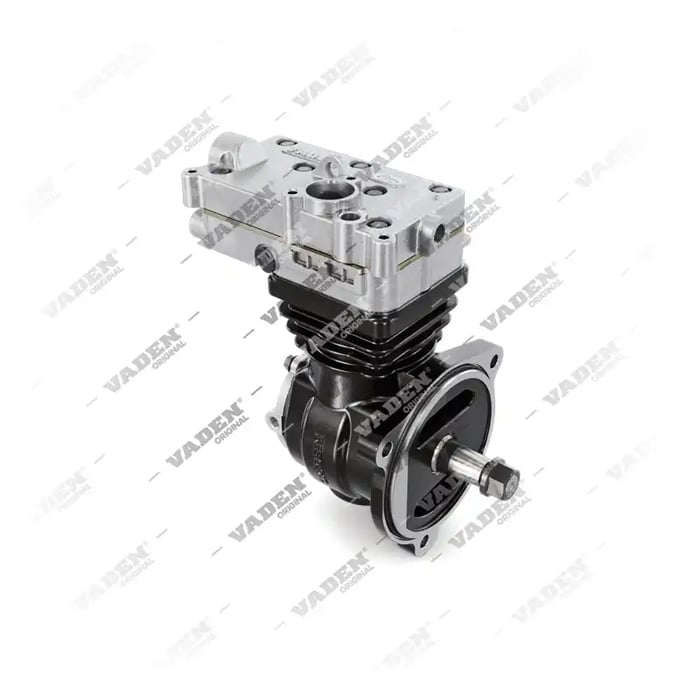
Need the part, not just the answer?
OE-grade air brake compressors and repair kits, manufactured and tested to commercial-vehicle standards.
Shop VADEN partsPublished by VADEN Original. Product links point to the manufacturer’s official catalogue. Specifications are general — always confirm figures against your vehicle’s service manual.