 airbrakecompressor
An air brake compressor pumps oil when engine lubricating oil slips past worn piston rings, a clogged intake, or a blocked oil-return (drain-back) line, and then rides the compressed air downstream as an oily film that collects in the discharge line, air dryer, and reservoirs. A trace of oil carryover is normal on any engine-lubricated compressor; heavy, pooling oil is not. The clearest tell-tale is oil sludge in the wet (supply) tank when you crack the drain, or a black, saturated air dryer cartridge that no longer pulls moisture.
Why an air brake compressor passes oil
Unlike a shop air compressor with its own sump, a truck's air brake compressor is fed pressurized oil from the engine and drains it back through a return line. That means anything wrong with sealing, cooling, or oil flow shows up as oil in the air system. Three failure paths account for most cases.
Worn piston rings or cylinder bore
The rings seal the compression side of the piston from the crankcase oil below. As they wear — or as the bore glazes and scores — oil is drawn up on the intake stroke and pushed out with the air on the discharge stroke. This is ordinary wear-out and is the most common reason a high-mileage air brake compressor starts passing oil.
An overworked compressor (excessive duty cycle)
A compressor is meant to run loaded only a fraction of the time. When the system leaks — split lines, a leaking unloader valve, worn fittings, or brake chambers weeping air — the governor keeps calling for more air, so the compressor stays loaded far longer than designed. It runs hot, the oil thins, carbon builds in the head and discharge port, and far more oil gets carried past the rings. Chasing an oil-pumping complaint without first fixing air leaks usually fails.
Restricted oil return or fouled intake
If the oil-return line is kinked, sludged, or mounted so oil cannot gravity-drain, the crankcase floods and oil is forced up past the rings even when they are healthy. A restricted or oil-soaked intake filter — or an intake drawing from a fouled engine breather — has the same effect. These are cheap checks that are often skipped.
How much oil is "too much"?
Every engine-lubricated compressor passes a little oil; that is why the air dryer exists and why the wet tank is the first reservoir. The problem is quantity. A light varnish on a drained cartridge or a few drops at the tank drain is expected. Free-flowing oil, a gummed dryer purge, or oil reaching the secondary tanks and valves is a fault that will spread through the whole brake system if left alone.
Symptoms and what they point to
| What you see | Most likely cause |
|---|---|
| Oil sludge or a black slug of oil at the wet-tank drain | Compressor passing oil; check rings, duty cycle, oil return |
| Air dryer purges oily mist; cartridge black and heavy | Oil carryover saturating desiccant — dryer no longer removing water |
| Oil at valve exhaust ports or in brake chambers | Heavy carryover reaching secondary circuit; system contaminated |
| Compressor runs constantly / slow to build to cut-out | System leak driving high duty cycle; overwork, then oil pumping |
| Blue haze or oil at the compressor intake/discharge | Worn bore, restricted return, or plugged intake filter |
Diagnosing it correctly
Work from the outside in before you pull the compressor. First, drain every reservoir and inspect what comes out — start at the wet tank and move downstream so you know how far the oil has traveled. Second, cut out the leaks: build the system to governor cut-out (about 120–135 psi), shut the engine off, and time the pressure drop. A system that bleeds down fast is overworking the compressor and must be sealed first. Third, check the cheap items: intake filter, breather, and that the oil-return line runs continuously downhill and is not blocked. Only after those come back clean should you condemn the rings or bore.
Confirm the compressor itself by inspecting the discharge port and head for carbon build-up and by checking the bore for scoring and taper. Persistent oil pumping with a clean intake, a good return line, and a leak-free system points squarely at the compressor's sealing surfaces.
Repair kit vs. new compressor
Once the compressor is the confirmed culprit, the decision comes down to the condition of the bore and crankcase. If the cylinder is still round and within service limits, a rebuild restores sealing at a fraction of the cost of a new unit. If the bore is scored, worn oval, or the crankcase is damaged, no seal kit will hold and replacement is the honest fix.
| Condition | Recommended path |
|---|---|
| Bore in spec, good crankcase, worn rings/gaskets/valve plate | Rebuild with a repair kit |
| Light carbon in head, unloader worn, seals leaking | Rebuild — head and unloader components in the kit |
| Scored or worn bore, cracked casting, seized | Replace the compressor |
| Unknown history, high mileage, downtime-critical fleet | Often replace for reliability; keep the old core |
A quality rebuild uses a matched set of rings, gaskets, valves, and unloader parts. For units with a serviceable bore, a purpose-made air brake compressor repair kit brings sealing back to spec and is the economical choice — provided you also correct whatever overworked the compressor in the first place.
After the fix: protect the new parts
Oil pumping usually contaminates everything downstream, so a repair is not finished at the compressor. Replace the fouled air dryer cartridge, drain and flush the reservoirs, and inspect valves that saw oil. Then keep it from coming back: fix air leaks promptly, service the intake filter, verify the oil-return line drains freely, and drain the tanks on a schedule. A compressor that lives at a sensible duty cycle and breathes clean air passes very little oil for a long time.
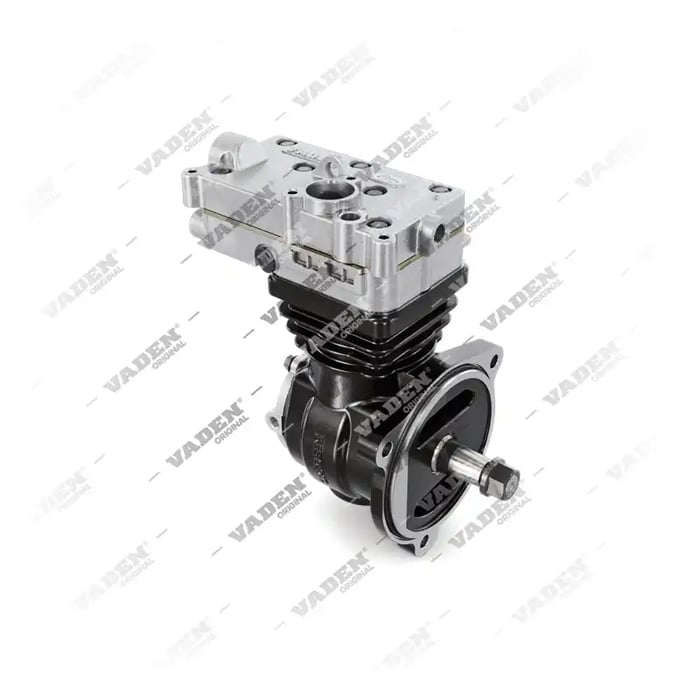
Need the part, not just the answer?
OE-grade air brake compressors and repair kits, manufactured and tested to commercial-vehicle standards.
Shop VADEN partsPublished by VADEN Original. Product links point to the manufacturer’s official catalogue. Specifications are general — always confirm figures against your vehicle’s service manual.