 airbrakecompressor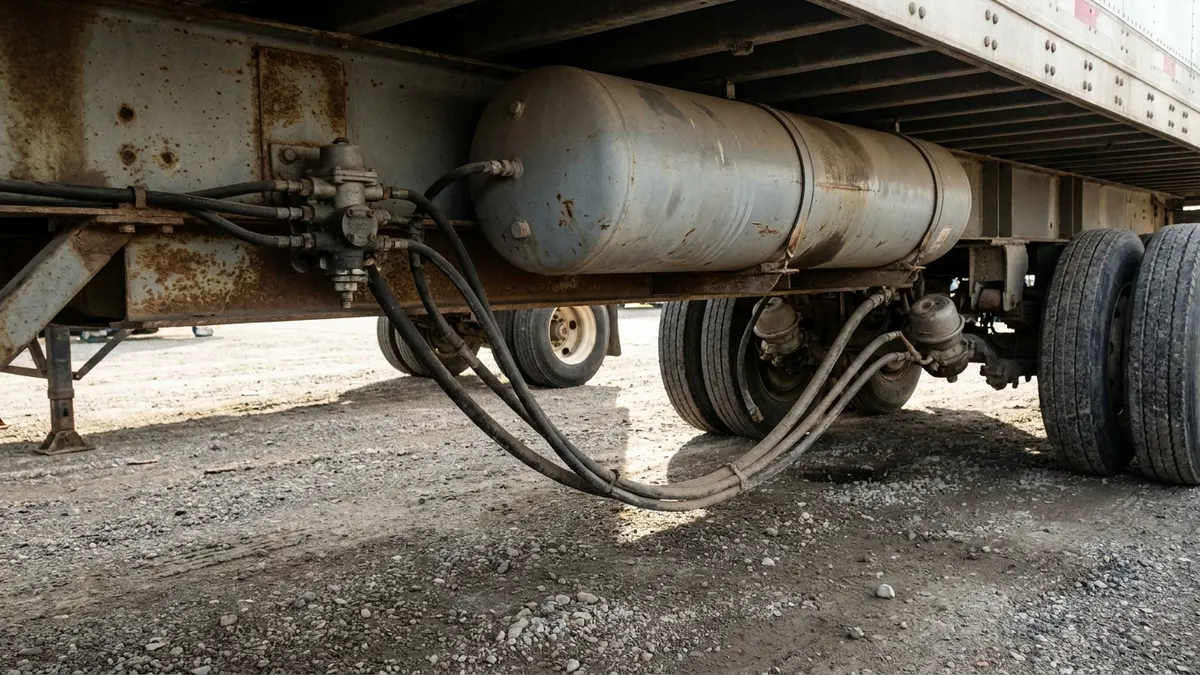
A relay emergency valve is the trailer-mounted pneumatic valve that performs two functions in one body. It acts as a remote relay for the service brakes — sensing the pressure signal arriving on the service line and metering air from the trailer's own reservoir into the brake chambers — and it monitors the supply (emergency) line so the trailer brakes apply by themselves if that line is cut, disconnected, or bled off. A plain service relay valve only does the first job. The emergency section, the reservoir charging check valve, and on combination units the park control, are what set this valve apart.
What the emergency section adds
The relay section works the same way it does anywhere on a combination vehicle. Pressure arriving at the control port moves an internal piston that opens a path from the reservoir port to the delivery port, so the chambers fill from air that is already sitting on the trailer instead of air pushed the full length of the tractor and trailer. When the signal drops, the piston lifts off its seat and chamber air dumps to atmosphere through the valve's own exhaust.
The emergency section adds a second piston referenced to supply line pressure. Once supply pressure rises past roughly 45 to 60 psi, that piston moves to its charging position: it opens a path through an internal check valve so the trailer reservoir fills, and it holds the emergency application released. The check valve matters — it keeps reservoir air from draining back up the supply line if the tractor loses pressure. When supply pressure falls into roughly the 20 to 45 psi band, the piston shifts and the valve makes a full application from stored reservoir air, or on spring-brake-equipped trailers dumps the hold-off air so the springs apply.
Port identification
| Port | Common markings | Connects to | Function |
|---|---|---|---|
| Supply / emergency | SUP, EMER | Supply line from the tractor via the supply gladhand coupler | Charges the reservoir through the internal check valve and holds the emergency application released |
| Service / control | SER, CONT | Service line from the foot brake valve and the trailer hand control valve | Signal only — tells the relay how hard to apply; it does not feed the chambers |
| Reservoir | RES, TANK | Trailer air reservoir | The air source for every application, service or emergency |
| Delivery | DEL | Service brake chambers | Metered output; often two ports, one per side |
| Exhaust | EX | Atmosphere | Releases chamber air on release; must stay clear and face downward |
Combination valves add a hold-off or park port feeding the spring brake chambers, and many include an anti-compounding feature so a service application and a spring application cannot stack mechanical force on the same pushrod.
How it behaves in each state
Charging and release
With the tractor supply line open and the system building toward a fully charged pressure of about 120 psi — the governor cutting out somewhere in the 120 to 135 psi range and cutting back in around 100 to 110 psi — the emergency piston seats in the charging position and the trailer reservoir fills. Delivery pressure drops to zero and the chambers release.
Normal service application
Pressure on the service line moves the relay piston. Delivery pressure tracks the control signal closely, so a light application gives a light chamber pressure. Because the air comes from the trailer reservoir a few feet away, apply and release timing stays inside regulatory limits even on a long combination.
Loss of supply line
If the supply gladhand parts, a line chafes through, or the driver closes the trailer air supply valve, supply pressure falls. The tractor protection valve seals the tractor's own air, and the trailer's relay emergency valve makes an automatic application from stored reservoir air. That application is only as strong as the reservoir behind it, which is why a trailer with a weak or leaking reservoir can roll after a breakaway.
Relay emergency valve or relay plus spring brake control valve?
Trailers built to modern standards carry spring brake chambers, and the park and emergency function usually lives in a separate spring brake control valve working alongside a service relay valve. That layout gives a mechanical park that holds with no air at all, which is why it replaced the older air-applied emergency arrangement on most road trailers. Combined relay emergency valves are still in service on older semitrailers, converter dollies, and off-highway or specialty equipment, and combination units that pack relay, charging check, park control and anti-compounding into one casting are common on current builds. Before ordering, count the ports and identify what the valve actually feeds — see spring brake and parking brake operation for how the hold-off side is plumbed.
Symptoms of a failing valve
- Trailer brakes drag or release slowly after the pedal is released — restricted exhaust or a sticking relay piston.
- Continuous leak at the exhaust port with brakes released, indicating a damaged inlet seat or contaminated seal.
- Trailer brakes apply late or grab, giving uneven braking between tractor and trailer.
- No automatic application when the supply line is disconnected — the most serious failure, because nothing warns the driver until a breakaway.
- Trailer reservoir will not charge, or bleeds back into the supply line overnight, pointing at the internal check valve.
Testing the valve
Chock the wheels before any of this. Never work under a vehicle held only by service air pressure.
- Couple, build to a fully charged system of about 120 psi, and confirm the low-air warning clears above the roughly 60 psi warning threshold.
- Release the brakes and confirm the trailer chambers release cleanly with no residual delivery pressure.
- Shut the engine down, leave the key on, and run a released leakage check, then a full applied leakage check, watching gauge loss per minute against the limits in your inspection standard.
- With wheels chocked, close the trailer air supply valve on the dash. The trailer brakes must apply immediately and stay applied.
- Reopen the supply and confirm a prompt, complete release at both delivery ports.
- Listen at the exhaust with brakes released and again with a steady application. A continuous hiss in either state means the valve is passing internally.
Service and replacement
Contamination is the usual killer. Oil carryover from a worn compressor and water from a saturated air dryer swell the seals and varnish the piston bores, and a valve cleaned but left on a dirty system fails again quickly. After any compressor failure, decontaminate the lines and reservoirs and change the dryer cartridge before fitting new valves. When a body is scored or the emergency section is sluggish, replacement is normally the sound call over a rebuild; OE-grade trailer emergency valves are catalogued by OE reference so the port pattern and thread sizes match without adapters. Mount the valve with the exhaust pointing down, keep the delivery lines to the chambers short and equal, and re-run the breakaway test before the trailer goes back into service.
Need the part, not just the answer?
OE-grade air brake compressors and repair kits, manufactured and tested to commercial-vehicle standards.
Shop VADEN partsPublished by VADEN Original. Product links point to the manufacturer’s official catalogue. Specifications are general — always confirm figures against your vehicle’s service manual.