 airbrakecompressor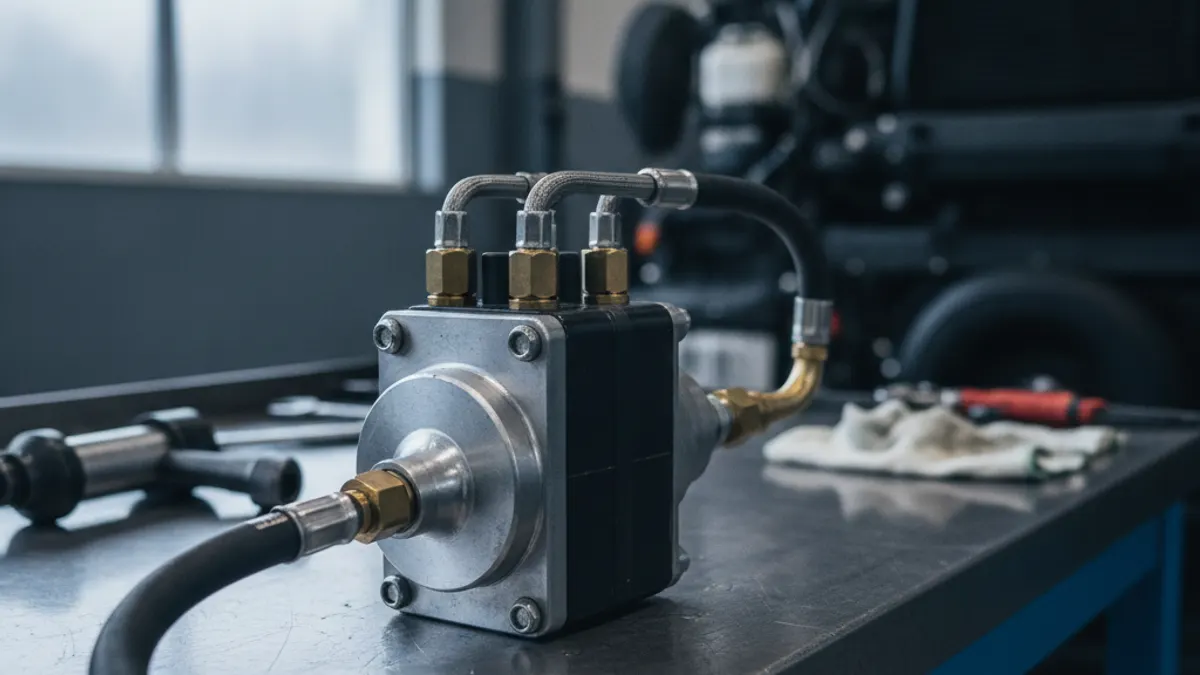
An inversion valve is a reverse-acting control valve in a commercial air (pneumatic) brake system: it keeps its delivery port exhausted as long as it sees control pressure, and it delivers reservoir air to the brake chambers the moment that control pressure disappears. The output is the inverse of the input signal, which is where the name comes from. It is the part that makes the brakes apply automatically when the service circuit fails, when the supply line is lost, or when a trailer breaks away, instead of leaving the vehicle rolling with no braking at all.
What the inversion valve actually does
Air brake systems are designed to fail applied, not fail released. Air pressure is what holds the brakes off on the parking and emergency side, and the inversion valve enforces that rule. It has three basic ports: a supply port fed from a protected reservoir, a control (signal) port fed from the circuit being monitored, and a delivery port that feeds the chambers or the spring brake side.
For context on the pressures involved: a fully charged system sits around 120 psi, the governor typically cuts out somewhere in the 120–135 psi range and cuts back in around 100–110 psi, and the low-air warning light and buzzer come on near 60 psi.
| Control (signal) port | What the valve does | Result at the wheels |
|---|---|---|
| Normal running pressure present (roughly the 100–135 psi working band) | Delivery port held closed and vented to atmosphere | Brakes released, normal driving |
| Control pressure falling (partial failure) | Valve meters supply air to delivery in proportion to the loss | Modulated, partial brake application |
| Control pressure lost (below the valve's threshold, typically a low band in the region of 20–45 psi) | Delivery port opened fully to reservoir supply | Full emergency application from stored air |
The middle row is the one that matters in service. A well-designed inversion circuit is modulated rather than on/off, so the driver keeps some pedal control instead of getting an instant full application at highway speed. Bendix, Wabco and Knorr-Bremse OE designs all work on this principle, though the part names differ: inversion valve, spring brake modulating valve, emergency relay valve, SR-style spring brake valve. Actual changeover thresholds vary by valve and by vehicle, so treat the figures above as typical ranges and use the vehicle manufacturer's current service manual for the exact values.
Where you find one
1. Tractor and straight truck: spring brake modulation
On a two-circuit vehicle, the drive axle service brakes are usually fed by the primary circuit. If that circuit fails, the inversion valve senses the loss and lets the driver apply the spring brake side of the rear chambers with air from the secondary reservoir, using the foot valve as the control. The spring brakes become a backup service brake, applied gradually rather than slammed on. This is where anti-compounding also becomes critical: the circuit must not stack mechanical spring force on top of service air force through the same pushrod.
2. Trailer: relay emergency valve / spring brake valve
On the trailer, the same inverted logic lives in the relay emergency or spring brake valve. It watches the supply (emergency) line coming through the tractor protection valve. Lose that supply line — gladhand pulled apart, hose burst, breakaway — and the valve dumps the air holding the trailer spring brakes off. On older relay emergency designs it also feeds trailer reservoir air straight to the service chambers. The trailer stops itself with no input from the driver.
Inversion valve vs. the valves it gets confused with
| Valve | Logic | Job |
|---|---|---|
| Inversion valve | Reverse-acting | Delivers air out when control pressure is lost |
| Relay valve | Direct-acting | Speeds up application by using a nearby reservoir instead of long lines |
| Quick release valve | Direct-acting | Dumps chamber air locally on release |
| Anti-compounding valve | Protective | Prevents service and spring force stacking on one pushrod |
| Pressure protection valve | Threshold-acting | Isolates accessories so brake reservoirs keep priority |
Many modern assemblies combine two or three of these functions in one casting, which is why a "spring brake valve" on a parts list may be doing inversion, relay and anti-compounding duty at once. Match by OE number and port configuration, not by appearance.
Symptoms of a failing inversion or emergency valve
- Spring brakes drag or apply on their own while system pressure is normal — the valve is leaking supply air to the delivery side.
- Spring brakes will not release after a full charge, even with the dash valves pushed in and pressure above the cut-in point.
- Constant exhaust hiss from the valve body, worst with the parking control pushed in or the pedal applied.
- No automatic trailer application during a breakaway test — a serious out-of-service condition.
- Slow or one-sided release on the drive axle after the pedal comes up, often mistaken for a sticking chamber or a seized slack adjuster.
- Air loss that changes when the pedal is applied, pointing at internal seals rather than a line or fitting.
How to test it (chocks in, engine off, level ground)
- Charge the system until the governor cuts out and the low-air warning has long cleared, then shut the engine down.
- Soap the valve body, delivery ports and exhaust port with the brakes released. Steady bubbling at the exhaust means an internal seal is passing.
- Apply and hold the foot brake, then re-soap the exhaust. Leakage that appears or worsens under application points to the inversion or spring brake valve, not a chamber diaphragm.
- Pull the trailer supply (red) knob and confirm the trailer brakes apply promptly and stay applied.
- Simulate a breakaway by separating the supply gladhand with the trailer charged. The trailer must apply on its own. If it does not, the vehicle does not leave the yard.
- With a gauge on the delivery port, confirm delivery air appears only after control pressure drops into the low band — never while the system is at normal running pressure.
Never disable, plug or bypass an inversion or emergency valve to stop a leak. Doing so removes the automatic application function entirely and puts the vehicle out of service.
Service and replacement notes
These valves sit under the frame rail or on the trailer crossmember, so corrosion, road salt and water carried past a failing air dryer kill them faster than mileage does. Before condemning one, confirm the air reaching it is dry and clean; contaminated air is the leading cause of repeat valve failures. Rebuild kits exist for many OE valves, but on a corroded body the sealing surfaces are usually the real problem and replacement is the better call.
When you replace one: drain the reservoirs fully, tag every line before removal (the ports look similar, and a swapped supply and control line reproduces exactly the fault you were trying to cure), apply a thread sealant rated for air brake fittings sparingly and keep it off the first thread, torque to the manufacturer's figure, then recharge and repeat the full leak-down and breakaway test before releasing the vehicle. The vehicle manufacturer's current service manual governs all torque and threshold values.
Where the body is corroded past a rebuild, match the replacement on port layout and threshold pressure rather than on appearance; VADEN's relay and emergency valves cover the common truck and trailer circuits.
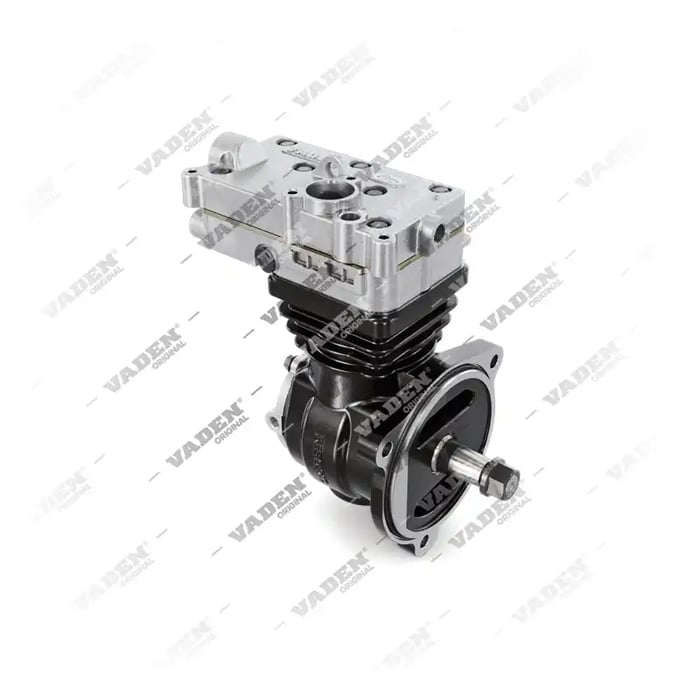
Need the part, not just the answer?
OE-grade air brake compressors and repair kits, manufactured and tested to commercial-vehicle standards.
Shop VADEN partsPublished by VADEN Original. Product links point to the manufacturer’s official catalogue. Specifications are general — always confirm figures against your vehicle’s service manual.