 airbrakecompressor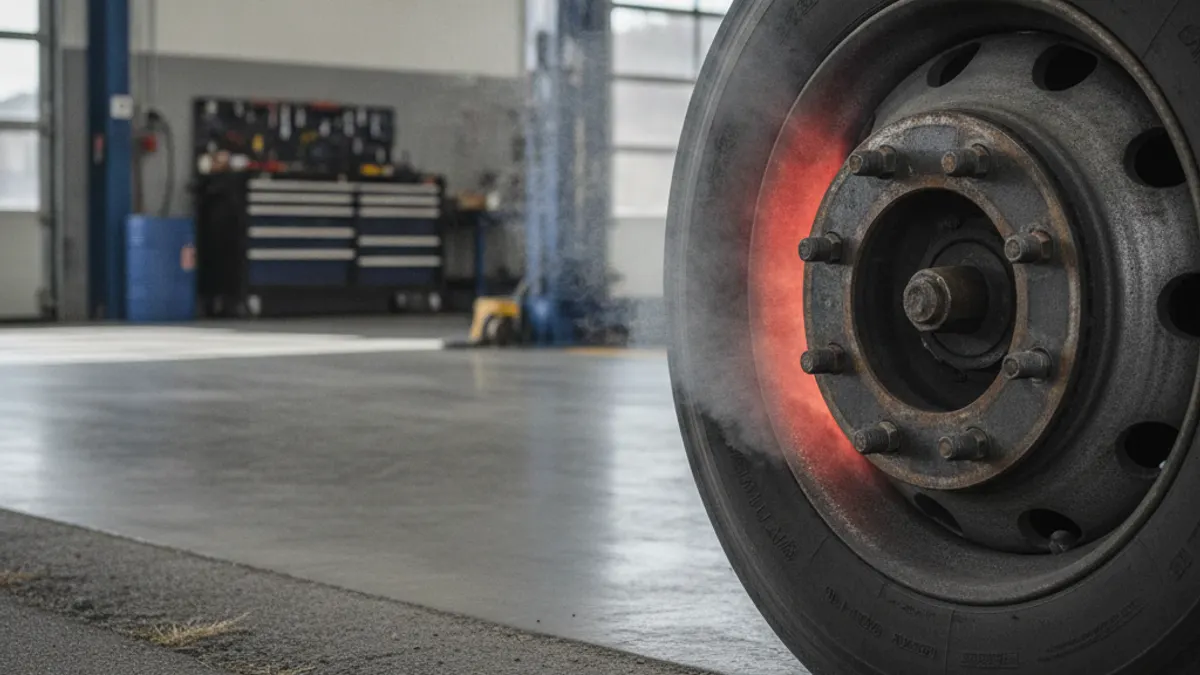
If your air brakes will not release, air is still trapped in the brake chamber, something mechanical is binding, or a valve exhaust is blocked. Unlike a car's hydraulic brakes, an air brake releases by dumping air out an exhaust port — no exhaust, no release. Start by identifying whether one wheel is dragging or all of them, because that single observation splits the fault list roughly in half.
Then work in order: confirm the system is fully charged (around 120 psi), chock the wheels on level ground, and watch each brake chamber pushrod while a helper applies and releases the pedal. A pushrod that goes out fast and comes back slow — or not at all — tells you where to look.
How an Air Brake Is Supposed to Release
On a service application, the foot brake valve opens a delivery path to the brake chambers. When you lift off, that signal drops, and the quick-release valve or relay valve nearest the axle opens its exhaust port and vents chamber air to atmosphere. The chamber return spring and the shoe return springs then pull the pushrod back, the slack adjuster rotates back, the S-cam untwists, and the shoes retract off the drum.
Break any link in that chain and the brake drags.
One Wheel Dragging vs. All Wheels Dragging
Drive a short distance, stop, and check drum temperature with an infrared thermometer — not your hand. A dragging brake runs noticeably hotter than its mates on the same axle.
| Symptom pattern | Most likely area | What to check first |
|---|---|---|
| One wheel hot, others normal | Mechanical at that wheel end | Slack adjuster free play, S-cam bushings, return springs, drum condition |
| Both wheels on one axle hot | Valve feeding that axle | Quick-release or relay valve exhaust, blocked muffler, kinked hose |
| All axles dragging | Pedal side or plumbing | Foot brake valve not returning, pedal linkage or floor mat |
| Drag after parking, eases as pressure builds | Spring brake side | Park control valve, system pressure, hold-off line |
| Drag when cold, clears by midday | Ice | Water in tanks, frozen valve exhaust, dead air dryer |
| Drag builds over miles, worse when hot | Adjustment and thermal growth | Pushrod stroke, slack adjuster function, out-of-round drum |
For any chamber that will not retract, crack the delivery line at the chamber. If air escapes, the valve is not exhausting. If no air escapes, the fault is mechanical at that wheel.
Cause 1: Spring Brakes Not Fully Releasing
Spring brakes are held off by air pressure. They generally need around 60 psi or more of hold-off air to sit fully released, and are solidly off at normal running pressure near 120 psi. If system pressure is marginal, or the hold-off line to the spring side is restricted, the power spring stays partially applied and the truck drags — heavy from a stop, easing as pressure climbs.
Look for a park control valve that has not fully seated in the released position, a collapsed hold-off hose, a corroded spring chamber where the piston binds in its bore, or a broken power spring. On a trailer, confirm the tractor protection valve and trailer supply are fully charged before blaming the chamber. If pressure never reaches the normal running range at all, that is a charging fault — chase the leak or the compressor first. More on the parking side is covered in spring brake parking brakes.
Never cut into or disassemble a spring brake chamber. The power spring stores enough energy to kill. Cage it with the release bolt or replace the chamber as a complete unit.
Cause 2: Quick-Release or Relay Valve Not Exhausting
This is the classic "applies fine, releases slow" complaint. The quick-release valve sits near the steer axle chambers and dumps chamber air locally instead of forcing it back up the line to the treadle. The relay valve does the same job on the rear axles. Both have an exhaust port and a rubber diaphragm, and both fail the same way: the port packs with mud, the exhaust flapper or muffler swells, or the diaphragm hardens and will not seat. Air cannot leave the chamber quickly, and the brake hangs on for a second or two — or indefinitely.
Test it by ear. With the system charged, have a helper apply and release the pedal while you listen at the valve. You should hear a clean, sharp exhaust burst on release. A weak hiss, a delayed puff, or silence means the valve or its exhaust path is the problem.
Oil from a worn compressor kills these diaphragms — it swells the rubber until it cannot seal. If you find oil at the valves, the root cause is upstream at the compressor and air dryer. Fix that first, or new valves fail the same way. On replacement, the rubber compound matters: a VADEN quick release valve uses OE-grade diaphragm material specified for oil and temperature exposure — precisely the failure mode that puts these valves on the bench.
Cause 3: Mechanical Bind at the Wheel End
If a single wheel drags and its chamber exhausts cleanly, the problem is mechanical. Chock the vehicle, release the brakes, and try to move the slack adjuster arm with a pry bar. It should have free play and spring back.
- Seized S-cam bushings. Corrosion in the cam tube stops the cam rotating back, so the shoes stay spread. A grease point that will not take grease is the warning sign.
- Frozen slack adjuster. Manual slacks that were never greased, or automatics with a failed internal clutch, will not return. Automatics that over-adjust hold the shoes tight.
- Broken or stretched return springs. These do the actual retracting; a broken one leaves the lining riding the drum.
- Anchor pin corrosion. Shoes seize on rusted pins and cannot pivot back.
- Drum and lining problems. Heat-checked, bell-mouthed, or out-of-round drums grab in spots. Delaminated or oversized linings bind.
- Wheel bearing or seal failure. Grease or gear oil on the linings grabs in a way that mimics drag.
Also verify pushrod stroke. An over-adjusted brake — stroke that is too short — never fully backs the lining off the drum. Free play and stroke both come back to the slack adjuster.
Cause 4: Ice and Moisture
In freezing weather, water condensed in the tanks migrates to valves and lines and freezes in the small exhaust passages of quick-release and relay valves, and inside gladhand seals. The brake applies, then physically cannot exhaust — brakes that drag first thing in the morning and free up by midday.
The fix is not a torch. Drain every reservoir, verify the air dryer purges audibly at each governor cut-out — normally in the 120–135 psi range — and replace the desiccant if it is past service life. A dryer that has quit is why the ice is there at all.
Cause 5: The Pedal Side and Plumbing
If every brake on the vehicle drags, look at the treadle. A foot brake valve whose plunger does not fully return — internal corrosion, a bent linkage, a floor mat bunched under the pedal, a worn pivot — holds a partial application at all times. You will typically see a few psi of residual delivery pressure on a test gauge with your foot off the pedal. Kinked or internally delaminated hoses restrict exhaust flow and slow release on whatever they feed.
Why You Cannot Ignore It
A dragging brake generates heat continuously. Linings glaze, drums crack, bearings and seals cook, and that wheel end can lose braking to fade right when you need it. In the worst case, a wheel-end fire. Chronic drag also shows up as a fuel economy complaint and uneven lining wear long before anything smokes, so treat premature wear on one wheel as an early warning.
Need the part, not just the answer?
OE-grade air brake compressors and repair kits, manufactured and tested to commercial-vehicle standards.
Shop VADEN partsPublished by VADEN Original. Product links point to the manufacturer’s official catalogue. Specifications are general — always confirm figures against your vehicle’s service manual.