 airbrakecompressor
A failing clutch servo announces itself in four ways: the pedal goes heavy almost overnight, air hisses at the bellhousing while the pedal is pressed, hydraulic fluid weeps from the vent between the servo's two sections, and the bite point wanders between a cold start and a hot afternoon. Each has a check that confirms the servo or clears it. Run those checks before ordering a unit: a weak air supply produces the same heavy pedal and has cost plenty of good servos their place on the truck.
What the servo does, and why that shapes the symptoms
A clutch servo, also called a clutch booster, is an air-assisted hydraulic actuator bolted to the bellhousing, its pushrod working the clutch release fork. Fluid pressure from the master cylinder arrives at the hydraulic port and does two jobs: it drives a small hydraulic piston, and it signals an internal air control valve. That valve admits reservoir air behind a much larger air piston, and both forces combine on one pushrod. The driver supplies a fraction of the effort; the air system supplies the rest.
Two design details explain nearly every fault. The air and hydraulic sections are separated by seals with a vent or drain port between them, so what appears at that port names the failed seal: fluid means the hydraulic seal, air means the air-side seal or the control valve. And the servo is fed from the air brake system through a pressure protection valve, so a system-wide air problem reaches the clutch long before the driver notices it at the brake pedal. For the air path and the layouts fitted to heavy trucks, see how an air-assisted clutch works.
Symptoms and the check that settles each one
| Symptom | Points to | Confirm or clear |
|---|---|---|
| Pedal suddenly heavy, nothing else changed | Assist lost: air not arriving, or arriving and doing no work | Gauge teed into the servo supply: full pressure with the pedal held confirms the servo, low pressure sends you upstream |
| Hiss at the bellhousing only while the pedal is held | Air piston seal or control valve passing | One short charge of air then silence is normal. Soap the unions and hose first |
| Hiss with the pedal released | Control valve not seating, or a loose fitting | A leak at the servo body or vent confirms it; at a union it does not |
| Fluid at the vent or down the gearbox | Hydraulic piston seal in the servo | Clean, mark the reservoir level, work a shift, re-inspect; fluid from the pipe above clears the servo |
| Bite point wanders cold to hot, pedal firms when pumped | Air in the hydraulic circuit, or a seal bypassing when hot | Stroke short of the published figure, or different hot and cold; steady stroke points at clutch wear |
Reading the four headline symptoms
Pedal suddenly heavy
A heavy pedal means the assist has stopped contributing, and the distinction worth making is between air that never arrives and air that arrives but does nothing. A gauge teed into the supply port settles it: if the servo has a fully charged supply and the pedal is still hard work, the control valve or the air piston is at fault. Lost stroke from the same cause shows up as gear clash and a clutch that drags.
Air hissing at the bellhousing
Timing is the diagnosis. A short intake of air on application, then silence while the pedal is held, is normal. A hiss that lasts as long as the pedal is down means air is escaping past a seal instead of pushing the piston, which is why a heavy pedal usually arrives with it. A hiss with the pedal released points to a control valve that is not seating, or to a loose union. Either way the loss shows up as a compressor cycling more often than it used to.
Fluid at the vent
The vent exists so that a failed seal leaks where it can be seen rather than into the other half of the unit. Fluid there is conclusive once the area is clean and nothing above is dripping onto the unit. Watch the reservoir level too, because a slow loss eventually pulls air into the hydraulic circuit. Where the pushrod enters the bellhousing, treat it as urgent: fluid on the clutch linings contaminates them.
Bite point wandering cold to hot
This one is rarely the air side. Pump the pedal several times: if it firms up and the bite point rises, there is air in the hydraulic circuit or a seal bypassing internally, and heat is why it worsens late in the shift. Mark the pushrod, measure full stroke cold and again hot, and compare both against the figure the manufacturer publishes for that part number.
The low air supply fault that imitates a failed servo
This is the mistake that costs money. The servo is fed through a pressure protection valve that keeps the brake circuits supplied first, opening only once supply pressure has risen past its preset threshold. When the system is not holding pressure, that valve stays shut, the assist disappears and the pedal turns solid while the servo is in perfect health.
Establish where the air system sits before touching the clutch. A healthy system unloads at governor cut-out somewhere around 120 to 135 psi and reloads at cut-in around 100 to 110 psi, so a working truck should show roughly 120 psi and hold it; the low-air warning device operates near 60 psi. Suspect the supply, not the servo, when:
- The pedal is heavy first thing in the morning and eases as the system charges.
- The low-air warning has been active, or the gauges never reach normal running pressure.
- The fault is cold-weather only: moisture past a tired air dryer can freeze in the supply line and thaw by mid-morning.
- Other air-fed accessories have gone lazy at the same time, since they sit behind the same protection valve.
The supply is cleared, and the servo confirmed, when the gauges show a full charge, that pressure reaches the servo port with the pedal down, and the pedal is still heavy.
Confirm-or-clear sequence
- Chock the wheels. Spring brakes apply as reservoir pressure falls through roughly 20 to 45 psi, so a truck sets its own parking brakes as the tanks empty, but never work to that assumption.
- Charge the system fully, confirm the governor cuts out and cuts in normally, then clean and dry the servo. Diagnosis on a dirty unit is guesswork.
- Tee a gauge into the servo air supply; read it at rest, then with the pedal fully depressed and held.
- With an assistant on the pedal, listen for the application charge and any hiss that continues while it is held down. Soap the union and hose first, then the body and vent.
- Wipe the vent, mark the reservoir level, and re-inspect after a shift's work.
- Mark and measure pushrod stroke against service data, cold and hot.
- Rule out the mechanical side: a seized release fork, a dry pedal pivot or a collapsing release bearing all give a heavy pedal with a healthy servo.
Repair or replace
A seal kit is the right answer when the bore and pistons are clean and the unit has simply aged. It is the wrong answer when the bore is scored or corroded, the air piston or its guide is damaged, or the pushrod is bent, because new seals cannot restore a worn running surface. Weigh the two against the comparison in repair kit versus a new servo, and where replacement is the verdict fit an OE-grade unit, such as the clutch servos VADEN Original builds for commercial vehicles. Either way, cure what killed the old one; a servo lost to water in the supply line will fail again on the same water.
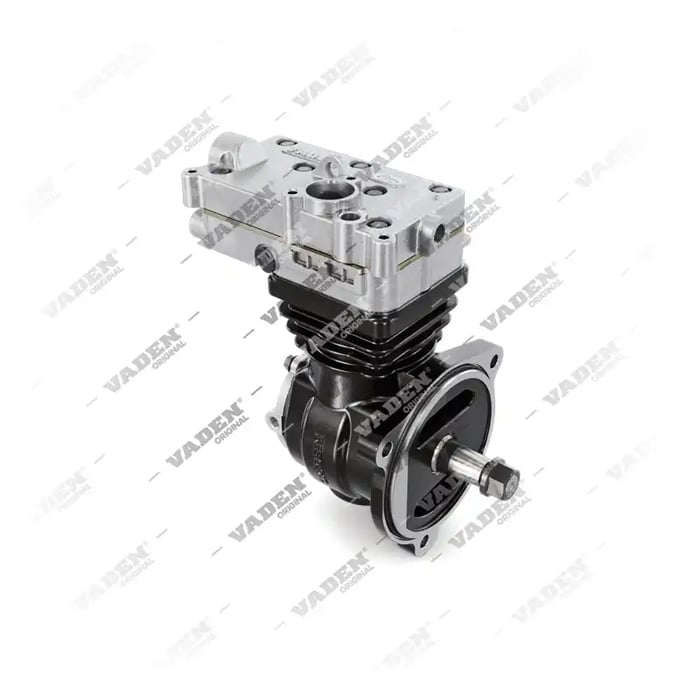
Need the part, not just the answer?
OE-grade air brake compressors and repair kits, manufactured and tested to commercial-vehicle standards.
Shop VADEN partsPublished by VADEN Original. Product links point to the manufacturer’s official catalogue. Specifications are general — always confirm figures against your vehicle’s service manual.