 airbrakecompressor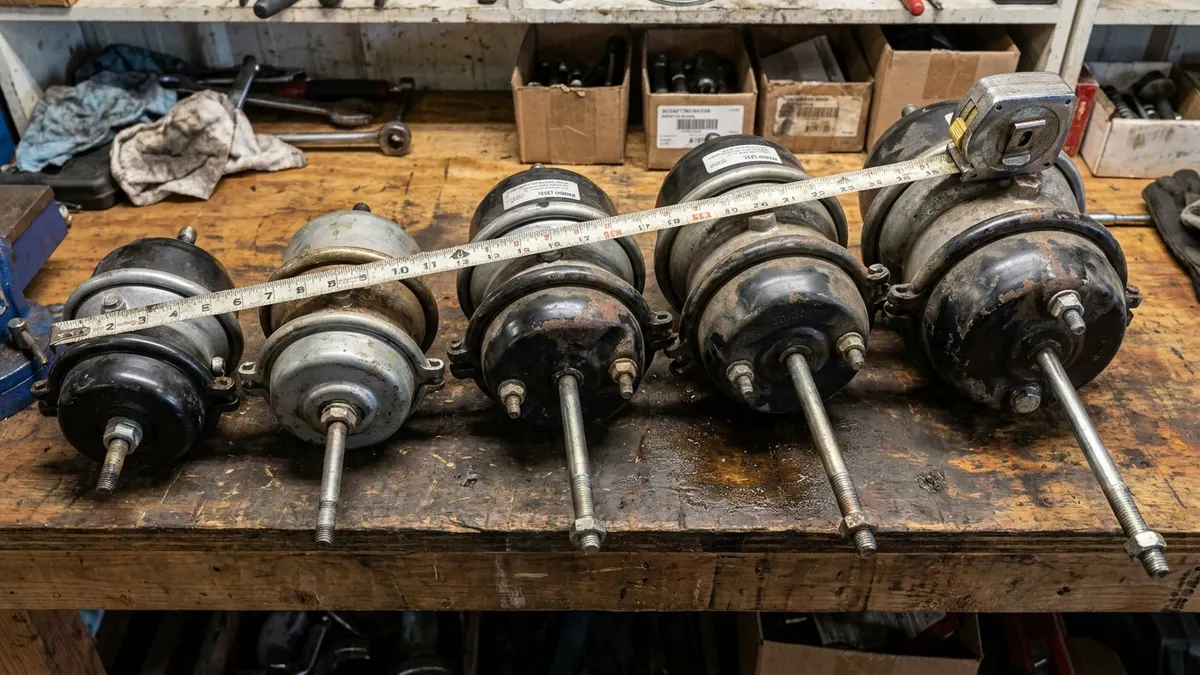
A replacement air brake chamber is one of the cheaper repairs on a heavy truck. A service-only chamber usually costs about $30 to $80 for the part, and a spring brake (piggyback) chamber about $60 to $180, depending on size, stroke, brand and mounting style. Add roughly half an hour to an hour and a half of labor per wheel end, and most shops land somewhere between $150 and $450 per corner installed. Prices vary by region, brand and date, so treat these as planning ranges and confirm with your supplier.
Typical brake chamber replacement cost
The figures below assume a standard on-highway tractor or trailer wheel end, a shop rate in the common $110 to $190 per hour band, and a chamber that comes off without a fight.
| Job | Typical part cost | Typical labor | Installed, per wheel end |
|---|---|---|---|
| Service chamber only (Type 20, 24, 30) - steer axle or trailer service side | $30 to $80 | 0.5 to 1.0 hr | $100 to $270 |
| Spring brake chamber (24/24, 30/30) - drive or trailer axle | $60 to $180 | 0.75 to 1.5 hr | $150 to $450 |
| Diaphragm / service kit only (serviceable clamp-type service side) | $10 to $35 | 0.5 to 1.0 hr | $70 to $220 |
| Chamber plus clevis, pushrod, hardware or a seized bracket | add $20 to $70 | add 0.3 to 1.0 hr | $200 to $550 |
| Mobile or roadside replacement | same part | call-out fee applies | $300 to $700 |
Fleets buying by the case pay near the bottom of the part ranges. A one-off over-the-counter purchase at a dealer counter, especially for a premium OE brand such as Bendix, Wabco/ZF, Knorr-Bremse, Haldex, Meritor or MGM, sits at the top. If you want the background on what the part actually does inside, see our overview of the air brake chamber.
Service chamber vs. spring brake chamber: why the price gap
A service chamber is a simple pneumatic actuator: air from the foot valve or relay valve pushes a diaphragm and pushrod, which rotates the slack adjuster. Not much to it, so it is cheap.
A spring brake chamber is two actuators bolted back to back. The service half works the same way, and the piggyback half holds a heavy coil spring compressed by air pressure. When you park or lose supply air, that pressure bleeds off and the spring applies the brake mechanically, generally somewhere in the 20 to 45 psi range as the tank drains. That power spring, its housing and the sealed construction are what roughly double or triple the price over a plain service can.
A caged or sealed spring chamber is a loaded spring. Cage it with the release tool before unbolting it, never torch or hacksaw a housing apart, and chock the wheels before you take any brake off the vehicle.
What the labor actually covers
On a clean truck the job is short: drain and secure the system, cage the spring brake, disconnect the two air lines, pull the clevis pin, remove two mounting nuts, install the new chamber, set pushrod length and adjust or verify slack adjuster stroke, then charge the system to a normal fully charged reading of about 120 psi and leak-check the fittings. That is the half-hour to one-hour version, and it is well within reach for a competent tech with the right tools - our brake chamber replacement walkthrough covers the sequence step by step.
Things that push labor time up
- Rusted mounting studs or a seized clevis pin that has to be cut and replaced.
- Corroded air line fittings that break off and need new tubing or a new nut and sleeve.
- A spring brake that will not cage because the release bolt is rusted or the caging port is packed with road salt.
- Tight packaging behind a lift axle, a fuel tank or suspension components.
- A chamber that failed because of something upstream, such as a leaking relay valve or contaminated air, which then needs its own diagnosis.
One side or both?
Replace in axle pairs whenever the budget allows. Both chambers on an axle are the same age, have seen the same water and road salt, and a new can on one side with a tired diaphragm on the other can leave you chasing an uneven pull. Doing the pair at once also spreads the setup and adjustment time across two corners instead of one, so the second side rarely costs a full second labor charge.
Buying the wrong chamber is the expensive mistake
The part is cheap. The wasted trip is not. Before ordering, confirm all of the following:
- Type number (16, 20, 24, 30 and so on), which is the effective diaphragm area and sets output force.
- Stroke. Standard and long-stroke chambers can look nearly identical but have different adjustment limits and are not interchangeable. The standard vs. long-stroke comparison explains how to tell them apart and why mixing them fails a brake inspection.
- Service or spring brake, and for spring brakes whether you need a complete unit or only the piggyback half.
- Port position and thread, mounting stud spacing and stud length, and pushrod length or clevis style.
- Non-pressure housing orientation so the lines route the same way they did originally.
Cross-reference the number stamped on the old housing against the OE listing for your axle. If the tag is unreadable, measure the can diameter and stroke rather than guessing.
Diaphragm kit vs. complete chamber
On older serviceable clamp-type service chambers, a diaphragm kit is a legitimate repair and saves real money. On modern sealed spring brake units, there is no rebuild path - you buy the chamber. Given how little a new can costs relative to the labor of getting to it, most shops fit a complete unit anyway so the diaphragm, return spring and housing are all fresh.
Ways to keep the bill honest
- Buy the pair up front rather than a single can, then fit both while the wheel end is open.
- Fix the cause. Chambers that keep failing usually point to water and oil carryover from a saturated air dryer, or to a chamber that has been pushing past its stroke limit because the slack adjuster is out of adjustment.
- Replace clevis pins, cotter pins and any weeping fittings while you are in there. They cost pennies and a second visit does not.
- Schedule it with a routine service instead of paying a roadside call-out.
Budget for the whole wheel end, not just the can. A chamber that failed after years of hard duty often shares its axle with worn bushings, a stiff camshaft or a slack adjuster overdue for grease, and those are the items that decide whether the new chamber lasts.
Source (VADEN Original): Brake Chamber Types and Sizes: Choosing T, DD and Spring Chambers
Need the part, not just the answer?
OE-grade air brake compressors and repair kits, manufactured and tested to commercial-vehicle standards.
Shop VADEN partsPublished by VADEN Original. Product links point to the manufacturer’s official catalogue. Specifications are general — always confirm figures against your vehicle’s service manual.