 airbrakecompressor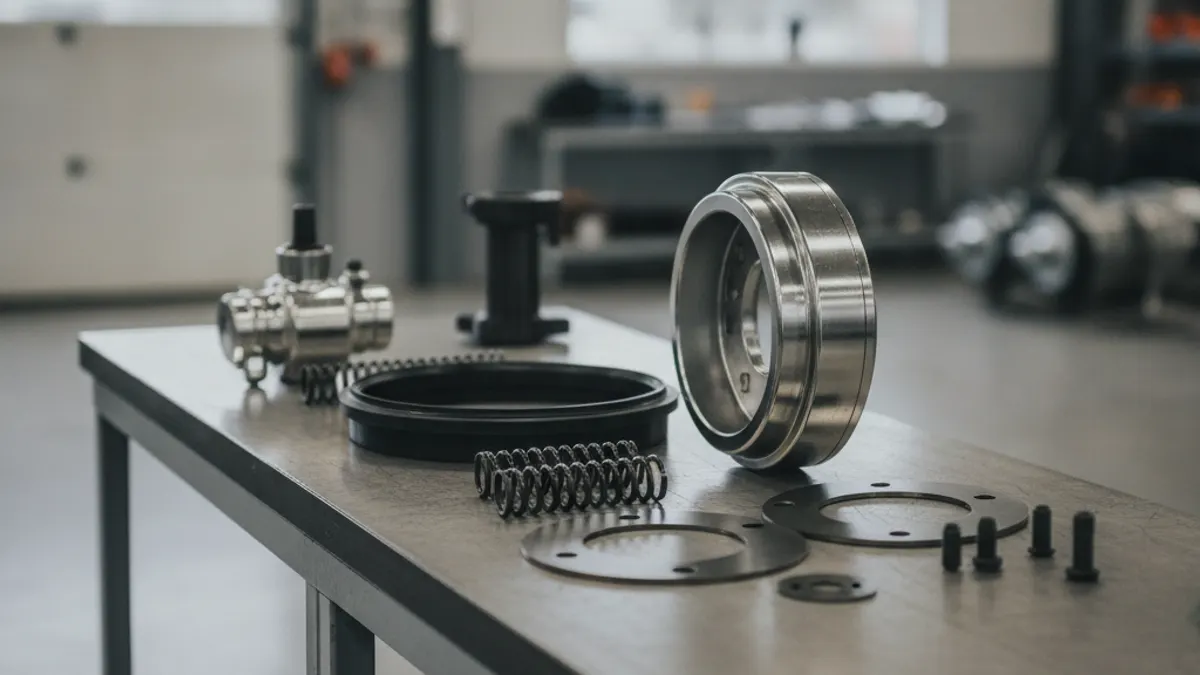
A 30/30 brake chamber is a piggyback spring brake actuator. The first number is the service side — a Type 30, meaning roughly 30 square inches of effective diaphragm area. The second number is the spring brake side, also nominally 30 square inches. One housing does two jobs: the front half applies the brakes when the driver presses the treadle valve, and the rear half holds a coiled power spring that applies the parking and emergency brakes whenever air pressure drops. It is the most common spring brake size on tractor drive axles and on the majority of highway trailers.
What the two numbers actually mean
Brake chamber "types" are sized by effective diaphragm area in square inches — Type 12, 16, 20, 24, 30, 36. That area, multiplied by the air pressure acting on it, gives the theoretical push rod force. A Type 30 at 100 psi produces roughly 3,000 lbf at the rod before linkage losses, and the slack adjuster converts that into torque at the S-cam. If you are still working out which size an axle needs, start with brake chamber sizes explained.
On a combination unit the two figures are written service/spring:
- 30/30 — Type 30 service chamber plus Type 30 spring brake.
- 24/30 — Type 24 service chamber plus Type 30 spring brake. Same parking force, less service force. Used where axle rating or brake balance calls for a smaller service side.
- 36/36 — heavier applications, some vocational and off-highway axles.
The spring section does not scale with air pressure. Its output is fixed by the power spring itself, generally in the region of 1,800 to 2,300 lbf of rod force depending on manufacturer and spring design. Treat that as an indicative range and check the maker's published data for the exact part. The spring is held compressed by air; bleed the air off and it applies.
How the spring side behaves
A commercial vehicle air brake system is pneumatic, not hydraulic — everything is done with compressed air. The governor normally cuts the compressor out somewhere around 120 to 135 psi and cuts it back in around 100 to 110 psi, so a healthy system sits near 120 psi when fully charged. At that pressure, air in the spring chamber holds the power spring compressed and the parking brake released.
As pressure in the park circuit falls, the spring begins to overcome the air behind it. In practice, spring brakes typically start to drag somewhere around 40 to 45 psi and are fully applied by roughly 20 to 30 psi. That is exactly why the low-air warning sounds at about 60 psi: it gives the driver time to stop under control before the parking brakes set themselves. The full sequence is covered in how spring brakes and parking brakes work.
30/30 versus a plain Type 30
| Feature | Type 30 (service only) | 30/30 spring brake |
|---|---|---|
| Sections | One — diaphragm and push rod | Two — service section plus bolted-on spring housing |
| Air ports | One service port | Service port and separate park (emergency) port |
| Parking brake | None | Yes, mechanical via power spring |
| Typical location | Steer axle, other non-parking axles | Drive axles, trailer axles, tag or lift axles that park |
| Overall length | Shorter | Noticeably longer — check frame and suspension clearance |
| Release stud | Not applicable | Caging bolt supplied with the unit |
The two are not interchangeable without also changing the plumbing. A Type 30 has no park port, so fitting one where a 30/30 lived leaves that axle with no parking or emergency brake — an immediate out-of-service defect.
Stroke ratings: standard, long and extended
Stroke is how far the push rod can travel before the diaphragm runs out of usable movement. Once the rod passes its rated stroke, braking force falls away sharply even though the pedal still feels normal to the driver, which is why stroke is measured at inspection rather than judged by feel.
| Chamber | Rated (maximum) stroke | Readjustment limit |
|---|---|---|
| Type 24, standard stroke | 2-1/4 in | 1-3/4 in |
| Type 24, long stroke | 2-1/2 in | 2 in |
| Type 30, standard stroke | 2-1/2 in | 2 in |
| Type 30, long stroke | 3 in | 2-1/2 in |
Always confirm against the current roadside inspection table or the vehicle manufacturer's service data before condemning a brake. Long-stroke units give more reserve travel as linings wear, and many fleets standardise on them. Extended-stroke variants exist for specific chassis, but they are not a free upgrade — mounting bracket, push rod length and clearance all have to suit.
Identifying what is already on the vehicle
- Read the housing. Type and stroke are usually stamped or tagged on the service side clamp ring or on the body.
- Look at the air inlet ports. On many brands, square or trapezoidal port bosses indicate a long-stroke chamber while round ports indicate standard stroke. Treat this as a strong hint, not proof.
- Check the clamp band and overall shape. Long-stroke units are slightly deeper than their standard-stroke equivalents.
- Measure actual stroke with the system fully charged and a 90 to 100 psi application, marking the rod at rest and again at full apply.
Ordering the right 30/30
Before you buy, pin down:
- Stroke — standard or long. Mixing strokes across an axle wrecks brake balance.
- Push rod length and thread — chambers ship in several rod lengths, and the clevis has to land in the correct hole of the slack adjuster.
- Mounting studs — stud size, spacing and length must match the bracket.
- Port orientation (clocking) — the spring housing can usually be rotated to route lines cleanly; some units arrive pre-clocked for a given axle.
- Sealed or serviceable — sealed units resist water and salt intrusion better, serviceable ones allow diaphragm replacement.
- Left, right or universal — many are universal, but not all.
Replace spring brakes in axle pairs. A new chamber on one side and a tired one on the other is a classic cause of pull under braking. If you are cross-referencing OE numbers, VADEN's air brake system components catalogue lists chamber and brake system parts against the common OE references used by European and North American builders.
Never cut, torch or unbolt a spring brake housing. The power spring stores enough energy to kill. Cage it with the supplied release stud before removal, and dispose of used units according to the manufacturer's instructions.
The caging procedure itself is set out in how to cage a brake chamber. After installation, set the slack adjuster, measure stroke on both sides of the axle, and run a full leak-down and applied-pressure test before the vehicle moves.
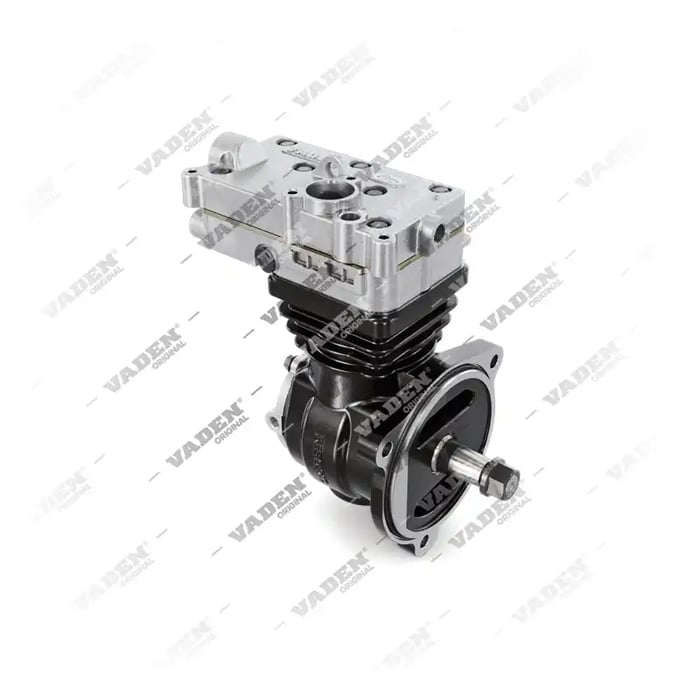
Need the part, not just the answer?
OE-grade air brake compressors and repair kits, manufactured and tested to commercial-vehicle standards.
Shop VADEN partsPublished by VADEN Original. Product links point to the manufacturer’s official catalogue. Specifications are general — always confirm figures against your vehicle’s service manual.