 airbrakecompressor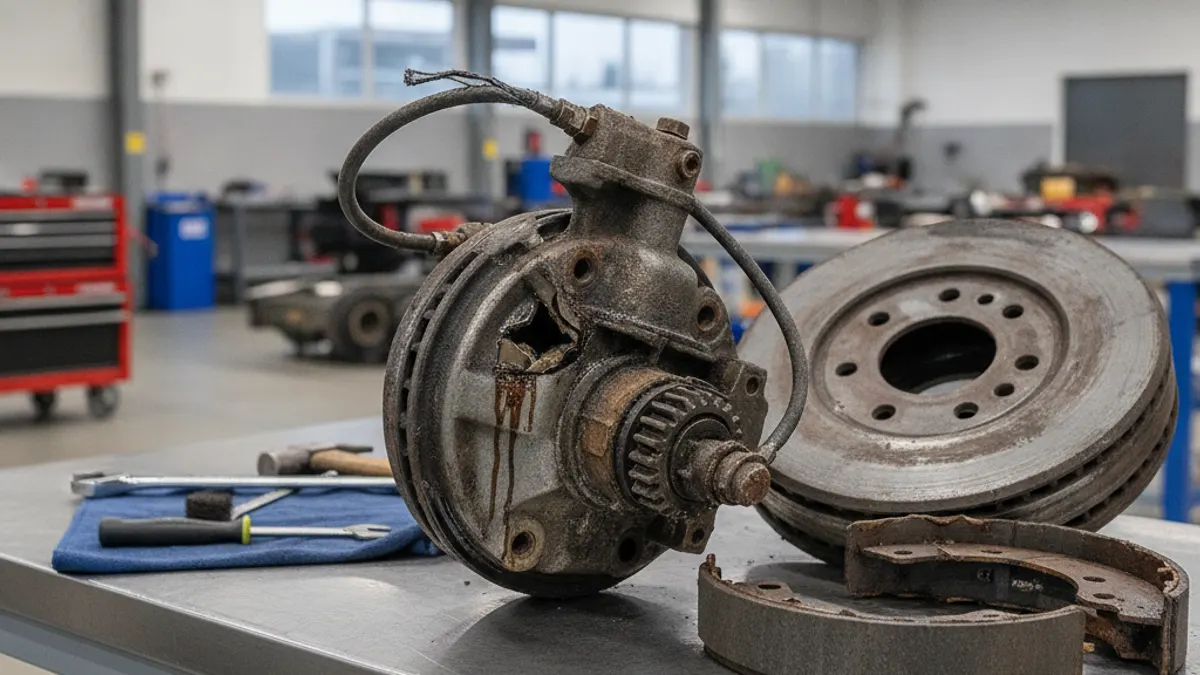
If your trailer brakes are not working, the cause is almost always one of five things: the red trailer supply valve is not charging the trailer, the gladhand couplings or seals are leaking or crossed, a service or supply line is kinked, crushed or shut off, the trailer relay valve is not responding to the control signal, or the trailer has no electrical power so the ABS is dead. Work through them in that order and you will usually find the fault in minutes.
Keep in mind what "trailer brakes" means on a heavy vehicle. This is a pneumatic system, not a hydraulic one: there is no fluid to bleed and no master cylinder to top up. The blue service line carries a control signal from the tractor's foot valve back to the trailer relay valve. The red supply (emergency) line carries reservoir air that charges the trailer tanks and holds the spring brakes released. Lose supply air and the trailer locks up; lose the service signal and the trailer simply does nothing while the tractor brakes alone. Which of those two symptoms you have tells you which line to chase.
First: which failure do you actually have?
| What you observe | Most likely area |
|---|---|
| Red trailer supply knob pops back out | Large leak on the trailer, open gladhand, ruptured supply hose, tractor protection valve doing its job |
| Trailer never charges, spring brakes stay applied | Blocked or kinked supply line, closed shut-off cock, plugged trailer check valve |
| Tractor brakes normally, trailer does nothing | Service line blocked or crossed, relay valve not actuating, gladhands reversed |
| Trailer brakes weak or very late | Out-of-adjustment slack adjusters, restricted service line, sticky relay valve, worn linings |
| Only one axle or one side brakes | Individual chamber, hose, quick-release valve, or seized camshaft |
| Trailer brakes drag or will not release | Plugged relay valve exhaust, service line holding pressure, iced lines, foot valve not returning |
Step 1 — Build full system pressure and set the trailer
Start the engine and let the system charge. A healthy air system typically cuts out somewhere around 120–135 psi and cuts back in around 100–110 psi, and a fully charged truck usually sits near 120 psi. If pressure falls to roughly 60 psi the low-air warning light and buzzer come on, and a little below that the supply valve pops out on its own. If you cannot build and hold pressure at all, that is a tractor problem, not a trailer problem, and it has to be fixed first.
With pressure up, push in the red trailer supply knob. It must stay in. If it pops back out, the trailer is dumping air — a gladhand hanging open, a burst hose, a blown chamber diaphragm, or a valve stuck open. Walk the trailer with the engine off and listen; air leaks are loud, and finding one by ear beats guessing.
Step 2 — Inspect the gladhands and air lines
Hardened or missing gladhand seals are the most common roadside cause of poor or absent trailer braking. Pull both couplers apart and look at the rubber: it should be pliable and square, not cracked, flattened or torn. Replace them in pairs and keep spares in the truck.
Then confirm the lines are not crossed: red to red (emergency), blue to blue (service). Crossed lines can leave a trailer that charges but will not brake on the pedal, or one that applies the moment it is coupled. Follow both hoses their full length and look for kinks where they hang off the pogo stick, chafed spots where a hose rubs the frame, crushed sections behind the fifth wheel, and shut-off cocks left closed at the nose of the trailer. On the coupling side, the gladhands and air lines take the most abuse of anything in the circuit, so they earn a hard look every trip.
Step 3 — Verify the control signal reaches the trailer
Have a helper hold the brake pedal down while you watch the trailer brake chambers. The pushrods should stroke out promptly and return cleanly when the pedal is released. No movement anywhere on the trailer means the control signal is not arriving, or the relay valve is not opening.
Test the two paths separately. Apply the trailer hand valve on its own: if the trailer brakes on the hand valve but not on the pedal, the fault is upstream in the tractor foot valve circuit. If neither works, the problem is at the trailer end. Crack the service line open at the trailer nose with the pedal applied — if no air comes out, the blockage lies between the foot valve and that point; if air is strong there but the chambers stay put, the relay valve or the delivery plumbing behind it is at fault.
Step 4 — Test the relay valve
The relay valve is the trailer's local air amplifier: it reads the small control signal from the blue line and feeds a matching pressure from the trailer reservoir straight into the chambers. When it fails, everything downstream goes dead even though the rest of the system looks healthy.
- No output: blocked control port, torn diaphragm, or a valve packed with rust and oil carried over from a saturated air dryer.
- Slow apply or release: plugged exhaust port, contaminated internals, or a crushed delivery hose.
- Brakes drag: the exhaust is not venting — a common winter failure when moisture freezes in the port.
Relay valves are wear items. If one is old, corroded or has been fed wet air for years, replace it rather than clean it. The same goes for the tractor-side control gear: fitting an OE-grade trailer control valve in place of a worn one restores a crisp, repeatable signal on a rig that has gone vague at the pedal.
Step 5 — Check trailer power and ABS
Plug the seven-way in and switch the ignition on. The trailer ABS lamp on the side of the trailer should light briefly, then go out. If it never lights at all, the trailer most likely has no ABS power — check the seven-way pins for corrosion, spread terminals and green crust, then check the trailer's inline fuse or breaker. If it lights and stays on, ABS is faulted and the modulators are inactive, but base braking still works; the trailer will brake, just without wheel-speed control.
Step 6 — Foundation brakes and adjustment
If air arrives and the chambers stroke but the trailer still barely slows the combination, the problem is mechanical. Measure pushrod stroke at every chamber with the brakes applied; long stroke means the automatic slack adjusters are not adjusting or the foundation hardware is worn. Look for seized camshafts and bushings, glazed or oil-contaminated linings, cracked drums and broken return springs. One dragging or one dead wheel end throws the whole trailer out of balance and shows up as pulling, chatter, or heat on one side.
When to stop and call for service
A trailer that will not brake, or will not release, is out of service. Do not limp it in. A tractor alone cannot safely stop a loaded combination, and driving with the trailer spring brakes dragging will cook the drums and linings within a few miles.
Repair it where it sits or have it towed. Once the trailer brakes again, deal with why it failed: wet tanks, a tired air dryer, brittle hoses or a compressor passing oil into the system will take out valves again within a season. Stroke limits, torque figures and chamber sizes vary by axle and by builder, so follow the vehicle manufacturer's current service manual for exact specifications. For the wider picture on this circuit, see the guide to the trailer brake system and its warning messages.
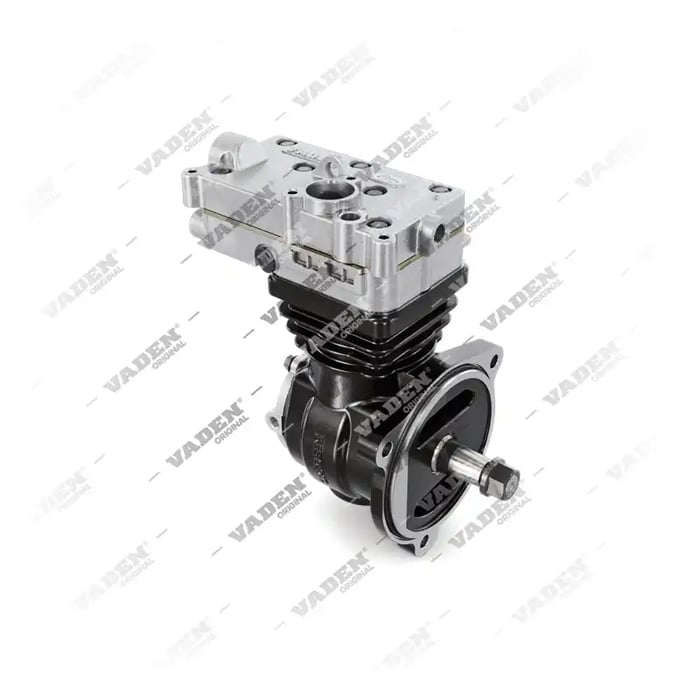
Need the part, not just the answer?
OE-grade air brake compressors and repair kits, manufactured and tested to commercial-vehicle standards.
Shop VADEN partsPublished by VADEN Original. Product links point to the manufacturer’s official catalogue. Specifications are general — always confirm figures against your vehicle’s service manual.