 airbrakecompressor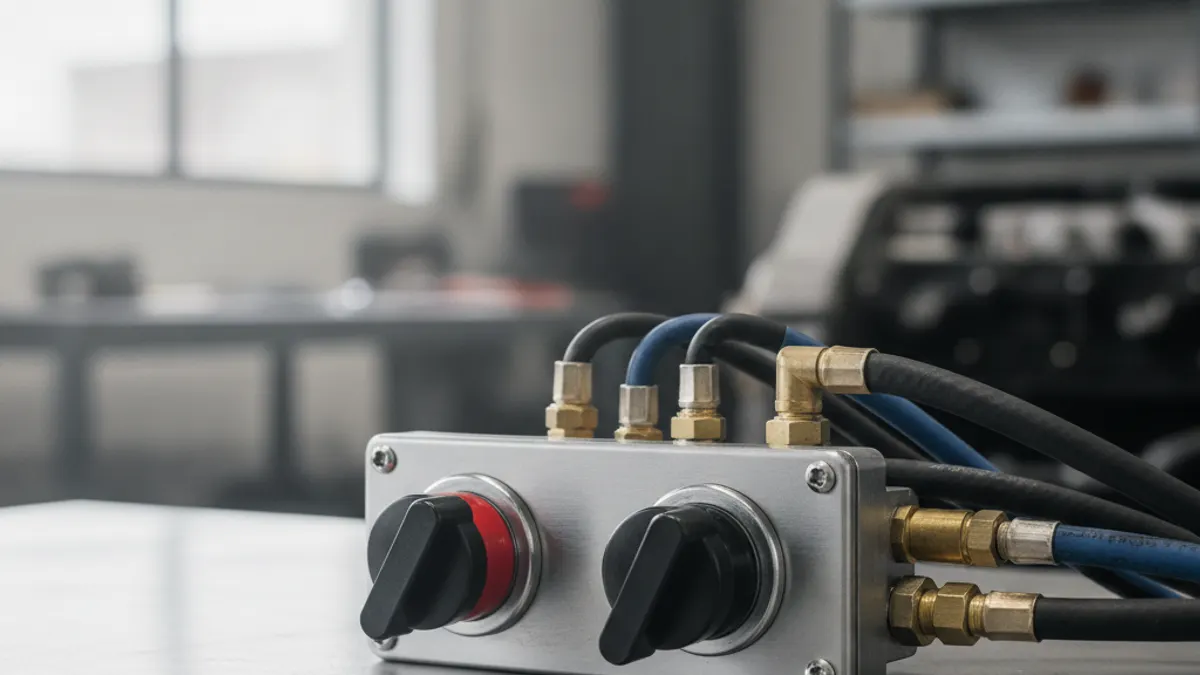
The dash air brake valves are the two push-pull knobs that control the spring brakes on a truck and trailer. The yellow, diamond-shaped knob is the parking brake control valve - it sets and releases the spring brakes on the tractor, and on most combinations the trailer as well. The red, eight-sided (octagonal) knob is the trailer air supply valve - it charges the trailer's supply line and opens the tractor protection valve, or shuts it off and vents the trailer's supply. Pushed in means air is applied and the spring brakes are held released; pulled out means air is exhausted and the brakes are applied mechanically by the power spring. Both are purely pneumatic controls - there is no hydraulic circuit anywhere in this system.
The shapes and colours are not styling choices. North American air brake standards require the parking control to be yellow and diamond-shaped and the trailer supply to be red and octagonal, so a driver can identify them by feel in the dark, in an unfamiliar truck, in a hurry. Cab layouts differ between builders; these two controls do not.
The two knobs at a glance
| Yellow diamond | Red octagon | |
|---|---|---|
| Name | Parking brake control valve | Trailer air supply valve |
| Controls | Tractor spring (parking) brakes | Trailer supply line and tractor protection valve |
| Pushed in | Air holds the springs off - vehicle free to roll | Trailer charging, trailer spring brakes released |
| Pulled out | Air exhausted - springs apply, vehicle parked | Supply line vented, trailer springs apply, tractor protection closes |
| Bobtail position | In to drive, out to park | Stays out - nothing to supply |
| Automatic pop-out | Roughly 20-45 psi | Roughly 20-45 psi |
Yellow diamond: the parking brake control valve
Pull the yellow knob and the valve vents the air that has been compressing the large power spring inside each spring brake chamber. With nothing holding it back, the spring pushes the pushrod out and the brakes clamp - mechanically, with no air required to stay applied. That is why a parked truck cannot roll away after it bleeds down overnight. For how the chamber itself does that job, see spring brakes and parking brakes.
Push the knob back in and the valve routes reservoir air to the spring side of the chamber, compressing the spring and releasing the brake. The knob will not latch until there is enough pressure to actually compress the springs, which on most systems is somewhere above the 60 psi low-air warning point. If it will not stay in on a cold start, you usually have not built enough air yet - watch the gauges rather than fighting the knob.
On most tractors the yellow control is interlocked with the red one: pull yellow and the red trailer supply pops out with it, parking the whole combination. Pull red on its own and only the trailer parks, which is what you want when testing tractor protection or setting a loaded trailer down on its own brakes.
Red octagon: the trailer air supply valve
The red knob is not really a brake control - it is a supply control. Pushed in, it feeds reservoir air through the emergency (supply) gladhand to the trailer, charges the trailer reservoirs and releases the trailer spring brakes. Pulled out, it exhausts that supply line, which sets the trailer spring brakes and closes the tractor protection valve so the tractor keeps its own air if the trailer breaks away or a line lets go.
That break-away function is the whole point of the design. If a trailer separates and tears the supply line off, pressure in that line collapses, the trailer's relay emergency valve applies the trailer springs, and the tractor protection valve seals the tractor's supply so you still have air to get stopped.
Correct order of operation
- Coupling and pulling out: connect the gladhands, build to a fully charged system (typically around 120 psi), push the red knob in and let the trailer charge, then push the yellow knob in and roll.
- Parking a combination: stop, pull the yellow knob (red will normally follow), then chock the wheels or let the trailer brakes hold before dropping the landing gear.
- Dropping a trailer: pull red to park the trailer while the tractor stays charged, then uncouple the lines.
- Bobtail: red stays out, yellow in to drive. Never run with red pushed in and no trailer connected - you are venting the system out of an open gladhand.
Why the knobs pop out on their own
Both valves are designed to release automatically as system pressure falls, generally somewhere in the 20-45 psi band. That is a safety feature, not a fault in the valve. Pressure only gets that low after the low-air warning buzzer and light have already come on at around 60 psi, so a pop-out means an earlier warning was missed or ignored.
When a knob pops out on the road, treat it as a system pressure failure and work through it in this order:
- Audible leaks - gladhand seals, supply and service lines, chamber diaphragms, fittings at the relay valve.
- Governor cut-in and cut-out. Cut-out normally lands around 120-135 psi and cut-in around 100-110 psi; a governor stuck in unload will never recharge the system.
- Compressor output - a unit that will not build back up after a heavy application points to the compressor or its unloader, not the dash valve.
- Check valves and the air dryer purge valve, either of which can bleed a reservoir down when they leak back.
Pushing the knob back in without finding the leak simply re-arms a brake system that is already losing the air it needs. Find the loss first.
Faults in the dash valves themselves
Push-pull control valves do wear out. The usual complaints are a knob that will not stay in (worn internal o-rings or a seat that will not hold), a constant hiss at the dash with the knob pushed in (exhaust port leaking past a seal), a knob that is stiff or gritty from moisture and corrosion, or one that releases at normal operating pressure because the latch mechanism is worn. Moisture is the common thread - a dryer that is not purging sends water and oil straight up the control line, so fix the source before replacing the valve. Replacement assemblies are available across a full range of OE-grade park release and emergency valves once a bench test confirms the valve is at fault.
Before condemning anything, confirm the fault is in the valve and not downstream: cap the delivery port and see whether the leak follows the valve or the line. Verify dash valve operation as part of the seven-step air brake check - the applied leakage test, the low-air warning test and the pop-out test are all run from these two knobs, and an inspector will do exactly the same.
Pressures given here are typical ranges for North American highway equipment. Always confirm governor settings, pop-out pressures and torque values against the vehicle manufacturer's current service manual for the chassis in front of you.
Need the part, not just the answer?
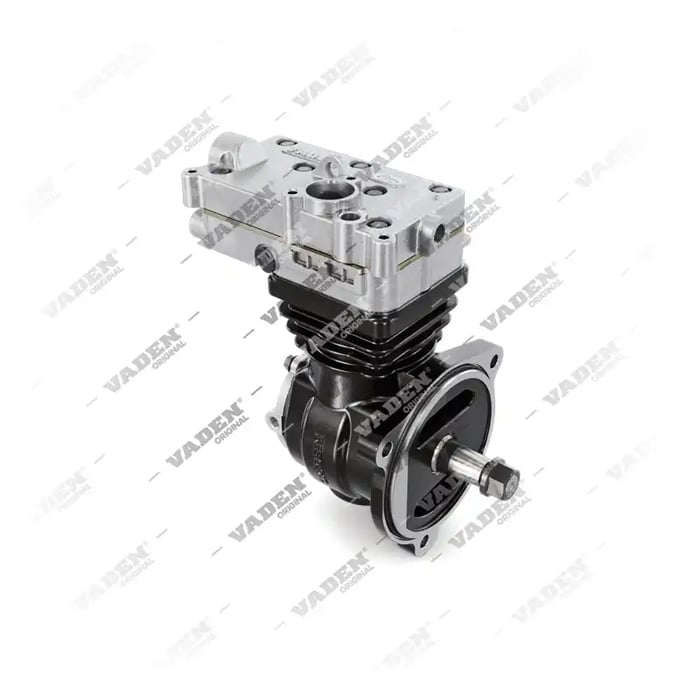
OE-grade air brake compressors and repair kits, manufactured and tested to commercial-vehicle standards.
Shop VADEN partsPublished by VADEN Original. Product links point to the manufacturer’s official catalogue. Specifications are general — always confirm figures against your vehicle’s service manual.