 airbrakecompressor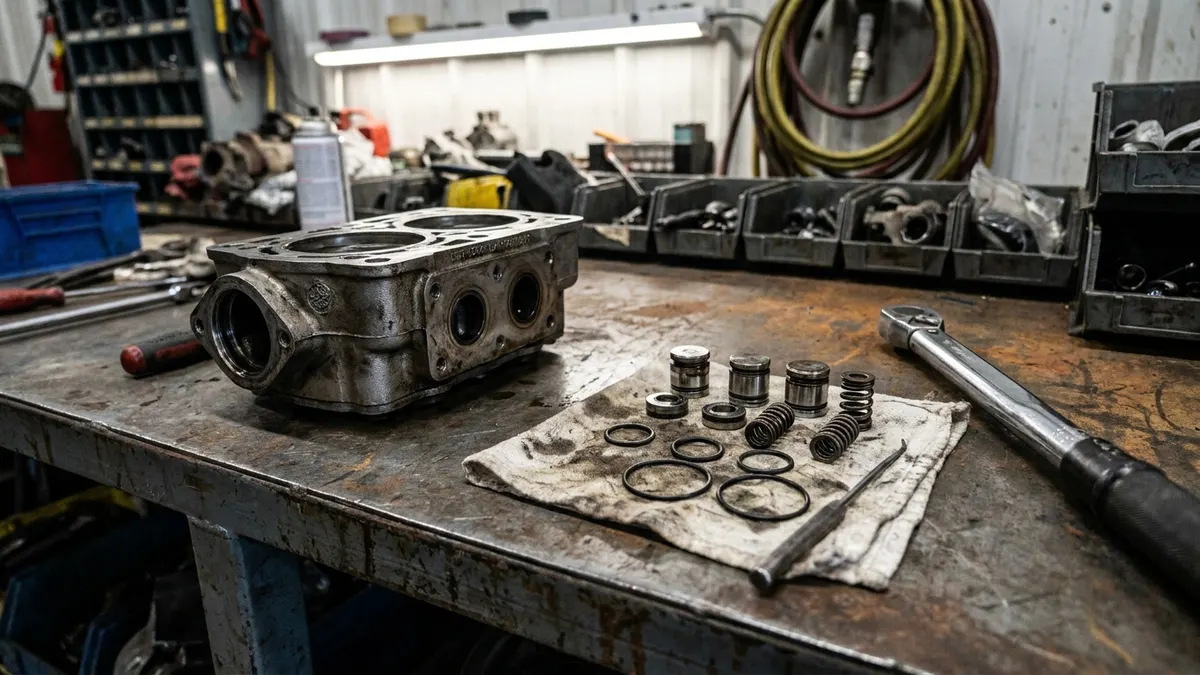
The valve plate is the thin steel plate sandwiched between the cylinder head and the compressor block. It carries the inlet (suction) valves and the discharge valves — usually flat reed or disc valves — that force the pump to move air one way only: in from the intake on the down-stroke, out to the discharge line on the up-stroke. When those valves seal cleanly the compressor builds pressure fast and unloads clean. When they leak, blow back, or carbon over, you get slow build, constant cycling, and oil downstream.
On most truck compressors the plate is a single machined assembly. The inlet valves face the block; the discharge valves face the head. Each valve is a spring-steel leaf backed by a stop that limits how far it lifts. A few thousandths of lift is all it takes — which is exactly why a speck of carbon or a hairline crack ruins the seal.
How the valve plate works
Think of each cylinder as a one-way pump with two check valves. On the intake stroke the piston drops, cylinder pressure falls, the inlet reed lifts off its seat, and air is drawn in through the intake filter. On the compression stroke the piston rises, the inlet reed snaps shut, cylinder pressure climbs above discharge-line pressure, the discharge reed lifts, and compressed air is pushed toward the wet tank through the discharge line. Once the governor reaches cut-out (roughly 120–135 psi) the unloader holds the inlet valves open so the compressor free-wheels and stops pumping until cut-in (around 100–110 psi).
Blow-back: the classic worn-valve symptom
"Blow-back" is discharge air leaking back past the discharge valve into the cylinder on the next intake stroke. Instead of pushing a fresh charge to the tanks, the compressor re-compresses the same air it just leaked back. The result is a pump that turns and turns but barely raises system pressure — the same complaint as a compressor not building pressure. Two quick field checks point at the plate rather than the rest of the system:
- Time the build from cut-in to cut-out with the engine at a steady fast idle. A healthy unit recovers in a couple of minutes; a badly leaking valve plate may never reach cut-out.
- Feel the discharge line for excessive pulsing heat and listen at the intake for air puffing back out of the filter — that reverse puff is a leaking inlet or discharge valve.
Rule out leaks and drain valves first, because a system losing pressure downstream imitates a weak compressor.
Carbon: where slow build really comes from
Every compressor passes a little oil for lubrication, and heat on the discharge side bakes that oil into hard carbon on the valve plate, the discharge port, and the head. Carbon does two bad things. It holds a valve slightly open so it can never fully seat, and it flakes off and travels downstream where it fouls the air dryer and coats lines. If you are also chasing a unit pumping oil, expect the discharge side of the plate to be black and crusted. Carbon buildup is a symptom of high discharge temperature, oil carryover, or a partially blocked discharge line — fix the cause, not just the plate, or the new one carbons up too.
Discharge/inlet valve comparison
| Item | Inlet (suction) valve | Discharge valve |
|---|---|---|
| Opens on | Intake stroke (piston down) | Compression stroke (piston up) |
| Seals against | Intake vacuum pulling air in | Tank pressure pushing air back |
| Held open by | Unloader at governor cut-out | Nothing — pressure-actuated only |
| Typical failure | Cracked reed, weak seat, unloader wear | Carbon fouling, pitting, blow-back |
| Main symptom | Air puffs back out the intake filter | Slow build, constant cycling, hot discharge |
When the plate is scrap
Some plates ship with serviceable valve kits; many are replace-only. The plate is scrap when you find any of the following:
- Pitted or grooved valve seats — once the sealing face is eroded, a new reed will not seal against it.
- Cracked, chipped, or set (flattened) reeds that no longer spring back flat.
- A warped plate that will not seal flat against the block or head, usually from overheating or uneven head torque.
- Heavy carbon that has heat-etched the metal, not just surface deposits you can clean off.
Field-lapping a truck valve plate rarely pays off — the tolerances are tight and the seats are hardened. If the plate is questionable, replace the plate assembly with its full gasket set. When the compressor also shows worn rings or bore, weigh the plate job against a full rebuild or replacement rather than fixing one wear item at a time.
Reassembly notes that prevent comebacks
A leaking valve plate gasket produces the exact same slow-build complaint as a bad valve, so treat the gasket set as mandatory. Clean both mating surfaces to bare, flat metal, fit new inlet-side and discharge-side gaskets in the correct order, and torque the head bolts evenly in a cross pattern to the manufacturer's spec — uneven torque warps the plate you just installed. After the job, run the compressor up and confirm it reaches cut-out in normal time and holds pressure with the engine off. Because exact torque and clearance figures vary by compressor model, always follow the vehicle or compressor maker's current service manual rather than a generic number.
Source (VADEN Original): Truck Air Compressor Overhaul Kit: Head, Valve Plate, Gasket
Need the part, not just the answer?
OE-grade air brake compressors and repair kits, manufactured and tested to commercial-vehicle standards.
Shop VADEN partsPublished by VADEN Original. Product links point to the manufacturer’s official catalogue. Specifications are general — always confirm figures against your vehicle’s service manual.