 airbrakecompressor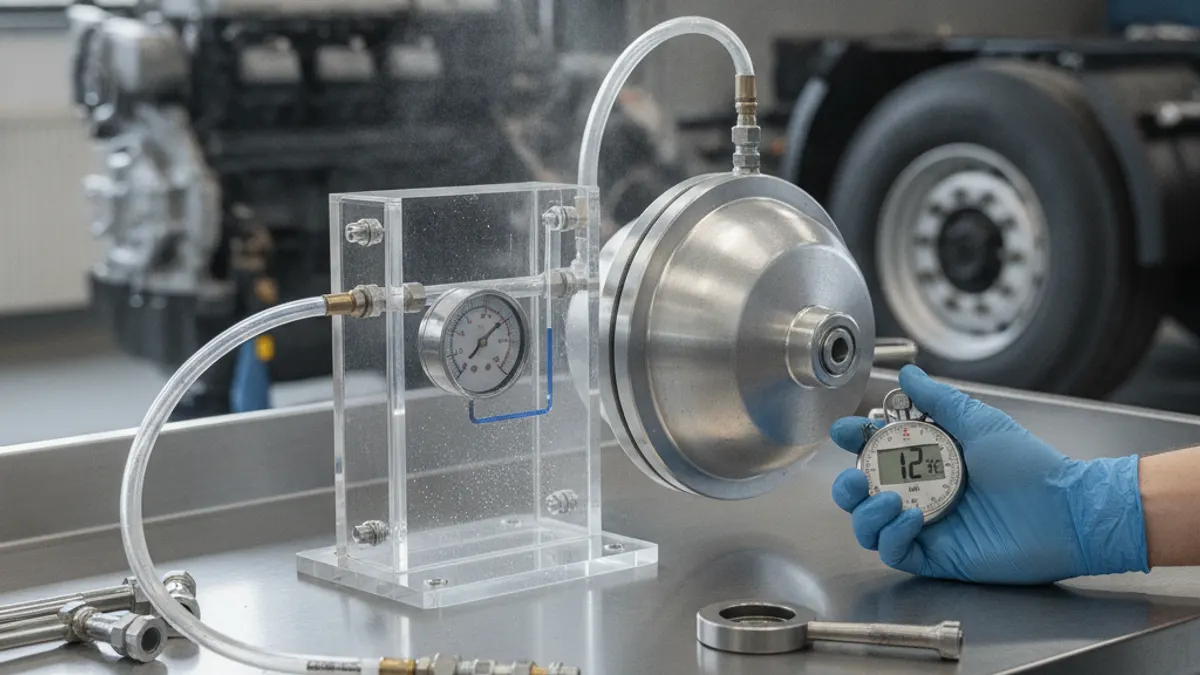
Air brake lag is the delay between pressing the treadle and the shoes actually clamping the drum (or the pads squeezing the rotor on air disc brakes). Some lag is normal and unavoidable: air is compressible and has to travel the length of the vehicle and fill every chamber before the pushrod moves, so a healthy tractor-trailer still takes roughly half a second to start braking. Lag becomes a fault when a relay valve is sluggish or wrongly specified, when signal lines are long, kinked or undersized, when system pressure is low, or when the foundation brakes are out of adjustment. The driver feels a soft, late pedal, the combination pushes or pulls in hard stops, and linings wear unevenly across the axles.
Where the delay actually comes from
A car's hydraulic system responds almost instantly because fluid is incompressible. An air system has to move a volume of air through valves and lines, and each stage adds its own share of the delay. Breaking it down makes it obvious why a long combination reacts later than a straight truck.
| Stage | What happens | What makes it slower |
|---|---|---|
| Pedal / treadle travel | Foot valve opens the delivery port | Worn plunger, dry or gummed foot valve, sticky linkage |
| Signal travel | Control pressure runs from the foot valve to the relay valve | Line length, small inner diameter, kinks, ice, extra fittings and tees |
| Relay valve reaction | Relay senses the signal and opens local reservoir air to the chambers | Crack pressure too high, corroded piston, swollen o-rings, dirt |
| Chamber fill | Air fills the chamber and moves the diaphragm | Oversized chambers, low reservoir pressure, leaks |
| Mechanical take-up | Pushrod, slack adjuster, S-cam and shoe-to-drum clearance | Long stroke, out-of-adjustment slacks, worn cam bushings, thin linings |
US federal timing rules (FMVSS 121) exist precisely because of these delays: chamber pressure has to build to about 60 psi within roughly half a second on a truck or tractor, with separate limits on release timing and on trailer application. Those requirements are the reason relay valves exist at all.
Why relay valves and line length matter
If every rear and trailer chamber had to be filled through a line running all the way from the foot valve, the delay would be unacceptable. The air would still be traveling while the steer axle was already dragging. A relay valve solves this by acting as a remote foot valve: the treadle sends a small control signal down the long line, and the relay opens a short, large-bore path from a nearby reservoir straight into the chambers. The long line only moves a signal, not the working volume.
Two specifications control how quickly this happens.
- Crack pressure is the signal pressure at which the relay starts to deliver, typically in the 2-5 psi range and chosen deliberately for that axle position. Fit a relay with a higher crack pressure than the original and the rear brakes will consistently apply after the front.
- Port size and delivery capacity decide how fast the chambers fill. A relay sized for a tandem drive axle moves far more air per second than a small trailer-spec valve; an undersized replacement builds chamber pressure slowly even though the valve "works."
Line sizing matters for the same reason. Service delivery lines are commonly 3/8 in and supply lines 1/2 in on heavy combinations. Substituting smaller hose, adding unnecessary tees, or leaving a hose kinked behind a crossmember all restrict flow and add tenths of a second. Nylon tubing crushed under a clamp is a classic hidden cause of one axle always lagging. When replacing control valves, matching the original crack pressure and port sizing matters more than price, which is why fitment data is worth checking when sourcing OE-grade relay valves for commercial vehicles rather than fitting whatever bolts on.
Brake balance front to rear
Timing mismatch, not just total lag, is what drivers feel. If the tractor axles apply noticeably before the trailer, the trailer pushes the tractor: the combination feels unstable in hard stops and drive tires and linings wear fast. If the trailer applies first, it gets pulled along and its brakes overheat and fade. Neither condition sets a code. It shows up as uneven lining wear across axles and a truck that "doesn't stop the same every time."
Common causes of front-to-rear imbalance:
- Mixed relay valves with different crack pressures across axles after piecemeal repairs.
- A quick release valve on the steer axle that has hardened and no longer dumps quickly, so the front hangs on during release.
- Wrong brake chamber sizes fitted at one axle, changing both force and fill time.
- Slack adjusters at different stroke lengths, so one axle takes up clearance well before another. See slack adjuster adjustment.
- A load sensing or proportioning valve out of calibration on an air-suspension chassis.
Diagnosing excessive lag
Work through the cheap checks before condemning a valve.
- Confirm supply first. Lag on a system that is not fully charged is a supply problem, not a valve problem. Build to governor cut-out, normally in the 120-135 psi band, and confirm cut-in around 100-110 psi before judging response.
- Listen at each relay. With a helper on the treadle, a healthy relay delivers and exhausts crisply the instant the pedal moves. A soft wheeze or a noticeable pause before delivery points at the valve.
- Gauge at the chamber. Tee a gauge into a chamber line and compare how fast pressure builds axle to axle. Large differences between axles are the finding you want.
- Inspect the run of hose. Follow the control line end to end for chafe, crush points, sharp bends and rusted fittings, and check that gladhand seals are not swollen or iced.
- Measure pushrod stroke. Long stroke adds mechanical delay on top of the pneumatic delay, and excessive stroke is an out-of-service defect.
- Check for moisture. Water and oil carried past a failing air dryer degrade valve seals and freeze in control lines in winter, producing lag that only appears on cold mornings.
Slow to apply and slow to release are different faults. If the brakes drag or hang on after the pedal is released, start at the exhaust side of the relay and quick release valves. See air brakes slow to release.
Reducing lag on a working truck
Most fleets recover response time with basic discipline rather than exotic parts: keep the system fully charged and leak-free, drain tanks and service the air dryer on schedule so valve internals stay clean, keep slack adjusters and foundation brakes in stroke, and replace hardened rubber hose instead of patching it. Above all, replace a relay valve with the same specification as the original rather than the nearest thing on the shelf; see how to replace a relay valve. Rebuild kits are fine on a clean, non-corroded body, but a pitted piston bore means replacement. After any valve change, re-check timing feel on a loaded road test and inspect lining wear at the next service to confirm the axles are sharing the work evenly. Torque, pressure and stroke limits vary by chassis, so the vehicle manufacturer's current service manual is always the governing reference.
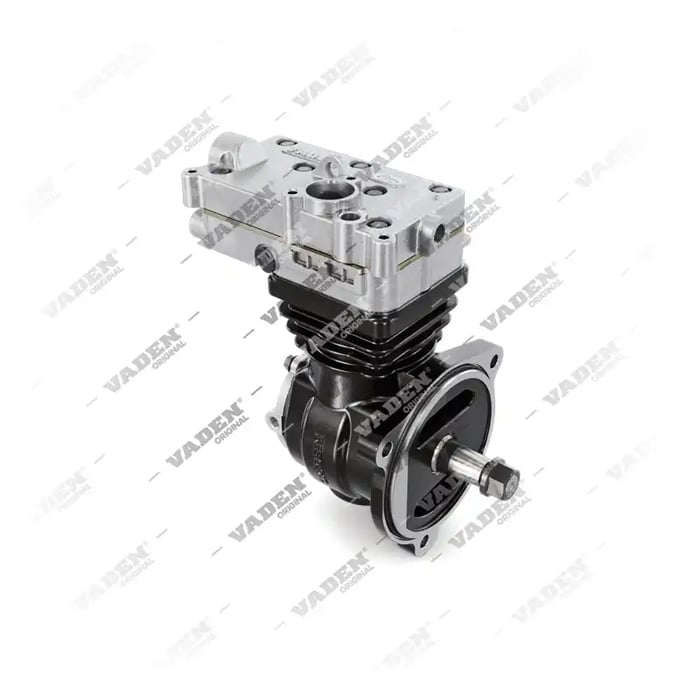
Need the part, not just the answer?
OE-grade air brake compressors and repair kits, manufactured and tested to commercial-vehicle standards.
Shop VADEN partsPublished by VADEN Original. Product links point to the manufacturer’s official catalogue. Specifications are general — always confirm figures against your vehicle’s service manual.