 airbrakecompressor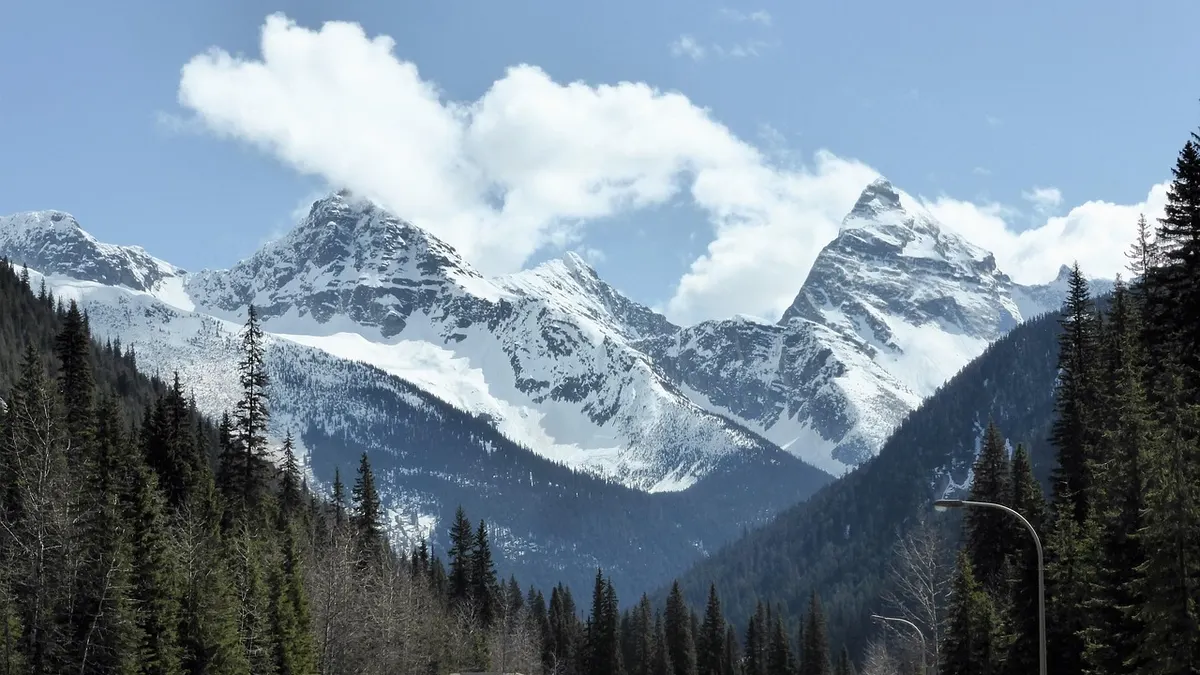
A brake check area is a signed pull-out on level ground near the crest of a long descending grade, where the driver of a commercial vehicle stops to inspect the air brake system before committing to the hill. Where the sign states that trucks must stop, the stop is a legal requirement and is enforceable; where the sign only announces a brake check area, it is advisory but serves the same purpose. Either way it is preventive — which is what separates it from a runaway ramp, an emergency arrestor bed sited partway down the grade for a vehicle that has already lost control of its speed.
Why the pull-out sits at the top of the grade
Two failure modes show up on long descents, and both are far cheaper to catch on level ground than halfway down.
The first is thermal. Foundation brakes convert the vehicle's energy into heat at the drum or rotor. Held on minute after minute, they build heat faster than the wheel end can shed it: linings glaze, drums grow away from the shoes, and braking force falls off while the pedal still feels normal underfoot. That is brake fade, and by the time it is obvious the vehicle is already moving too fast for the remaining stopping capacity.
The second is pneumatic. Air brakes are not hydraulic — every application spends stored air, and the compressor has to replace it. A leak the system easily covers on the flat becomes serious when applications come one after another. On a healthy vehicle the governor cuts out somewhere around 120-135 psi and cuts back in near 100-110 psi, with the system running fully charged in the region of 120 psi. Let supply fall and the low-air warning device activates at roughly 60 psi; keep descending and the spring brakes will apply on their own somewhere in the 20-45 psi band, at full force, wherever the vehicle happens to be.
Related guides: Annual DOT Inspection Requirements: What 49 CFR 396.17 Covers for Air Brakes
Mandatory or advisory: read the sign
There is no single national rule in either the United States or Canada that makes every brake check stop compulsory. The requirement is set at state or provincial level and is carried on the sign at the site. British Columbia, for example, signs mandatory brake checks for commercial vehicles above a posted weight, and enforcement officers are sometimes present. Several mountain states post their own mandatory-stop signage on the approaches to major grades, while other locations are marked purely as an advisory service area. Some sites are combined with chain-up areas, in which case the paved area is shared and vehicles should be parked clear of the through lane and clear of drivers working on tires.
The practical rule for a driver is simple: if the sign says trucks must stop, stopping is not optional; if it does not, stop anyway. The pull-out exists because that particular grade has a history.
What to check while you are stopped
A brake check is a walk-around plus a gauge check, and it takes a few minutes. The point is to confirm the vehicle can hold and repeat applications for the whole descent, not simply that it stopped once on the flat.
| Item | What to confirm | Do not descend if |
|---|---|---|
| Reservoir pressure | Both circuits sit at normal running pressure and the governor has cut out | Pressure is short of normal cut-out, or the compressor never unloads |
| Static leakage | Engine off, brakes released, pressure holds within the allowance for your combination over one minute | The gauge falls faster than allowed, or a leak is audible at a chamber or fitting |
| Applied leakage | Full application held with the engine off; pressure holds steady | Pressure keeps bleeding down under application |
| Pushrod stroke | Travel is well inside the limit for the chamber size fitted | Any wheel is at or past its adjustment limit |
| Wheel-end temperature | Heat is present and reasonably even across axles | One wheel end is markedly hotter, or is cold while its neighbours are hot |
| Wheel ends and tires | No oil film on the inner tire sidewall or backing plate; fasteners tight; inflation correct | A hub seal is wetting the lining, or a wheel fastener is missing |
| Warning devices | Low-air warning and ABS lamps behave normally | An ABS fault lamp stays on and the fault is unknown |
| Load security | Straps, chains, tarps, doors and any cargo shift since the last stop | Anything has moved, loosened or is bearing on a brake line |
Brake adjustment
Out-of-adjustment brakes are the most common reason a combination arrives at the bottom of a hill with less braking than it started with. A chamber that is stroking near its limit still works on the flat, but as drums heat and expand the stroke grows, and that wheel stops carrying its share. Measure or compare pushrod stroke against the limit for the chamber size fitted, and remember that automatic slack adjusters are not meant to be adjusted by hand as routine maintenance — an automatic adjuster that has fallen out of adjustment is telling you it has a fault, not that it needs a turn of the wrench.
Heat at the wheel ends
Do not touch a drum or rotor with a bare hand. Hold the back of the hand near the wheel end, or use an infrared thermometer, and compare across the axle. Even heat is normal after a run. A single wheel that is far hotter than the rest is dragging or carrying too much of the load; one that is cold while the others are hot is contributing nothing. Smoke, a scorched paint smell or bubbled paint on a drum means the descent does not start until that wheel end has been dealt with.
Choose the gear before you release the parking brake
The brake check area is also where the descent gets planned. Select the gear on level ground — a heavy combination will not downshift reliably once it is running away — and decide how the engine brake or retarder will be used. Service brake applications on the way down should be firm and short, allowing the drums to cool between them, rather than a continuous light drag. That technique is covered in more depth in our guide to downhill braking.
How a brake check area differs from a runaway ramp
| Brake check area | Runaway ramp | |
|---|---|---|
| Purpose | Preventive inspection before the descent | Emergency arrest of a vehicle that can no longer control its speed |
| Location | Level ground near the top of the grade | Partway down, usually on the outside of the descent, often more than one |
| Use | Planned, every trip over that grade | Last resort, and the decision must be made early |
| After use | Drive away under your own power | Recovery equipment required; costs are frequently charged to the carrier |
Drivers sometimes hesitate to use an escape ramp because of the recovery bill. That hesitation is exactly what the brake check area is designed to prevent: the ramp is the consequence of skipping the stop.
If the check fails
A defect found in the pull-out is a defect found in the best possible place. The vehicle stays parked. Depending on what turned up, that may mean waiting for hot drums to cool before descending, correcting an adjustment fault, having a leaking chamber or valve replaced, or calling for road service. North American roadside inspection criteria place a vehicle out of service once a defined proportion of its service brakes are defective, so a wheel end found out of adjustment at the top of the grade is also a wheel end that will fail an inspection at the bottom.
Nothing about a marginal air brake system improves once the grade begins. The gradient only adds energy, and the brakes are the only part of the vehicle asked to take it back out.
Need the part, not just the answer?
OE-grade air brake compressors and repair kits, manufactured and tested to commercial-vehicle standards.
Shop VADEN partsPublished by VADEN Original. Product links point to the manufacturer’s official catalogue. Specifications are general — always confirm figures against your vehicle’s service manual.