 airbrakecompressor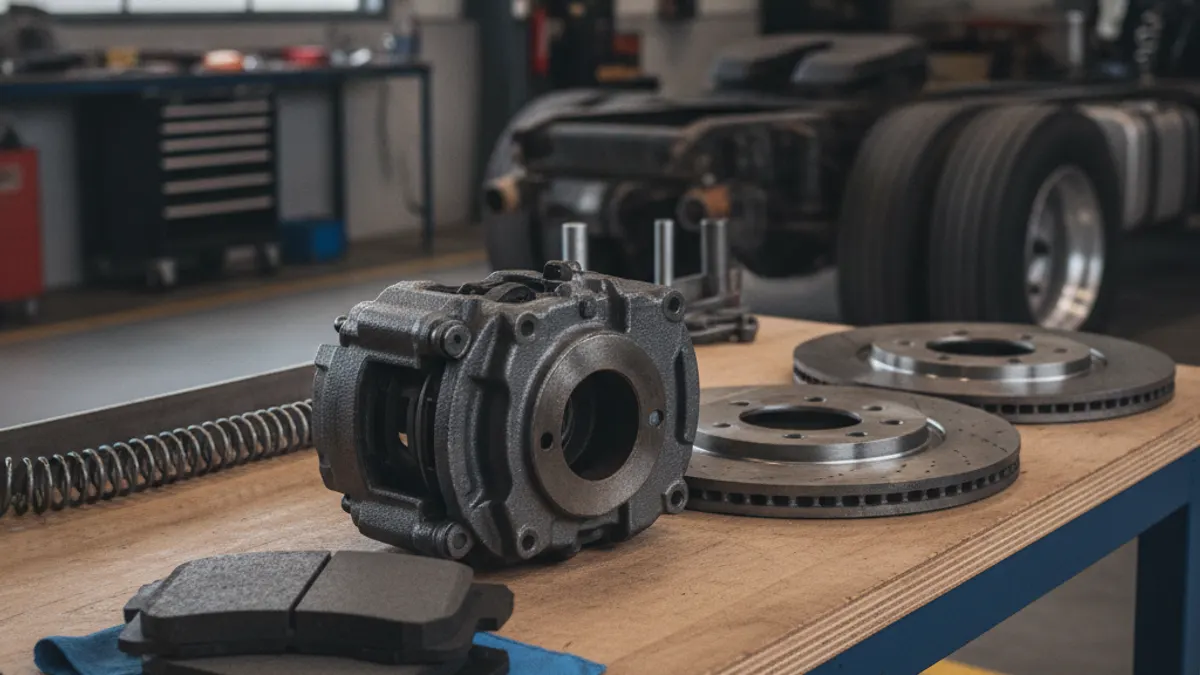
Heavy vehicle brakes in Australia are regulated at two levels. The Australian Design Rules (ADRs) set what a truck, bus or trailer must be built with, and the Heavy Vehicle National Law (HVNL) — administered by the National Heavy Vehicle Regulator (NHVR) — sets the condition it must stay in once it is in service. For day-to-day roadworthiness the document that matters most is the National Heavy Vehicle Inspection Manual (NHVIM), which is what authorised officers and examiners work from at annual inspections and at the roadside.
If you operate a truck, bus or trailer over 4.5 tonnes GVM, all of this applies to you — and under Chain of Responsibility (CoR) duties it also applies to the people who load, schedule and maintain the vehicle, not just the driver.
Who makes the rules
- Australian Design Rules (ADRs) — national construction standards. ADR 35 covers commercial vehicle brake systems; ADR 38 covers trailer brake systems. They set braking performance, park brake capability, warning devices and, in later versions, mandatory antilock braking.
- Heavy Vehicle National Law (HVNL) — the in-service law covering roadworthiness, maintenance, defects and CoR. It applies in NSW, VIC, QLD, SA, TAS and the ACT, with Western Australia and the Northern Territory running their own closely aligned legislation.
- NHVR — the regulator that publishes the NHVIM, issues defect notices through authorised officers, and runs the National Heavy Vehicle Accreditation Scheme (NHVAS).
- VSB 6 — the national code of practice for heavy vehicle modifications. Any change to the brake system (axle swaps, wheelbase changes, converting foundation brakes) must be certified by an Approved Vehicle Examiner under the relevant VSB 6 code.
ABS is mandatory on new heavy vehicles and trailers under the later versions of ADR 35 and ADR 38, phased in around the end of the 2010s for new model types and then for all new builds. Because the cut-in dates depend on vehicle category and build date, check the compliance plate rather than assuming — an older prime mover pulling a new trailer will have mismatched capability.
ADR versus NHVIM: two different tests
An ADR is a type-approval standard the manufacturer certifies against when the vehicle is built. The NHVIM is an in-service standard: it does not ask whether the vehicle still meets its original ADR performance, it asks whether the brakes are within the wear, adjustment, leakage and function limits that make the vehicle roadworthy today.
So a 15-year-old tipper does not need ABS to pass an inspection — but its foundation brakes, air system and park brake must meet current in-service limits.
What an inspector actually checks
| Area | What is checked | Typical reason for failure |
|---|---|---|
| Air supply | Compressor builds and maintains pressure; governor cuts out and cuts in correctly | Slow build-up, compressor pumping oil, governor stuck |
| Leakage | Static and applied air loss over a timed period, engine off | Leaking chambers, fittings, gladhand seals, valves |
| Warning devices | Low-air warning light and audible alarm operate at the specified pressure | Dead buzzer, failed pressure switch, inoperative gauge |
| Reservoirs | Secure mounting, drain valves working, no external corrosion or damage | Water in tanks, seized drain cocks, cracked mounts |
| Foundation brakes | Pushrod stroke within limits, lining thickness above wear limit, drum or disc condition | Out-of-adjustment brakes, lining below limit, cracked drums |
| Chambers and springs | No cracks, corrosion or leaks; spring brakes release and hold | Ruptured diaphragm, damaged spring brake housing |
| Plumbing | Hoses and tubing not chafed, kinked, heat-damaged or temporarily repaired | Rubbing lines, incorrect repairs, missing clips |
| Combination controls | Trailer supply and emergency function, tractor protection, park brake integrity | Trailer does not apply when the supply line is broken |
| Performance | Service and park brake effectiveness, often on a roller brake tester or by decelerometer | Imbalance across an axle, insufficient park brake hold |
Pressure figures to work to
Australia works in kilopascals, but the pneumatic hardware is designed around the same operating band used worldwide. These are typical service ranges, not legal limits — the manufacturer's figure for the vehicle always wins.
| Function | kPa (approx.) | psi (approx.) |
|---|---|---|
| Governor cut-out | 830–930 | 120–135 |
| Governor cut-in | 690–760 | 100–110 |
| Normal fully charged running | around 830 | around 120 |
| Low-air warning activates | around 415 | around 60 |
| Spring brakes begin to apply | 140–310 | 20–45 |
If the governor is cutting out low, or the system takes an unusually long time to recover after repeated applications, treat it as a supply-side fault before you blame the foundation brakes. See air brake compressor not building pressure for the diagnostic order.
Brake adjustment: the number one defect
Out-of-adjustment brakes are the most common brake defect found on Australian heavy vehicles, as they are in Europe and North America. Automatic slack adjusters are fitted to virtually all modern equipment, but an automatic adjuster that has stopped adjusting still reads as out of adjustment — and winding it up by hand to pass an inspection masks a failed component rather than fixing it.
If an automatic slack adjuster needs manual adjustment to bring stroke back into limits, the adjuster or the foundation brake has a fault. Adjusting it is a temporary measure, not a repair.
Measure applied pushrod stroke with the engine off, the system charged to normal operating pressure (roughly 620–690 kPa, 90–100 psi), the spring brakes released and a full service application made. Compare the result against the limit for that chamber size rather than a single universal figure. Our brake adjustment limits chart lists stroke limits by chamber type and size.
Defect notices and being grounded
Authorised officers can issue graduated outcomes depending on severity:
- Formal warning — a minor issue recorded, with an expectation it is rectified.
- Minor defect notice — the vehicle can usually keep operating, but the fault must be repaired and cleared within a set period.
- Major defect notice — for serious safety risks. The vehicle can be grounded on the spot or restricted to a direct trip to a repairer, and it must be cleared by an authorised inspection before returning to normal service.
Brake defects sit disproportionately in the major category, because a brake fault on a loaded combination cannot wait for the next scheduled service.
Inspection regimes by jurisdiction
The in-service standard is national, but when you get inspected still varies. New South Wales requires an annual heavy vehicle inspection for registration renewal, Queensland uses an annual certificate of inspection, and other jurisdictions apply inspections at registration, on transfer or on a periodic basis. Western Australia and the Northern Territory run their own inspection arrangements.
Operators accredited under the NHVAS Maintenance Management module can, in some jurisdictions, use their own documented maintenance system in place of the standard periodic inspection — but that only holds up if the records genuinely exist and the scheduled brake checks are being done and signed off.
What this means in the workshop
Charge the system fully, run a timed leak-down test with the engine off, check the warning light and buzzer, measure pushrod stroke on every wheel end rather than eyeballing two of them, and inspect linings and drums for wear and cracking instead of trusting a wear indicator alone. A structured walkaround using the same logic as an air brake pre-trip inspection catches most of what an inspector will find, before it becomes a defect notice.
Keep the paperwork too. Under CoR, being able to show that brake maintenance was scheduled, performed and recorded is as much a part of compliance as the condition of the hardware.
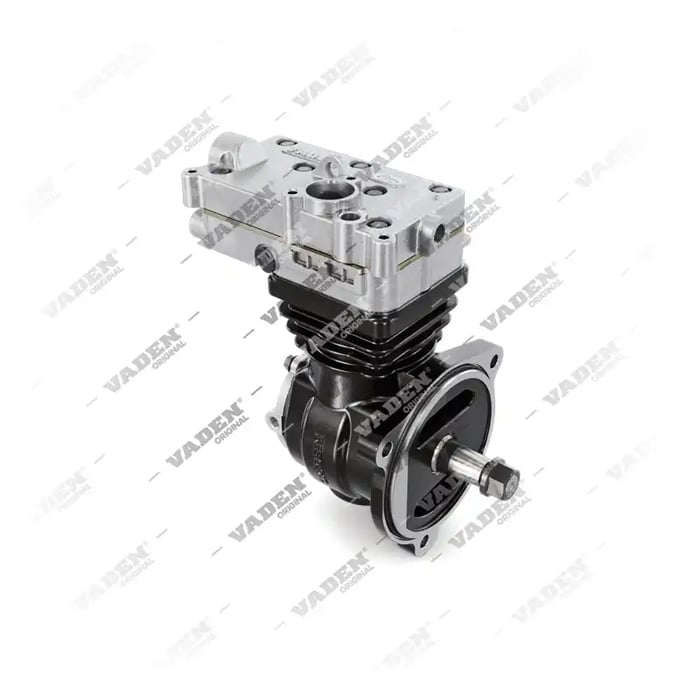
Need the part, not just the answer?
OE-grade air brake compressors and repair kits, manufactured and tested to commercial-vehicle standards.
Shop VADEN partsPublished by VADEN Original. Product links point to the manufacturer’s official catalogue. Specifications are general — always confirm figures against your vehicle’s service manual.