 airbrakecompressor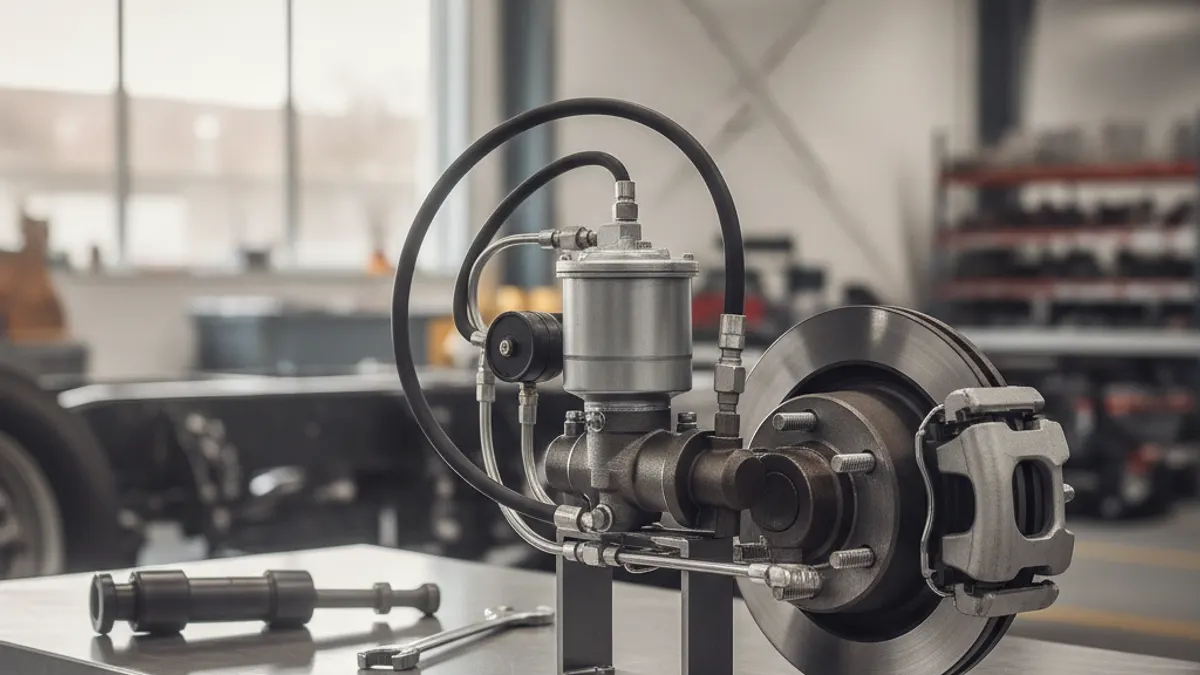
Air-over-hydraulic brakes are a hybrid system: compressed air does the pushing, but hydraulic fluid actually clamps the wheel brakes. An air-hydraulic booster (commonly called an "air pack") sits between the two circuits. When you press the pedal, tank air pressure is metered against a piston that generates high hydraulic pressure in a master-cylinder section, and that fluid operates the calipers or wheel cylinders. In short, you get the light pedal effort and strong output of an air system driving the simpler, self-adjusting hydraulic wheel brakes found on lighter vehicles.
This setup is a middle ground. It appears on vehicles too heavy for a driver's leg to work straight hydraulic brakes, but not big or heavy enough to justify a full pneumatic S-cam foundation brake setup. Think medium-duty trucks, older transit and school buses, larger motorhomes, tow trucks, and some fire and utility rigs.
How the air-over-hydraulic system is laid out
The system is genuinely two systems bolted together, and it helps to picture them separately.
The air side is nearly identical to any pneumatic truck: an engine-driven compressor charges the reservoirs, a governor cycles the compressor between cut-in and cut-out (typically cut-out around 120-135 psi, cut-in around 100-110 psi), an air dryer removes moisture, and a low-air warning trips around 60 psi. The difference is what the air does at the end of the line.
The hydraulic side is the familiar light-vehicle arrangement: a fluid reservoir, hydraulic lines, and either disc calipers or drum wheel cylinders. There are no brake chambers, no slack adjusters, and no S-cams on the axles.
Bridging them is the air-hydraulic booster. Inside, a large air piston is exposed to metered tank pressure; it drives a smaller hydraulic piston. Because the air piston has far more area than the hydraulic piston, modest air pressure becomes high fluid pressure, which is what lets a heavy medium-duty truck stop with a light pedal.
Air-over-hydraulic vs. full air brakes vs. straight hydraulic
Buyers and techs mix these up constantly. Here is how the three compare on the points that matter in the shop.
| Feature | Straight hydraulic | Air-over-hydraulic | Full air brakes |
|---|---|---|---|
| Wheel actuator | Hydraulic caliper / wheel cylinder | Hydraulic caliper / wheel cylinder | Brake chamber + slack adjuster + S-cam |
| Power source | Vacuum or hydraulic boost | Compressed air (air pack) | Compressed air direct |
| Compressor / dryer / tanks | No | Yes | Yes |
| Fluid required | Yes | Yes | No |
| Typical parking brake | Cable / driveline | Often driveline or limited spring brakes | Spring brakes (apply as air falls below ~60 psi) |
| CDL air-brake endorsement | No | Varies by vehicle weight/config | Usually required |
| Typical vehicles | Pickups, light trucks | Medium-duty trucks, older buses, RVs, tow trucks | Class 8 tractors, trailers, transit buses |
The key takeaway: an air-over-hydraulic truck has a compressor and tanks like a full air-brake truck, but the wheels are stopped by fluid like a car. That's why you maintain a compressor and an air dryer and bleed brake fluid.
Where air-over-hydraulic brakes are used
This design shows up wherever a chassis is heavy enough to need power assist beyond vacuum but the manufacturer wanted to keep the simpler hydraulic wheel-end hardware. Common examples:
- Medium-duty trucks (roughly Class 5-7) such as larger box trucks and dump bodies.
- Older transit and school buses, before many fleets standardized on full air.
- Large motorhomes and RVs on heavier chassis.
- Tow trucks and rollbacks, where the base chassis is medium-duty.
- Some fire apparatus and utility vehicles.
If you're not sure which system a truck has, look at the wheel ends. Brake chambers and slack adjusters mean full air. Calipers or wheel cylinders fed by hydraulic lines, combined with air tanks and a booster mounted on the frame rail, mean air-over-hydraulic.
Advantages and drawbacks
Why manufacturers use it
- Light pedal effort with strong braking output, without full air-brake foundation hardware.
- Self-adjusting hydraulic wheel brakes are simpler to service at the wheel end than S-cam brakes that need manual or automatic slack adjustment.
- No spring-brake caging or chamber replacement at every wheel.
What makes it more work
- You maintain two systems: an air supply circuit (compressor, dryer, tanks, moisture control) and a hydraulic circuit (fluid, bleeding, seals).
- The air-hydraulic booster is a specialized, wear-prone part that can leak air, leak fluid, or lose boost.
- Parking-brake and emergency-brake behavior varies by design, so you can't assume full-air-style spring brakes will hold on a grade.
Diagnosing air-over-hydraulic brake problems
The single most useful diagnostic habit is deciding early whether you're chasing an air problem or a hydraulic problem, because the two feel different from the driver's seat.
| Symptom | Likely air-side cause | Likely hydraulic-side cause |
|---|---|---|
| Hard, heavy pedal | Low air pressure, governor not cutting in, booster not receiving air | Failed booster hydraulic section, restricted line |
| Pedal sinks slowly | - | Internal master/booster fluid leak, external hydraulic leak |
| Spongy pedal | - | Air in hydraulic lines, needs bleeding |
| Compressor runs constantly / slow build | Air leak, tired compressor, governor fault | - |
| Low-air warning at ~60 psi | Supply leak or compressor not keeping up | - |
| Air hiss at the booster when braking | Booster air seal / diaphragm leak | - |
Start with the basics of any pneumatic truck: build pressure, watch the gauge, and confirm the governor cycles correctly. If the air supply is healthy and holding but the pedal is still wrong, move to the hydraulic side. A slow-building or constantly cycling compressor points back toward an air leak or a compressor that isn't keeping up; those checks are the same as on any air system, covered in air brake compressor not building pressure and air brake system losing pressure.
Air in the hydraulic lines makes a spongy pedal that bleeding fixes; low air pressure makes a hard pedal that no amount of bleeding will help. Confirm which one you have before you crack a bleeder.
Maintenance basics
Because you're maintaining both circuits, split your routine:
- Air side: drain the reservoirs regularly to purge water, service the air dryer cartridge on schedule, and keep the compressor and governor healthy. Moisture is the enemy of every air system.
- Hydraulic side: keep fluid at level and clean, inspect for leaks at the booster and wheel ends, and bleed the system after any line service.
- The booster: inspect for combined air and fluid leaks. A booster that leaks fluid into its air section, or hisses air under pedal, is done and should be replaced.
The compressor feeding the air side is the same class of component you'd find on any commercial air-brake truck, and the same failure modes apply. If the air side is starving the booster, work through failing air brake compressor symptoms before condemning the hydraulic parts.
Treat air-over-hydraulic as what it is: a full air supply system that happens to end in hydraulic wheel brakes. Keep the air clean and the fluid clean, know which half of the system a symptom belongs to, and these hybrids are straightforward to keep in service.
Where the booster's hydraulic half is at fault — fluid past the seals, a pedal that sinks — bleeding will not save it, and the brake master cylinders are the parts to have on the bench first.
Need the part, not just the answer?
OE-grade air brake compressors and repair kits, manufactured and tested to commercial-vehicle standards.
Shop VADEN partsPublished by VADEN Original. Product links point to the manufacturer’s official catalogue. Specifications are general — always confirm figures against your vehicle’s service manual.