 airbrakecompressor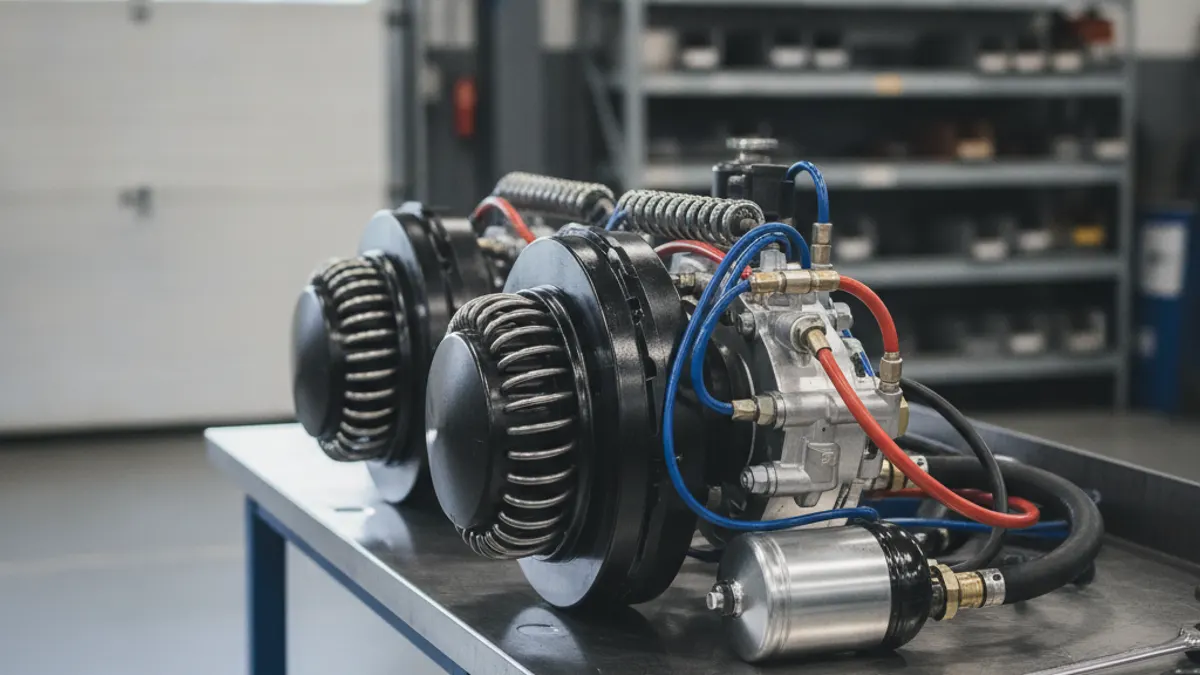
Most large diesel-pusher motorhomes and bus conversions do have full air brakes — the same pneumatic system used on commercial trucks, where an engine-driven compressor charges storage tanks and compressed air, not hydraulic fluid, applies a brake chamber at each wheel. Lighter Class A coaches on gas chassis and nearly all Class C and Class B motorhomes use hydraulic brakes instead, and a middle group runs air-over-hydraulic. The quickest way to tell which you own: if the dash carries two air pressure gauges, a yellow octagon park knob and a low-air buzzer, and you hear the governor cut out once pressure settles near 120 psi, you have air brakes — and the maintenance that comes with them.
Which RVs actually have air brakes
Chassis decides it, not the coach body or the badge on the side. A 45-foot diesel pusher and a 30-foot gas Class A can look similar in a campground and share almost nothing under the floor.
| Coach type | Usual braking system | Tell-tale signs |
|---|---|---|
| Class A diesel pusher, heavy tag-axle coaches, bus conversions | Full air brakes | Two air gauges, yellow octagon park knob, governor cycling the compressor, audible purge from the air dryer |
| Medium-duty diesel chassis (some Class A and Super C) | Full air or air-over-hydraulic, depending on GVWR | Air gauges present, but a hydraulic master cylinder and booster in the engine bay |
| Class A gas chassis, most Class C and Class B | Hydraulic brakes with vacuum or hydro-boost | Brake fluid reservoir, no air gauges, conventional parking brake pedal or lever |
How the system works on a motorhome
The layout mirrors a truck. The compressor is driven off the engine and pumps whenever the engine turns; the governor decides when it loads and unloads, cutting out somewhere around 120–135 psi and cutting back in around 100–110 psi. Air passes through the dryer into the supply (wet) tank, then into separate primary and secondary tanks, so a failure on one circuit still leaves braking on the other. Pressing the treadle sends a signal to relay valves that meter tank air into the brake chambers; releasing exhausts that air to atmosphere, which is the hiss you hear at every stop sign.
What is different on a coach is everything else hanging off the same air supply: suspension bags and leveling valves, air-operated entry steps, bay door assists, air horns, and sometimes a kneeling circuit. These accessories sit behind pressure protection valves, so a leak in a convenience circuit cannot bleed the brake tanks below a safe level. When an owner reports that the compressor runs constantly, an accessory leak is at least as likely as a brake leak.
Air-over-hydraulic: the in-between system
Air-over-hydraulic uses compressed air only as the muscle. A treadle valve sends air to an air-hydraulic booster, which develops hydraulic pressure at conventional wheel cylinders or calipers. You still maintain a compressor, dryer and tanks, but you also have brake fluid, hydraulic hoses and bleeding procedures. The failure modes are mixed: a soft, sinking pedal points to the hydraulic side, while slow response or a dropping gauge points to the air side. If you are not certain which system you have, the air-over-hydraulic overview covers how to identify the booster and what it needs at service time.
Why RV air brakes fail differently than truck air brakes
A line-haul tractor may cover a hundred thousand miles a year; a motorhome might cover three thousand and then sit for eight months. Almost every RV-specific air brake problem traces back to that duty cycle.
- Moisture and corrosion. Short trips never fully heat the system, so condensate collects. Water rusts tanks from the inside and carries oil into valves. Draining tanks matters more on a coach than on a truck, not less.
- Dryer cartridges age out by time. Desiccant degrades whether you drive or not, so think in seasons rather than odometer readings.
- Rust jacking and seized parts. Linings bond to drums during storage, slack adjusters seize on dried grease, and chamber pushrods stick. The first drive after winter is when a dragging brake shows up as a hot wheel end.
- Dry-rotted rubber. Chamber diaphragms, hoses and O-rings harden with age and UV exposure. A coach with 40,000 miles can still be running 20-year-old rubber.
- Compressor oil carryover. Long idling under light load lets oil past worn rings, fouling the dryer and the valves downstream.
Owner checks before every trip
None of these need shop tools. Do them cold, on level ground, with the wheels chocked; a full air brake pre-trip inspection follows the same sequence a commercial driver uses.
- Drain the tanks. Open each tank drain until the air stops. Clear moisture is normal; oily sludge means the dryer or the compressor needs attention.
- Watch the build-up. From low pressure, both gauges should climb steadily and the governor should cut out without hesitation. Slow or stalled build means a leak, a restricted intake filter, or a worn compressor.
- Run a static leak test. Charge the system fully, shut the engine off, release the parking brake and watch the gauges for one minute with the brakes off, then again with the pedal held down. A single vehicle should hold within roughly 2 psi per minute static and 3 psi applied; a coach towing an air-braked trailer is allowed slightly more.
- Test the warnings. Fan the pedal down. The low-air light and buzzer should come on near 60 psi, and the spring brakes should set on their own somewhere in the 20–45 psi range.
- Walk the wheel ends. Look for pushrod travel noticeably longer than its neighbours, oil or grease on a drum face, cracked hoses and chafed lines.
Safety warning: never tie down, block or bypass a spring brake to get the coach moving. Those springs are the only thing holding a parked 30,000-pound vehicle, and a caged chamber is a tow condition, not a driving condition.
Service intervals for low-mileage coaches
| Item | Practical interval | Notes |
|---|---|---|
| Tank draining | Weekly in use; before and after storage | Automatic drain valves still need a manual check |
| Air dryer cartridge | Typically every 2–3 years, sooner if oil is present | Follow the chassis manufacturer schedule |
| Compressor inlet and discharge line | Annually | Carbon build-up in the discharge line is an early warning |
| Slack adjuster lubrication and stroke check | Annually and after storage | Automatic slack adjusters still need grease and verification |
| Foundation brake inspection | Annually | Linings often time out on cracking or contamination rather than wear |
| Chamber diaphragms and hoses | Inspect annually, replace on condition | Age matters more than mileage |
Torque, pushrod stroke limits and cut-out settings vary by chassis and by chamber size, so treat the figures above as typical ranges and use the chassis maker's current service manual for exact values.
Towing behind an air-braked coach
Air brakes on the motorhome say nothing about what is behind it. A flat-towed car still needs its own supplemental braking device, and a trailer may run electric, surge or air brakes. If the trailer is air-braked, the coach must supply protected service and emergency lines through a trailer supply valve — normal on stacker and toy hauler combinations, not on typical dinghy towing.
Do you need an air brake endorsement?
Private recreational use is generally not commercial operation, so a CDL air brake endorsement usually does not apply. Several states and provinces do require a non-commercial Class A or B licence above certain weights or when towing heavy, and the thresholds differ by jurisdiction, so confirm with your own licensing authority. Treat the knowledge as mandatory either way: a 40-foot coach stops on the same physics as a loaded truck.
Coaches that sit for months are hard on the supply side: rings glaze, oil carries into the dryer and build-up time stretches. If yours takes minutes to reach cut-out, look at bus and coach air compressors.
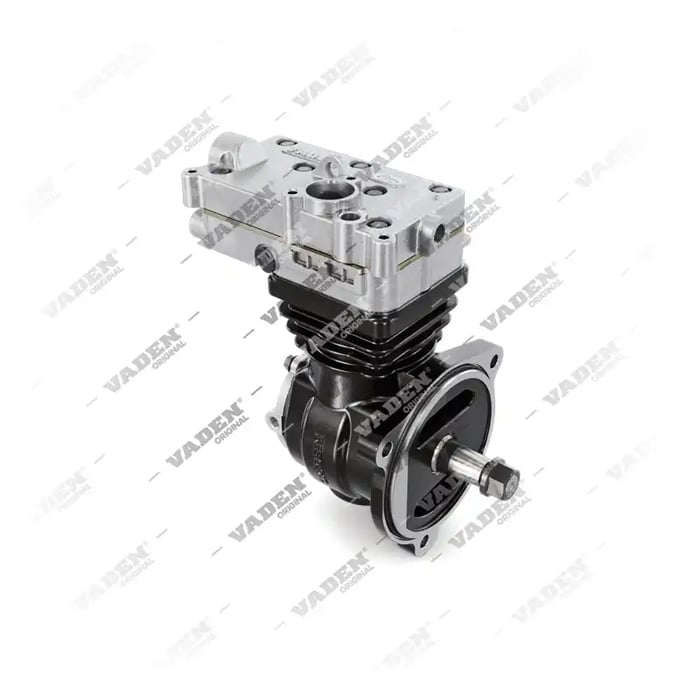
Need the part, not just the answer?
OE-grade air brake compressors and repair kits, manufactured and tested to commercial-vehicle standards.
Shop VADEN partsPublished by VADEN Original. Product links point to the manufacturer’s official catalogue. Specifications are general — always confirm figures against your vehicle’s service manual.