 airbrakecompressor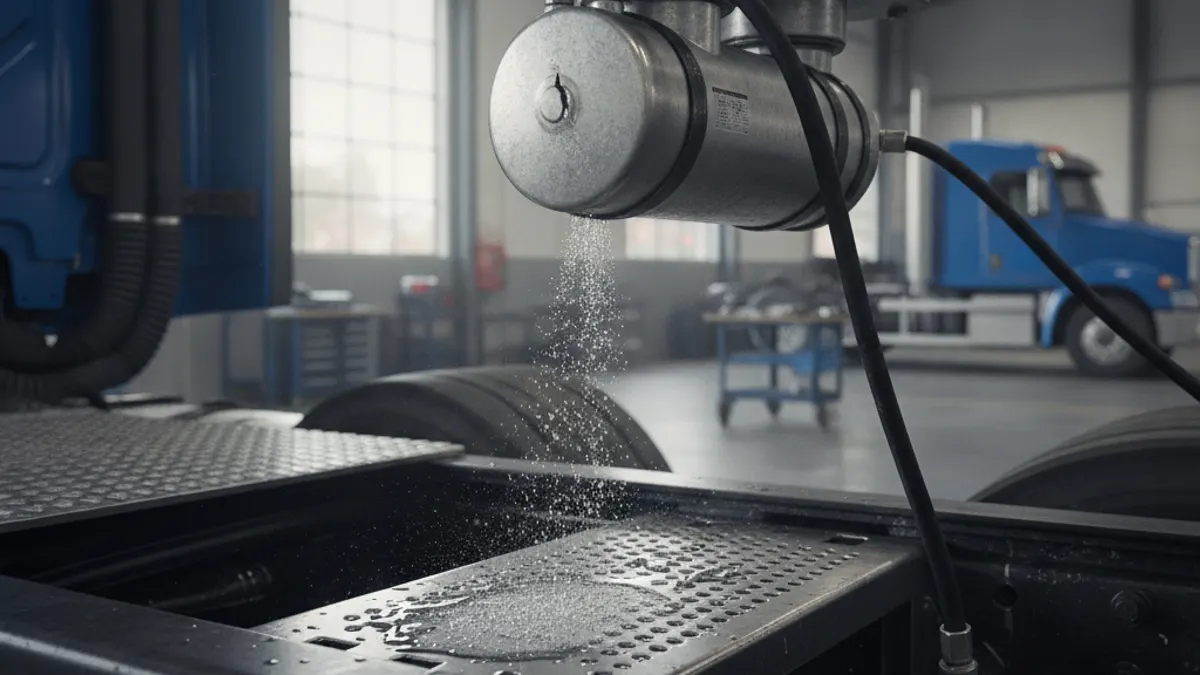
An air dryer is supposed to purge, but only briefly. When the governor reaches cut-out, typically 120-135 psi, it unloads the compressor and signals the dryer to blow accumulated water, oil and contaminant out of the purge exhaust in one short blast lasting a second or two. If your dryer hisses continuously, purges every few seconds, or weeps air at the base while the system is building pressure, that is a fault and not normal behavior.
Three causes account for most of these complaints: a leaking purge valve (seat or o-ring), a governor unloader signal line that will not exhaust, and a desiccant cartridge that is saturated or fouled with compressor oil. Soapy water and a careful listen will separate them in about fifteen minutes.
What normal purge behavior sounds like
On a healthy pneumatic brake system the compressor builds air until the governor cuts out, you hear one sharp blast from the dryer, and then silence. The dryer stays quiet while the system holds pressure. When pressure falls to cut-in, roughly 100-110 psi, the compressor loads again and the dryer is silent until the next cut-out. A fully charged system sits around 120 psi, and the low-air warning light and buzzer come on near 60 psi.
Some dryers give a brief secondary hiss as the unloader line bleeds down. Brief is the key word. Anything that continues while the vehicle sits, or repeats every few seconds while driving, needs diagnosis. For background on the component itself, see how truck air dryers work.
Fault patterns and what they mean
| What you observe | Most likely cause | How to confirm |
|---|---|---|
| Continuous hiss from the purge exhaust while the compressor is loaded | Purge valve seat contaminated or scored, or the valve o-ring hardened | Soap the exhaust port. Bubbles during the build cycle confirm it. |
| Dryer purges every few seconds and the compressor cycles constantly | Leak downstream, or the outlet check valve letting tank air bleed back into the dryer | Build to cut-out, shut down, and watch the tank gauges. A fast drop with repeat purging points at the check valve. |
| Dryer never purges at all and water shows at the tank drains | Plugged purge valve, dead unloader signal, or a frozen exhaust | Verify the governor sends signal pressure to the dryer control port at cut-out. |
| Leak at the seam between cartridge and base | Cartridge o-ring pinched, not seated, or the cartridge under-torqued | Soap the seam and re-seat per the cartridge instructions rather than over-tightening. |
| Oil blowing from the purge exhaust and a dark stain down the dryer body | Compressor passing oil, desiccant saturated | Check the discharge line and tank drains for oil. Fix the source first. |
| Leak only in cold weather, ice at the exhaust | Failed purge valve heater or thermostat | Check heater current draw and ground, and inspect the connector for corrosion. |
Step-by-step diagnosis
- Chock the wheels and build full pressure. Run the engine until the governor cuts out, then note whether the purge is one clean blast or a stutter.
- Soap the purge exhaust. With the compressor loaded and pressure below cut-out, spray the exhaust port. Steady bubbles mean the purge valve is not sealing.
- Soap the cartridge seam and every port. The cartridge-to-base o-ring, the control port fitting, the inlet from the compressor and the outlet to the wet tank all leak eventually.
- Isolate the governor signal. With the system charged and unloaded, check the unloader control line at the dryer. Air should flow only at cut-out. Continuous flow means the governor is not exhausting and the dryer is being held in purge.
- Check the outlet check valve. If the dryer purges repeatedly right after cut-out, the check valve between the dryer and the first reservoir is letting stored air bleed backward. Some dryers use a serviceable valve in the outlet port; many use an external one.
- Look at what comes out of the tanks. A grey emulsion means moisture carryover. Heavy black oil means the compressor is the root cause and no dryer part will fix it.
- Confirm the compressor is unloading. If it keeps pumping after cut-out, the dryer is being force-fed and will purge or leak regardless of its condition.
Repair or replace?
A purge valve kit, a set of o-rings and a fresh desiccant cartridge cure the large majority of leaking dryers, provided the aluminum base and valve seat are not corroded or pitted. If the seat is scored or the housing is porous, replace the base. On a dryer that has spent years in a road-salt environment, the labor of freeing seized fittings often costs more than a complete unit.
Replace the cartridge on the manufacturer's interval, commonly annually or on a set mileage, and fit an assembly matched to the vehicle's OE specification. VADEN Original supplies OE-grade air processing units and air dryer components for heavy commercial vehicles. The service procedure itself is covered in our air dryer cartridge replacement guide.
Do not chase the dryer if the compressor is at fault
The most expensive mistake in this repair is replacing a leaking dryer twice. A compressor that passes oil will coat fresh desiccant within weeks, and the oil film stops the purge valve sealing. Before fitting new dryer parts, check the discharge line for carbon buildup, inspect the reservoirs for oil, and assess compressor condition. Persistent moisture is a related but separate symptom covered in water in air tanks.
Safety before you open anything
Never loosen a dryer fitting or cartridge with the system pressurized. Drain all reservoirs to zero, chock the wheels, and confirm the gauges read zero before opening anything. Spring brakes apply as system pressure falls, generally somewhere in the 20-45 psi range, so the vehicle must be chocked rather than left on the parking brake alone. Torque figures and service intervals vary by manufacturer, so the current service manual for the vehicle governs.
After the repair, build to cut-out, listen for a single clean purge, then shut down and confirm the system holds pressure. A properly repaired dryer is silent between cycles and the tank drains come out dry.
Need the part, not just the answer?
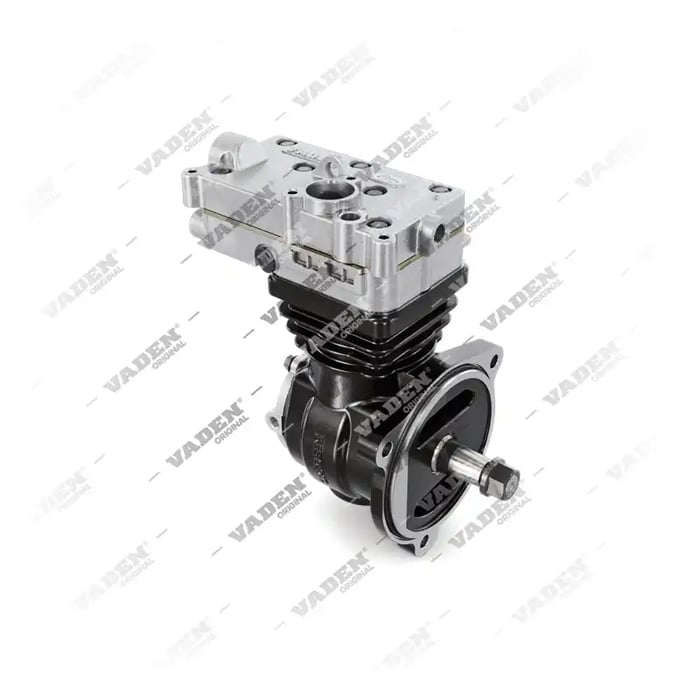
OE-grade air brake compressors and repair kits, manufactured and tested to commercial-vehicle standards.
Shop VADEN partsPublished by VADEN Original. Product links point to the manufacturer’s official catalogue. Specifications are general — always confirm figures against your vehicle’s service manual.