 airbrakecompressor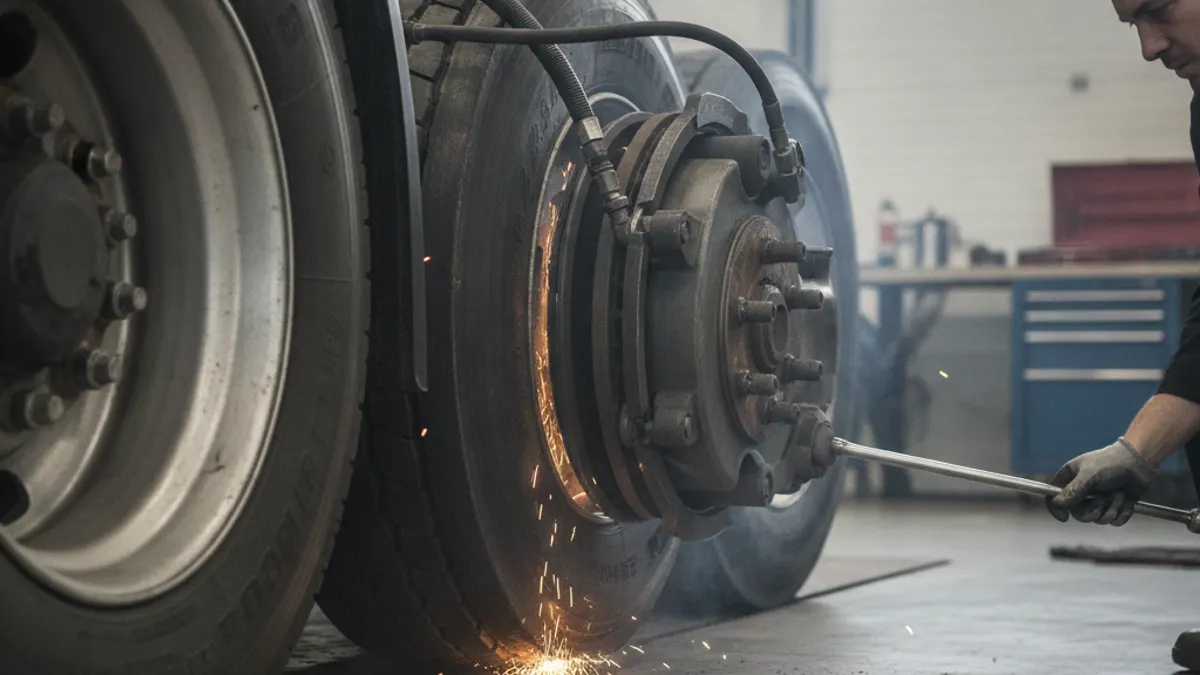
Air brakes lock up for one of three reasons: the spring (parking) brakes have applied because system pressure fell, air is trapped in the service chambers by a valve or a seized foundation component, or the brakes are so far out of balance that one axle grabs before the others. Because a truck air brake system is pneumatic and fail-safe by design, the most common cause by far is simple air loss - pressure drops, the springs set the brakes, and the vehicle will not roll. Read the dash gauges before you touch anything mechanical; they tell you within seconds which of the three families you are in.
Lock-up, drag and grab are three different faults
These words get used interchangeably, and that is how people end up replacing the wrong part. Separate them first:
- Locked up - the wheel will not turn at all, usually with the vehicle stationary. Almost always a spring brake application or a mechanically seized brake.
- Dragging - the wheel turns but with heavy resistance, the drum or rotor runs hot, and fuel economy drops. Usually a partial release problem: sticky cam, tired return spring, trapped air. See brakes that drag and will not release.
- Grabbing or locking under braking - the wheel turns freely until you apply the pedal, then it skids. That is a balance, load or ABS issue, not a seized part. See brakes grabbing and chattering.
Cause 1: the spring brakes have applied
Spring brake chambers hold a heavy coil spring compressed by air. As system pressure falls, that spring pushes the pushrod out and applies the brake mechanically. Application typically begins somewhere in the 20-45 psi range depending on chamber design, and the dash low-air warning will have been sounding since roughly 60 psi. A healthy system runs around 120 psi when fully charged, with the governor generally cutting out somewhere in the 120-135 psi band and cutting back in around 100-110 psi. Treat those as typical ranges and confirm the figures for your vehicle in its service manual.
So if a truck locks up while driving or shortly after shutdown, look for the leak rather than the mechanism: a burst service or supply line, a failed chamber diaphragm, a leaking gladhand seal, a purge valve stuck open on the air dryer, or a compressor that stopped charging. On a combination vehicle, loss of supply-line pressure trips the tractor protection valve and the trailer sets its emergency brakes - that is the system working correctly. A spring brake that stays applied even with full air is a different fault, covered under spring brake will not release.
Cause 2: seized foundation brake hardware
With full system pressure and the parking brakes released, a wheel that still will not turn is mechanically stuck. On S-cam foundation brakes the usual suspects are dry or corroded camshaft bushings, a seized slack adjuster (particularly automatic slacks that have never been greased), rusted anchor pins, shoe rollers locked into their seats by rust, or a broken return spring. Road salt, deep water crossings and long parked periods all accelerate this.
The tell is that the brake releases slowly or not at all when air is dumped, and a pry bar shows no movement at the cam head. Rebuilding the foundation - bushings, pins, rollers, springs, and a slack adjuster that actually strokes - is the fix. Squirting grease at a seized cam without disassembly buys a few days at best.
Cause 3: trapped air in the service chambers
If the pushrods stay extended after you release the pedal, air is not getting out. Check for a foot valve that is not returning fully (worn treadle, floor mat or debris under the pedal), a relay valve whose exhaust port is blocked by ice, dirt or a swollen seal, a failed quick release valve, or a kinked, crushed or internally collapsed air hose. Listen at the exhaust ports: a healthy release is a sharp, immediate exhaust, not a long slow bleed.
Cause 4: over-adjustment and mismatched brakes
A brake adjusted too tight will drag, heat up, and can lock as the drum expands and then cools unevenly. Automatic slack adjusters that are worn or incorrectly installed can over-adjust as easily as under-adjust. Measure applied pushrod stroke against the readjustment limit for that chamber type and size rather than eyeballing it. Mixing lining friction grades across axles, or fitting a different chamber size on one side, also creates a brake that does the work of two and locks first.
Cause 5: balance, load sensing and ABS
Wheels that lock only during a firm stop are usually being asked to do more braking than the tire load supports. Empty or lightly loaded trailers are the classic case. If the vehicle has a load-sensing or load-proportioning valve, check its linkage, ride height reference and adjustment - a valve stuck in the laden position will lock an empty trailer's wheels every time. If the ABS lamp is lit, the system has reverted to conventional braking, so wheel lock during a hard stop is the expected outcome; scan for codes before blaming the foundation brakes.
Quick diagnostic table
| What you see | Most likely cause | First check |
|---|---|---|
| All wheels locked, gauges low, warning buzzer on | Spring brakes applied after air loss | Find the leak; check compressor, dryer purge, gladhands, chambers |
| One wheel locked, full system pressure | Seized cam, slack adjuster, anchor pin or roller | Pry-test the cam head and slack adjuster for movement |
| Pushrods stay out after pedal release | Trapped air: foot valve, relay or quick release valve | Listen for exhaust; check for blocked ports and kinked lines |
| Trailer wheels skid on light loads only | Brake balance or load-sensing valve set wrong | Inspect the valve linkage and ride height reference |
| Locking after an overnight freeze | Moisture frozen in valves, or shoes iced to drums | Drain tanks; check air dryer function and desiccant condition |
| Wheel locks only in hard stops, ABS lamp lit | ABS inactive, so no wheel-slip control | Scan for codes; check sensor gap and tone ring |
Roadside triage sequence
- Chock the wheels first, and never rely on the brakes you are about to diagnose.
- Read both gauges. A reading below the warning threshold means an air problem, not a mechanical one.
- Build pressure and watch the governor cut out and cut back in normally. If it will not build, the fault is upstream of the brakes.
- Walk the vehicle and listen. Most locked-brake calls end at an audible leak.
- Release the parking controls and note which wheels free off. The ones that do not are your mechanical suspects.
- Feel the drums or rotors. A hot wheel among cold ones identifies the dragging brake immediately.
Preventing repeat lock-ups
Most locked brakes trace back to two things: water in the system and neglected foundation lubrication. Drain the tanks on schedule, replace the air dryer cartridge at the recommended interval, and grease cam bushings and slack adjusters properly rather than giving the fitting a token shot. Keep chamber boots intact so grit stays off the pushrod, and check pushrod stroke at every service. A compressor passing oil into the system swells valve seals and causes sticky release, so treat oil in the tanks as a fault to fix, not a nuisance to drain.
Air brake work carries real risk. A compressed power spring can release with lethal force, and a vehicle can roll the instant a stuck brake frees. Chock the wheels, follow the manufacturer's caging procedure, and use current service-manual figures for stroke and pressure limits - the values above are general ranges, not specifications for your vehicle.
One brake locking on its own after an ABS event points at the modulator on that wheel end holding air it should have vented, and a contaminated ABS modulator valve is replaced, not cleaned.
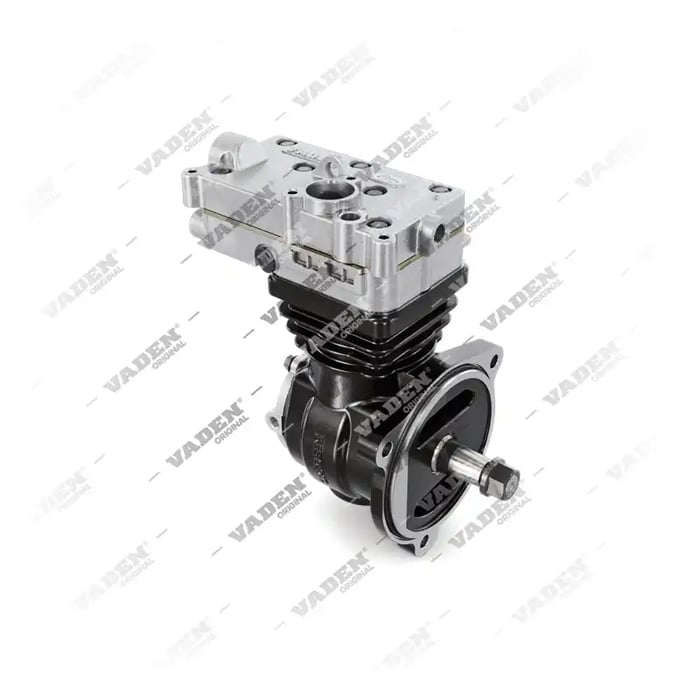
Need the part, not just the answer?
OE-grade air brake compressors and repair kits, manufactured and tested to commercial-vehicle standards.
Shop VADEN partsPublished by VADEN Original. Product links point to the manufacturer’s official catalogue. Specifications are general — always confirm figures against your vehicle’s service manual.