 airbrakecompressor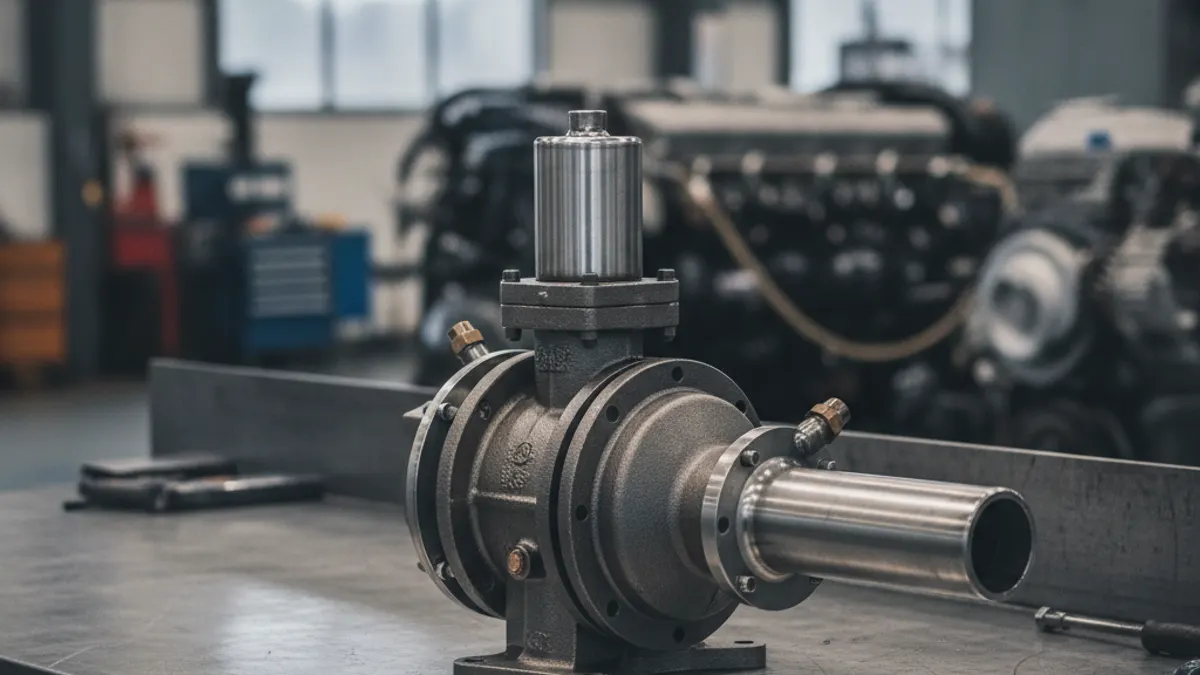
An exhaust brake slows a truck by placing a restriction - usually a butterfly valve - in the exhaust pipe. When the driver lifts off the throttle and the brake engages, that valve closes and traps exhaust behind it, so the engine has to work against high backpressure on every exhaust stroke. That resistance is fed back through the pistons and driveline as braking force, letting you hold speed on a downgrade without riding the foot valve. It is an engine retarder, not part of the air-brake system, and it works alongside - not instead of - your service brakes.
Because it slows the truck through the engine rather than the friction brakes, an exhaust brake keeps your brake drums, linings, and air components cooler and lasts far longer between overhauls. Heat is what kills brakes on a mountain, and every mile the engine handles is a mile the shoes don't.
How an exhaust brake works
The core of the system is a valve mounted in the exhaust stream, typically just after the turbocharger or in the downpipe. Under normal driving the valve is wide open and exhaust flows freely. When you engage the brake and lift off the throttle, an actuator swings the valve nearly shut.
With the outlet choked, exhaust gas can't escape. The pistons on their exhaust strokes are now pushing against a wall of pressurized gas, and that pumping loss becomes retarding torque. The higher the engine rpm and the tighter the restriction, the more braking you get. Most systems cap backpressure with a relief feature or a valve stop so you don't overpressure the exhaust manifold and blow gaskets or lift valves.
Actuation is commonly one of three types:
- Air-actuated - an air cylinder driven from the truck's air supply swings the butterfly. Simple and strong; the usual choice on trucks that already have an air system.
- Vacuum-actuated - found on lighter diesels that run a vacuum pump.
- Electric/electronic - an electric actuator, or a variable-geometry turbo (VGT) that closes its vanes to create the same choking effect on many modern engines.
Exhaust brake vs. Jake brake (compression-release)
People use "Jake brake" as a catch-all, but a true Jacobs-style engine brake and an exhaust brake do fundamentally different things. A compression-release brake opens the exhaust valve at the top of the compression stroke and dumps the compressed air - that loud bark you hear on a highway grade - so the energy the engine spent compressing air is never returned to the piston. An exhaust brake instead chokes the outflow to build backpressure. One releases pressure at top-dead-center; the other holds pressure downstream.
| Feature | Exhaust brake | Jake brake (compression-release) |
|---|---|---|
| Method | Restricts exhaust to build backpressure | Releases compressed air at top of stroke |
| Retarding power | Moderate | High |
| Noise | Quiet | Loud (often banned in towns) |
| Typical use | Medium-duty, pickups, mid-range diesels | Heavy Class 8 tractors |
| Complexity | Simple valve and actuator | Mechanism in the valvetrain |
| Cost | Lower | Higher |
Neither device uses your air tanks to stop the truck, and neither is a substitute for a proper brake application in an emergency. They carry the steady load of a descent so the service brakes stay cool and ready. For the full picture on how the pneumatic side works, see how air brake systems work. If you want a side-by-side of all three retarder families, the Jake vs. exhaust vs. retarder comparison breaks down where each earns its keep.
Benefits of an exhaust brake
- Longer brake life. The engine absorbs the descent, so linings and drums see far less heat and wear, which extends service intervals on hilly routes.
- Fade protection. Keeping the friction brakes cool prevents brake fade on long grades, when overheated shoes stop biting.
- Better control. You hold a steady speed down a grade with light, feathered service-brake use instead of dragging them the whole way.
- Lower cost and quiet operation. An exhaust brake is cheaper and far quieter than a compression-release brake, which matters where "engine brake prohibited" signs are posted.
- Cold-weather warm-up. Closing the valve at idle raises backpressure and helps a cold diesel reach operating temperature faster.
Where exhaust brakes fit best
Exhaust brakes deliver the most value on medium-duty trucks, buses, box trucks, and mid-range diesels where a full Jake brake is overkill or unavailable. On heavy Class 8 tractors hauling max gross weight down a serious mountain, drivers lean on a compression-release brake or a driveline retarder for the raw stopping power; an exhaust brake there is a useful supplement rather than the main event. Many modern engines with variable-geometry turbos get exhaust-brake-like retarding built in, closing the turbo vanes to choke flow on demand.
Symptoms of a failing exhaust brake
The butterfly valve lives in a hot, sooty environment, and its shaft, bushings, and actuator take a beating. Watch for these signs:
- No retarding effect. If the brake does nothing when engaged, the valve is likely stuck open, the air line to the actuator is leaking or clogged, or the control solenoid has failed.
- Loss of power or poor throttle response. A valve stuck partly or fully closed chokes the engine all the time, killing power and fuel economy and sometimes causing hard starting.
- Sticking or lazy actuation. Carbon buildup seizes the shaft, so the valve moves slowly or hangs up. You may hear the actuator working but feel little braking.
- Air leak at the cylinder. On air-actuated units a leaking diaphragm or cylinder bleeds tank air and weakens the brake. If your system is also losing pressure, rule the exhaust-brake cylinder in or out during the leak-down check.
- Rattle or exhaust leak. Worn bushings let the valve chatter, and a cracked housing or blown gasket downstream of the restriction can leak under backpressure.
Diagnosis is usually straightforward: with the engine off and the system charged, actuate the brake and watch the butterfly move fully closed and spring back open. A shaft that's stiff, a valve that won't seat, or an actuator that won't stroke points you right at the fault. Replacement exhaust brake valve assemblies are available in OE-grade form to match the original flow and backpressure spec - an undersized or mismatched valve either won't retard properly or will overpressure the manifold.
Using it right
An exhaust brake is a downhill and deceleration tool. Turn it on before you start a grade, pick a gear low enough that the engine does the holding, and let it carry the load so you only tap the service brakes to trim speed. Take care in rain or ice - on a slick surface, engine retarding on the drive axle can upset traction, which is why systems interlock with ABS to back off if wheels start to slip. Used properly, it is one of the cheapest ways to keep your foundation brakes cool, safe, and lasting.
Source (VADEN Original): Exhaust / Engine Brake: Faults, Replacement & Maintenance Guide
Need the part, not just the answer?
OE-grade air brake compressors and repair kits, manufactured and tested to commercial-vehicle standards.
Shop VADEN partsPublished by VADEN Original. Product links point to the manufacturer’s official catalogue. Specifications are general — always confirm figures against your vehicle’s service manual.