 airbrakecompressor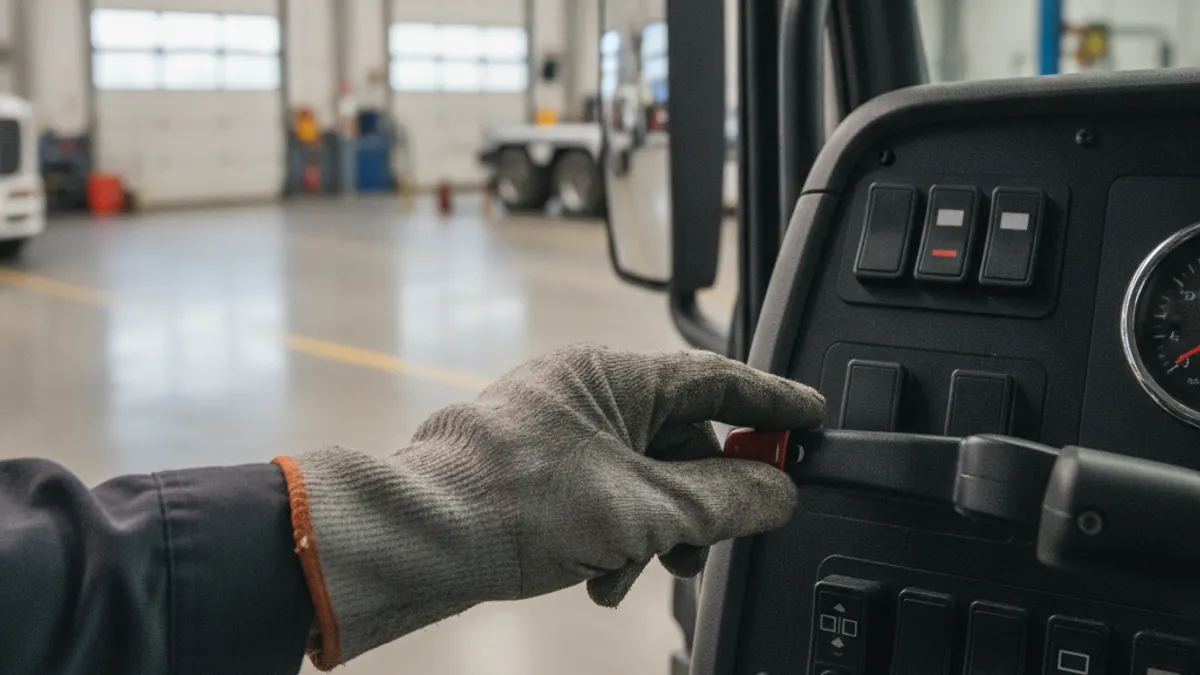
To use a Jake brake safely, switch it on at the start of the run so it engages every time you lift off the throttle, select a gear low enough that the engine sits in the upper part of its working RPM range, and set the stage to match the load and the road surface. Turn it off — or drop to the lowest stage — on wet, icy, gravel, or snow-covered roads, when running empty or bobtail, and in posted no-engine-brake zones. Used this way the engine brake does the bulk of your speed control on grades, and your air brakes stay cool for the moments you need them to stop the truck.
An engine compression brake (Jacobs' "Jake brake" is the best-known name, though the principle applies to most compression-release brakes) opens the exhaust valve near the top of the compression stroke. The engine spends energy compressing air, and that energy is dumped out the exhaust instead of pushing the piston back down. The result is a retarding force at the drive wheels — and the loud staccato bark that gets it banned in residential areas.
The basic operating procedure
- Switch it on at the start of the run and leave it on. Treat it as an always-available system, not something you flick on mid-descent.
- Set the stage. Multi-stage units (low/medium/high, or 2-4-6 cylinders) let you dial in retarding force. Start low in marginal conditions.
- Lift off the throttle. The brake engages on its own once the throttle is closed, the clutch is out, and road speed is above the cut-in threshold.
- Select the gear before the grade, not on it. Once you are over the crest and accelerating, downshifting becomes difficult or impossible.
- Let the engine work in its upper range. Retarding power climbs sharply with engine speed; a compression brake at low RPM does almost nothing.
- Use the service brakes in firm snubs, not a steady drag, to trim any speed the engine brake alone cannot hold.
Gear selection: the part most drivers get wrong
The old rule of thumb — descend in the same gear you would need to climb it — is a reasonable starting point, but modern high-torque engines climb in a much taller gear than they can safely descend in. Pick the gear that lets the engine brake hold your target speed with the engine near the top of its working range, without the tachometer creeping toward the governed maximum.
If speed keeps building even at the highest stage, you are in too high a gear. Snub the service brakes down to a speed where you can safely grab a lower gear. Do not wait until the linings are hot and fading to make that decision. Overspeeding the engine is the opposite risk, particularly with an automated transmission that has already downshifted for you: know your engine's maximum no-fuel RPM and stay under it.
When to back off or shut it off
| Condition | Recommended setting | Why |
|---|---|---|
| Dry pavement, loaded, long grade | Full stage, on continuously | Maximum retarding; service brakes stay cool |
| Wet road | Low stage or off | Retarding acts on the drive axle only; can break traction |
| Ice, packed snow, gravel | Off | Drive-wheel lockup can jackknife a tractor-trailer |
| Empty, lightly loaded, or bobtail | Low stage or off | Little weight over the drives; wheels slip easily |
| Posted "no engine brake" zone | Off before the sign | Local noise ordinance; fines are common |
| Cold engine, below operating temperature | Off or minimal | Manufacturers generally advise warm oil first |
| Curve, loaded, marginal grip | Reduce before entry | Retarding mid-corner upsets the combination |
Anti-lock braking does not make any of this foolproof. ABS manages the service brakes, and while many modern trucks also cut engine-brake torque when the controller sees drive-wheel slip, that is a safety net rather than permission to run full retarding on ice.
Why this protects your air brake system
Every mile you descend on the engine brake is a mile your foundation brakes are not converting momentum into heat. Riding the service brakes down a long grade cooks the linings and drums, and once the friction material overheats you get brake fade: the pedal is there, the air pressure is there, and the truck simply does not slow the way it should. Fade is a heat problem, not an air problem, and no amount of pedal pressure fixes it once it starts.
There is a second benefit on the air side. Continuous braking means continuous air consumption, which keeps the compressor loaded and cycling hard. On a healthy pneumatic system the governor cuts the compressor out at roughly 120–135 psi and cuts it back in near 100–110 psi, so a fully charged truck sits around 120 psi and the low-air warning comes on by about 60 psi. A compressor working overtime runs hotter, pushes more moisture and oil vapor downstream, and shortens air dryer cartridge life.
Snubbing: the correct service-brake technique
When the engine brake alone will not hold your speed, snub rather than drag:
- Let speed rise about 5 mph above your target.
- Apply the service brakes firmly enough to feel real deceleration — deliberate, not a light drag.
- Bring speed roughly 5 mph below target, then release fully.
- Let the brakes cool while the engine brake carries the load, and repeat as needed.
Firm-and-release keeps heat in short bursts the drums can shed between applications. A light continuous drag never lets anything cool, and that is what glazes linings and warps drums.
No-engine-brake zones and noise
Those signs are municipal noise ordinances and they are enforceable. Switch off before you reach the sign rather than at it, so you are already at a controlled speed, and plan the approach so you are not relying on retarding through the restricted stretch. Keep the exhaust system in good order too — a leaking or removed muffler section makes the compression release dramatically louder, and most complaints trace back to exhaust condition rather than the brake itself.
Engine brake versus other retarders
A compression brake is one option among several. Exhaust brakes restrict the exhaust stream and are quieter but generally weaker. Driveline and transmission retarders — hydraulic or electromagnetic units acting after the engine — are near-silent, which is why they are common on coaches. Many drivers run them in combination; see how engine, exhaust, and driveline retarders compare, and the engine brake overview for how the compression release itself works.
Quick pre-descent checklist
- Air system fully charged, around 120 psi, before the crest.
- Gear selected on the flat, before the grade begins.
- Engine brake on, stage set for load and conditions.
- Target speed decided from grade, weight, and posted limits.
- Brakes correctly adjusted; an out-of-adjustment slack adjuster contributes little when you need it.
An engine brake is a speed-holding device, not a stopping device. It cannot bring the truck to a halt, it does nothing with the clutch in, and it is no substitute for a properly maintained air brake system.
Common mistakes
- Turning it on halfway down a grade. Applying full retarding force to drive wheels already at the limit is how a slide starts.
- Running it in rain because it is "only a little wet." The first rain after a dry spell is the slipperiest surface you will meet.
- Using it to cover late gear selection. The engine brake buys you margin; it does not create it.
- Assuming quiet means broken. Below the cut-in RPM, or before the oil is warm, some systems reduce output by design. Check the manual before chasing a fault.
Treat the engine brake as your primary tool for controlling speed on descents and the service brakes as your reserve. That ordering is the whole safety argument in one sentence.
On engines that retard with an exhaust brake rather than a compression brake, the same descent discipline applies, but the butterfly valve and its actuator wear with heat and soot — check the exhaust brake components when holding power fades.
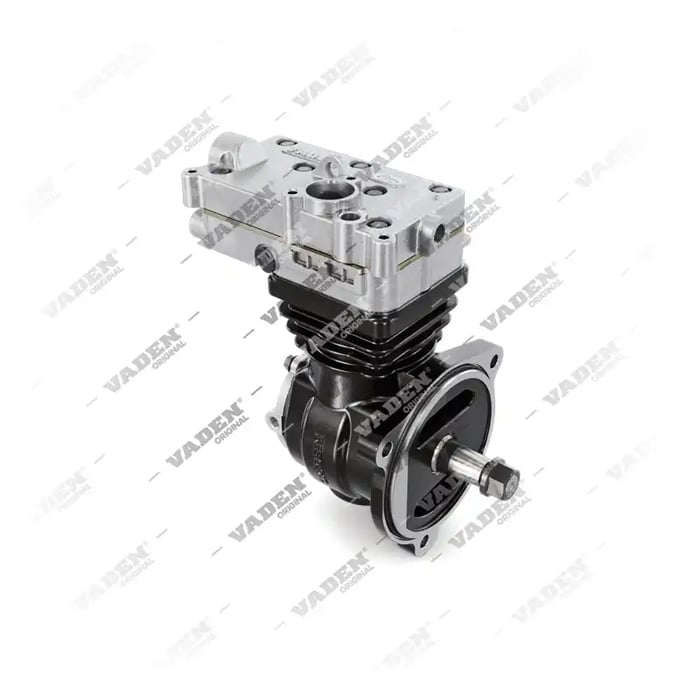
Need the part, not just the answer?
OE-grade air brake compressors and repair kits, manufactured and tested to commercial-vehicle standards.
Shop VADEN partsPublished by VADEN Original. Product links point to the manufacturer’s official catalogue. Specifications are general — always confirm figures against your vehicle’s service manual.