 airbrakecompressor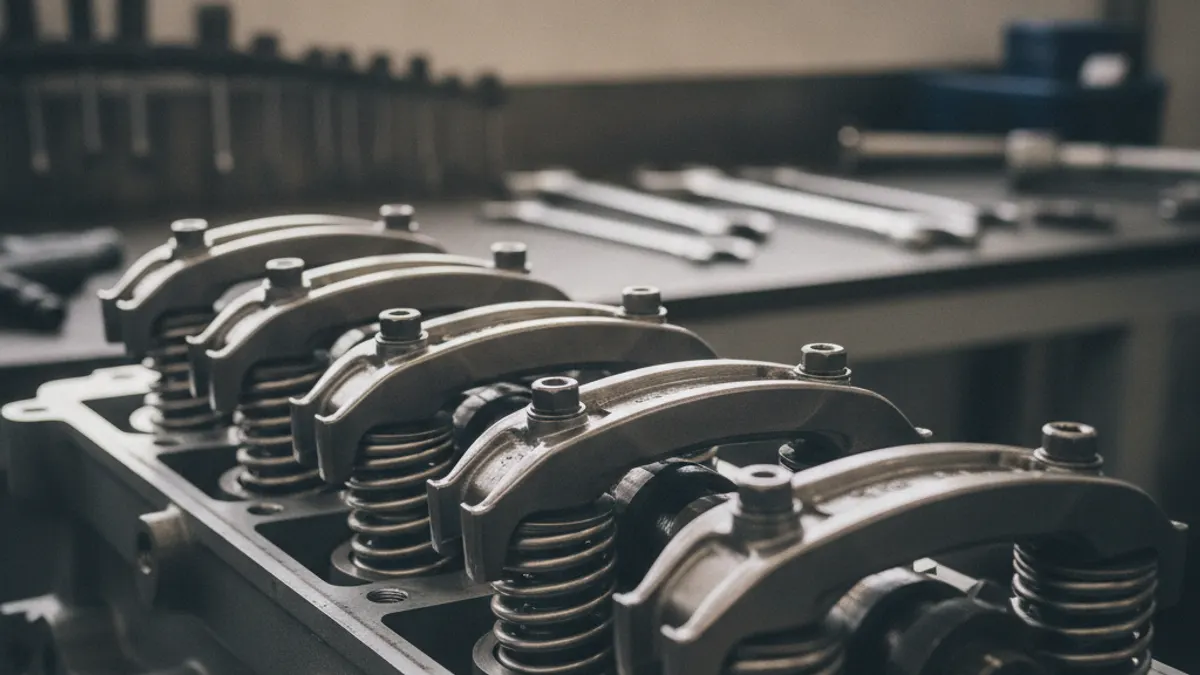
A Jake brake is an engine compression brake that slows a heavy diesel truck by turning the engine itself into an energy-absorbing air compressor, instead of relying on the wheel-mounted service brakes. When the driver lets off the throttle and switches it on, the brake opens the exhaust valves near the top of each compression stroke and releases the air the piston just squeezed. That energy never comes back to push the piston down, so the engine drags on the driveline and holds the truck back. The result is powerful, brake-saving retardation on long grades, along with the loud staccato bark that gives the device its reputation.
The name comes from Jacobs Vehicle Systems, the company that commercialized the device decades ago. "Jake brake" is a trademark that became the everyday word for any engine compression brake, the same way people say "band-aid."
How a Jake brake works, step by step
A four-stroke diesel does two things that matter here. On the compression stroke, the piston rises and squeezes the cylinder air into a small, high-pressure space. Normally that compressed air acts like a spring: as the piston passes top dead center, the pressurized charge shoves it back down and returns most of the energy spent compressing it. That recovery is why an engine coasts freely when you lift off the accelerator.
The compression brake breaks that spring. Here is the sequence:
- The driver lifts off the throttle and fuel is cut, so no combustion is taking place.
- The piston rises on the compression stroke and compresses the trapped air, absorbing energy from the driveline.
- Just before the piston reaches the top, a hydraulic circuit in the brake housing momentarily opens the exhaust valves.
- The compressed air blasts out through the exhaust valves and down the stack instead of pushing the piston back down.
- With no energy returned, the truck's own momentum has to drag the engine through the next cycle, which slows the vehicle.
Repeat that on every cylinder, several times a second, and you get strong braking delivered through the driveline to the drive axles. The higher the compression and the engine RPM, the more retarding power you get, which is why drivers downshift to keep the revs up for maximum hold on a grade.
Why a Jake brake is so loud
That distinctive machine-gun sound is simply compressed air escaping under pressure. On a normal exhaust stroke, burned gases leave the cylinder at low pressure and the muffler handles them easily. When the compression brake fires, it dumps a slug of highly compressed air through the exhaust valve all at once, and that sharp pulse cracks out of the stack as a loud bark. Multiply it across six cylinders at highway RPM and you get the rapid-fire brap everyone recognizes.
The noise is not a malfunction; it is the brake doing its job, and the volume depends almost entirely on the exhaust system. A truck with a good, intact muffler is often no louder than normal acceleration, while one on straight pipes or a gutted muffler can be deafening. That is why so many towns post "No Engine Braking" or "No Jake Brake" signs near residential areas. Those signs are aimed at illegally loud, unmuffled exhaust, not at the safe use of a properly muffled compression brake.
Jake brake vs. service brakes: the key difference
This is the distinction technicians most want drivers to understand. The two systems slow the truck in completely different ways, and one cannot replace the other.
| Feature | Engine (Jake) brake | Service (air) brakes |
|---|---|---|
| What it acts on | The engine and driveline | The wheels, via the brake chambers and foundation brakes |
| How it's powered | Engine compression, no wear parts consumed | Compressed air from the air compressor and tanks |
| Applied to which axles | Drive axles only | All axles including steer and trailer |
| Wear | Minimal, spares linings and drums | Consumes shoes, linings, and drums over time |
| Traction risk | Can break drive-wheel traction on ice | Modulated by the driver and ABS |
| Primary job | Speed control on long descents | Stopping and holding the vehicle |
The service brakes are your primary, legally required stopping system, clamping the drums at every wheel with air pressure from the compressor and reservoirs. The Jake is a supplemental retarder that only manages speed by loading the engine; it slows the truck but cannot bring it to a controlled stop on its own, and it does nothing for the steer or trailer axles. For the full pneumatic picture, see our overview of how air brake systems work.
The traction caveat
Because the compression brake acts only on the drive wheels, it can be a hazard on slick roads. If the drive tires are on ice or wet pavement and the Jake grabs hard, they can lose traction and the tractor can slide or jackknife before the trailer follows. Most fleets train drivers to switch the engine brake off in rain, snow, and ice, or to run it on a lower setting. On dry pavement it is one of the best tools a driver has.
When to use a Jake brake
The core value of an engine brake is sparing your foundation brakes from heat and wear. On a long, steep descent, riding the service brakes builds heat in the drums until they fade, the point where hot linings stop gripping. Fade is a classic cause of runaway trucks. By carrying most of the retarding load on the engine, the Jake keeps the service brakes cool and ready for when you actually need to stop.
Good practice looks like this:
- Long downgrades: pick a gear low enough that the engine brake holds your speed, and let it work instead of dragging the foot valve.
- Deceleration on the flat: slowing for a light, a curve, or traffic, where it bleeds off speed and saves a service application.
- Dry pavement with good traction, where the drive wheels can safely absorb the retarding force.
And situations to avoid it:
- Wet, snowy, or icy roads, where it can break drive-wheel traction.
- Posted "No Engine Braking" zones, usually residential areas near highways.
- Very low RPM, where the brake makes little power, so downshift to keep it working.
Compression brake vs. exhaust brake vs. retarder
Drivers often lump every "engine brake" together, but they differ. A true compression brake (the Jake) opens the exhaust valves to dump compressed air and is the most powerful of the engine-side options. An exhaust brake is simpler and quieter, closing a valve or butterfly in the exhaust stream to build backpressure against the pistons; it is common on medium-duty trucks but less powerful. A transmission or driveline retarder is a separate hydraulic or electric device that slows the driveshaft directly, often found on buses and vocational trucks.
All three share one goal: take load off the service brakes so the friction components last longer and stay cool. None of them replaces a healthy air-brake system with a sound compressor, dryer, and reservoirs behind it.
Keep the air side healthy too
A compression brake stresses the valvetrain and exhaust, but it does not lean on the air-brake circuit the way the service brakes do. Even so, a driver who relies on the Jake still needs the air system in top shape for the actual stops, so keep the compressor, governor, and dryer healthy enough to hold full reservoir pressure. If a stop ever feels weak, treat it as an air-side problem and start by ruling out a failing air compressor.
In short, a Jake brake is a clever, wear-free way to slow a loaded truck with the engine itself. It works through the driveline, so respect the traction limits on bad roads and treat it as the speed-control partner to your service brakes, never a substitute for them.
Plenty of mid-weight trucks retard with an exhaust brake instead of valve actuation, and a seized butterfly or tired air cylinder simply stops holding the truck back; the exhaust brake parts for that job are straightforward to change.
Source (VADEN Original): Air Brake Systems: Working Principle, Maintenance and Safety Tips
Need the part, not just the answer?
OE-grade air brake compressors and repair kits, manufactured and tested to commercial-vehicle standards.
Shop VADEN partsPublished by VADEN Original. Product links point to the manufacturer’s official catalogue. Specifications are general — always confirm figures against your vehicle’s service manual.