 airbrakecompressor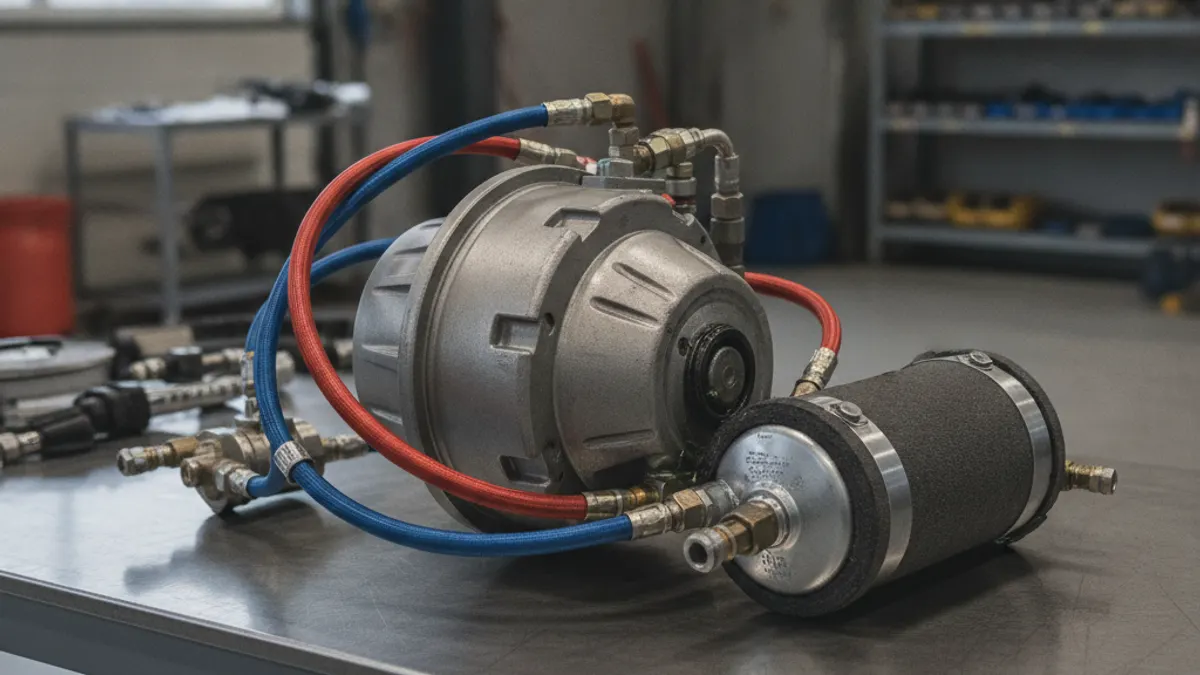
Cold weather does not directly weaken air brakes, but it exposes their single greatest vulnerability: moisture. Compressed air always carries water vapor, and when that water condenses inside tanks, lines, and valves and then freezes, it can jam components, block airflow, and cause brakes to drag or refuse to release. The fix is prevention. A working air dryer, daily tank draining, and a fully charged system (around 120 psi) keep most winter brake trouble from ever starting.
Below is what actually happens inside the system when the temperature drops, why frozen moisture is so dangerous, and the specific steps that keep a truck safe through a hard winter.
Why cold weather is really a moisture problem
Every time the compressor pumps, it pushes hot, wet air downstream. As that air cools in the tanks and lines, water vapor condenses into liquid. In summer that water sits in the bottom of the reservoir until you drain it. In winter it freezes, and ice does not flow through orifices, seat against valve faces, or let a spring brake release the way air does.
The compressor also pumps a small amount of oil vapor. Combined with water, that forms an emulsion that thickens in the cold and coats internal valve surfaces. Once you see that the compressor is the source of both the air and the contaminants riding in it, the whole winter strategy makes sense: control the moisture before it reaches the parts that freeze.
What freezes, and how it shows up
Ice can form anywhere water collects, but a few spots cause the most grief:
| Component | What freezing does | Symptom you notice |
|---|---|---|
| Air lines (nylon/rubber) | Ice plug blocks airflow to axles or trailer | Slow build, no rear brakes, or won't release |
| Relay valve | Ice holds valve open or closed | Dragging brakes or delayed application |
| Governor / unloader | Moisture freezes the pilot passages | Compressor won't cut out or won't load |
| Spring brake chamber | Ice traps air, spring can't apply or release | Parking brake won't release |
| Gladhand seals | Ice on the O-ring breaks the seal | Air leak, no trailer brakes |
| Reservoir drain valve | Frozen shut or frozen open | Can't drain, or constant leak |
The most alarming symptom is a spring brake that will not release on a cold morning. That usually means ice is trapping air in the chamber or blocking the line feeding it. Never force the truck to move; thaw the system first. A related winter failure is an air brake system slowly losing pressure, which often traces back to a valve that froze partially open.
The air dryer: your first line of defense
The air dryer sits between the compressor and the first reservoir. Its desiccant cartridge pulls water vapor out of the air before it can reach the tanks, and it purges that collected moisture to atmosphere during each unload cycle. A healthy dryer removes the vast majority of water from the system, which is exactly what you need before a freeze.
In cold weather the dryer earns its keep, but it also has to survive the cold. Most units include a heater in the purge valve to keep that valve from freezing shut; if the heater fails, the dryer stops purging and slowly fills with ice. A saturated cartridge (past its service life) also lets water pass straight through. Learn the details of the air dryer for trucks and replace the cartridge on schedule, ideally before winter. If you run without a dryer or with a bypassed one, you are relying entirely on manual draining, which is a losing battle in freezing conditions.
The dryer and its associated governor and purge controls are part of the air processing group. VADEN Original manufactures OE-grade air processing unit components covering the dryer, governor, and unloader hardware that keep moisture out of the system through the season.
Drain your tanks, every day
Even with a working dryer, some water reaches the reservoirs. In winter you drain them more often, not less. Open each tank's drain valve until only air hisses out, ideally at the end of the shift while the tanks are warm and the water has not yet frozen. If you wait until morning, the drain valve itself may be frozen shut.
- Park on level ground and chock the wheels.
- Build the system to full pressure (about 120 psi).
- Open each reservoir drain (wet tank first) and let water and air escape.
- Watch for milky or oily discharge, which points to a failing dryer or compressor.
- Close the valves and confirm they seal.
For a fuller routine, see the guide on draining air tanks. Automatic drain valves help, but they too can freeze, so verify they actually cycle.
Antifreeze and alcohol evaporators
Before the modern air dryer, fleets fought ice with alcohol. Two approaches survive today, and each has limits:
- Alcohol evaporators (air line antifreeze reservoirs): a canister of methanol plumbed into the supply line lets the airflow pick up alcohol vapor, which lowers the freeze point of any moisture downstream. These are meant for trucks without an air dryer. Running one alongside a desiccant dryer can poison the cartridge, so do not combine them unless the manufacturer approves.
- Air brake antifreeze injected into tanks: only use products specifically labeled for air brake systems, and only where the vehicle maker permits. Never pour automotive coolant, windshield fluid, or random alcohol into your air system; the wrong chemical attacks seals and O-rings.
The best antifreeze is dry air. A properly sized, heated air dryer with a fresh cartridge removes the water before it can freeze, so you rarely need chemical help. Reach for evaporators only on older, dryer-less trucks.
Cold-weather pre-trip and driving habits
A few habits carry a truck through the worst weather:
- Let the system build fully before moving. Cold air is denser and the compressor works harder; give it time to reach cut-out.
- Do a proper brake check. Follow the air brake pre-trip inspection and confirm the low-air warning clears, the governor cuts out, and both service and parking brakes apply and release cleanly.
- Listen for the compressor cycling too often, which can mean a leak or a valve icing partway.
- If a spring brake won't release, thaw it. Move the truck into a warm shop, or use gentle external heat; never drag a locked axle.
- After washing the truck, keep water out of gladhands and dry the connections before they freeze.
Keep the whole system charged overnight where you can. A truck parked with full tanks and drained water is far less likely to freeze than one sitting low on pressure with condensation pooling inside.
When ice has already formed
If you suspect a frozen line or valve, the only safe cure is heat and time. Move the vehicle indoors if possible, or apply warm (not open-flame) heat to the frozen area. Once thawed, drain every tank, check the dryer and its purge heater, and find out why the water got that far. A one-time freeze is a warning; a repeat freeze means the dryer, drains, or compressor need attention before the truck is roadworthy for winter.
Air brakes are extremely reliable in the cold as long as the water is managed. Keep the dryer fresh, drain daily, keep the system charged, and treat any frozen component as a stop-and-fix event rather than something to power through.
Source (VADEN Original): Winter Air Brake Care: Freeze-Up and Moisture Guide
Need the part, not just the answer?
OE-grade air brake compressors and repair kits, manufactured and tested to commercial-vehicle standards.
Shop VADEN partsPublished by VADEN Original. Product links point to the manufacturer’s official catalogue. Specifications are general — always confirm figures against your vehicle’s service manual.