 airbrakecompressor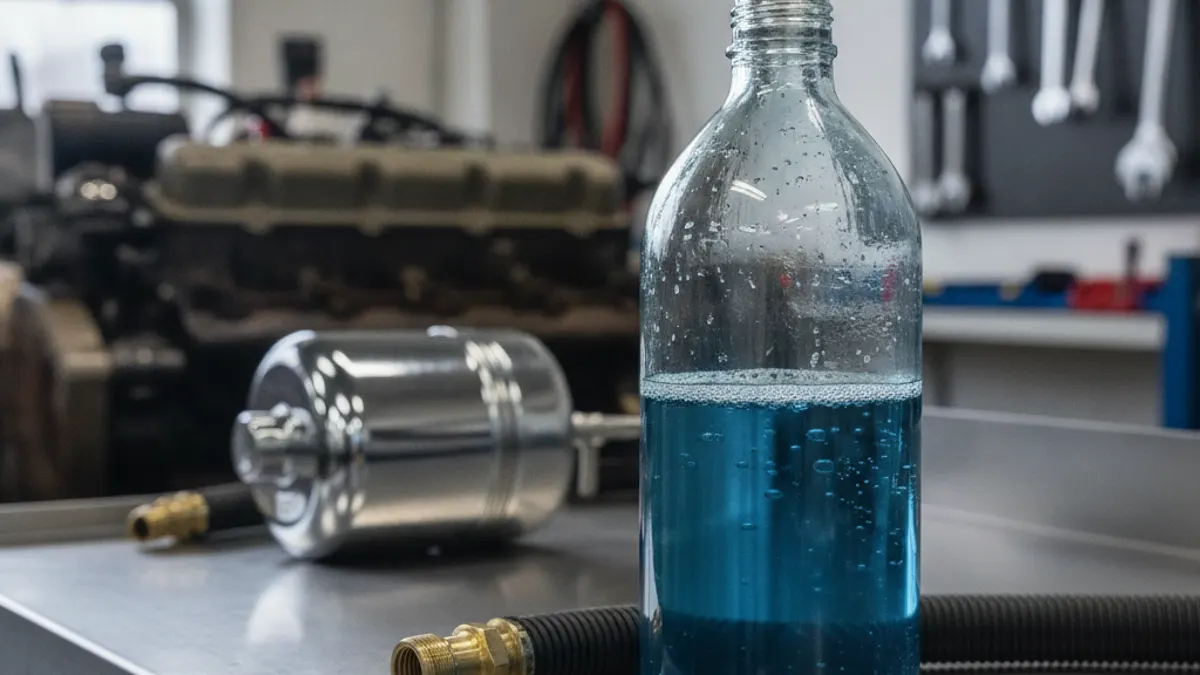
Air brake antifreeze is a methanol-based alcohol introduced into the compressed air stream to lower the freeze point of the moisture already in the system, so condensate cannot turn to ice inside valves, lines and brake chambers. It is metered in by an alcohol evaporator or an alcohol injector, or poured directly into a drained reservoir. On any truck with a functioning air dryer, alcohol should not be used: it attacks the desiccant, and a dryer that is doing its job makes antifreeze unnecessary.
What air brake antifreeze actually does
Every stroke of the compressor pulls in ambient air along with whatever humidity is in it. Compressing that air raises its temperature; as it travels down the discharge line into the wet tank it cools, and the water drops out as liquid condensate. In summer that water sits in the tanks and rusts them from the inside. Below freezing it collects at low points, at fittings, in the exhaust ports of relay and quick-release valves, and in the air dryer purge valve, and turns to ice.
Alcohol does not remove that water. It mixes with it and depresses the freeze point, the same way it does in a fuel line. That explains its limits: it protects only the water it actually reaches, only while it is present, and it does nothing about corrosion or contaminated valve bodies. It is a mitigation, not a repair. For the underlying condensation problem, see water in air tanks.
Three ways alcohol gets into the system
Alcohol evaporator
A small reservoir plumbed into the discharge line between the compressor and the first (wet) reservoir. Hot air from the compressor passes over or through the methanol, picks up vapour and carries it downstream. Most designs have a fill plug, a sight window or dipstick, and a shutoff so the unit can be bypassed in warm weather. Consumption depends on humidity, ambient temperature and compressor duty cycle, so the level has to be checked often. In hard winter running, checking at every fuel stop is reasonable.
Alcohol injector
A pump-style unit that meters a measured charge of methanol into the discharge line, usually triggered by the governor signal each time the compressor cycles between cut-in and cut-out. Because dosing is tied to how hard the compressor is working, an injector wastes less alcohol than an evaporator and holds a more consistent concentration. It also costs more and has more to go wrong.
Pour-in or spray-in antifreeze
Aerosol or bottled air brake antifreeze added directly into a drained reservoir through the drain port. This is the emergency method: get a frozen unit moving, then deal with the cause. Dosing is guesswork, and it is easy to overdo.
| Method | How it meters | Best for | Main drawback |
|---|---|---|---|
| Alcohol evaporator | Continuous vapour pickup from compressor discharge heat | Older equipment with no air dryer, severe cold | Uses alcohol whenever the compressor runs; frequent refilling |
| Alcohol injector | Metered charge per governor cycle | High-duty-cycle vocational trucks without a dryer | Cost, extra plumbing and wiring, more failure points |
| Pour-in or aerosol | Manual, into a drained tank | Roadside thaw-out, occasional use | No dose control; easy to overdose and swell seals |
| Air dryer (no alcohol) | Removes moisture before it reaches the tanks | Every modern truck | Needs cartridge changes, a working purge valve and heater |
Why alcohol and air dryers do not mix
A desiccant air dryer passes wet air through a bed of beads that adsorb water vapour, then blows that water back out through the purge valve when the governor reaches cut-out and unloads the compressor. Methanol carried into that cartridge coats and degrades the desiccant, so cartridge life drops, often sharply. You end up buying cartridges to solve a freezing problem that a good cartridge would have prevented.
The decision is straightforward. With no air dryer fitted, still common on older trailers and some vocational and vintage equipment, an evaporator or injector is legitimate winter equipment. With a dryer fitted, use no alcohol; if the system still freezes, the dryer is telling you something. Look for a saturated or oil-fouled cartridge, a purge valve that is not exhausting, a dead purge-valve heater, or a compressor passing oil into the air side.
Using an evaporator correctly
- Use only methanol-based fluid labelled for air brake systems. Nothing else.
- Drain all reservoirs completely before the first fill of the season, so you are not diluting alcohol into a tank half full of water.
- Fill to the marked level only. Overfilling can allow liquid alcohol to carry downstream, where it swells rubber seals and O-rings.
- Check the level daily in cold weather. An empty evaporator gives no protection and a false sense of security.
- Close the shutoff or bypass the unit once temperatures stay above freezing, and drain the residual fluid.
- Keep draining the tanks daily regardless. Alcohol does not remove condensate, it only keeps it liquid.
- Handle methanol with gloves and eye protection, away from ignition sources. It is flammable and toxic.
What never goes into an air brake system
The air side is pneumatic, not hydraulic. Nothing formulated for a liquid system belongs in it.
| Fluid | Why it is a problem |
|---|---|
| Engine coolant or ethylene glycol | Attacks rubber seals and diaphragms and leaves a residue that gums valve bores |
| Hydraulic brake fluid or ATF | Wrong system entirely; swells and destroys air brake seals |
| Washer fluid or fuel additives | Detergents, dyes and surfactants are not qualified for pneumatic components |
| Diesel fuel or penetrating oil | Contaminates desiccant and valve seats; a known cause of chronic leakage |
| Excess methanol | Even the correct alcohol, overdosed, swells seals and washes lubricant from valve bores |
The better winter plan
Antifreeze treats a symptom. What keeps a truck out of the shop in January is a system that never puts free water into the tanks in the first place. Drain every reservoir daily, starting with the wet tank, and note what comes out. Clear water means the dryer is passing moisture; grey emulsion or oil means the compressor is passing oil, and the cartridge is finished either way.
Replace the desiccant cartridge on schedule, verify that the dryer purges audibly at governor cut-out, and confirm the purge-valve heater has power before the first cold snap. A dead heater is one of the most common reasons a dryer ices shut. Then watch compressor duty cycle: a leaky system makes the compressor run far more than it should, which means more heat, more moisture and more condensate to freeze.
Know the pressures you are working with. A healthy system reaches governor cut-out in roughly the 120 to 135 psi band and cuts back in around 100 to 110 psi, so a fully charged truck sits near 120 psi. If ice restricts flow and reservoir pressure falls, the low-air warning light and buzzer come on at about 60 psi, and the spring brakes apply on their own somewhere in the 20 to 45 psi range. A freeze-up can put a vehicle on the shoulder quickly. More on the cold-weather routine in frozen air brakes in winter.
If a truck with a working air dryer needs alcohol to survive the winter, the dryer, the cartridge or the compressor is the actual fault. Find it rather than dosing around it.
Chasing that fault usually ends at the dryer: a purge valve that will not seat, a dead heater element, or a saturated cartridge. Fresh air dryer valves do more for winter reliability than any dose of alcohol.
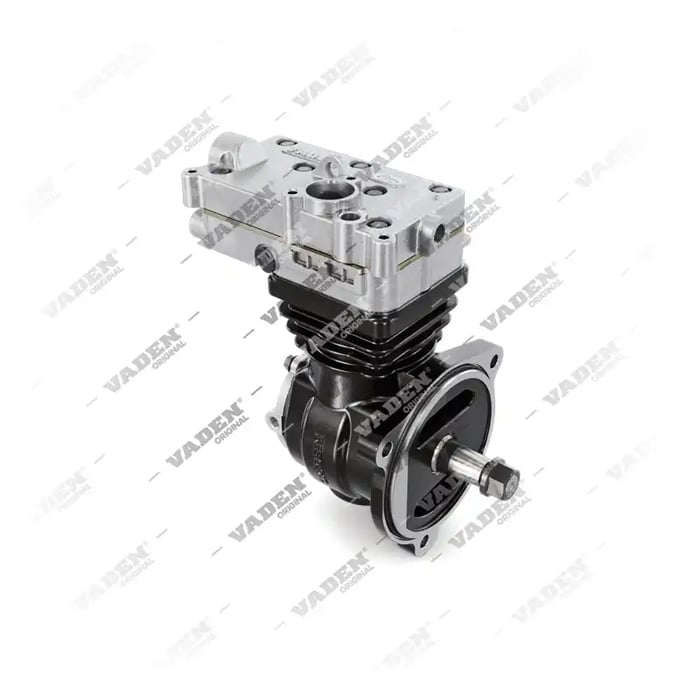
Need the part, not just the answer?
OE-grade air brake compressors and repair kits, manufactured and tested to commercial-vehicle standards.
Shop VADEN partsPublished by VADEN Original. Product links point to the manufacturer’s official catalogue. Specifications are general — always confirm figures against your vehicle’s service manual.