 airbrakecompressor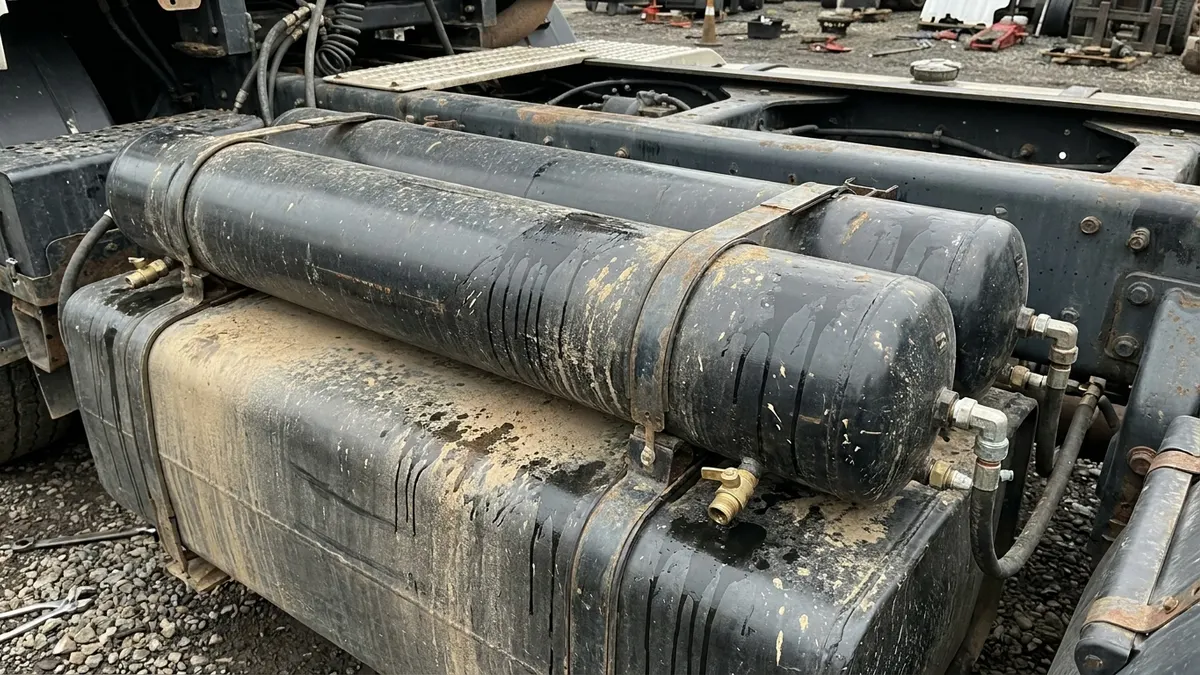
The air tank safety valve — most technicians call it the pop-off valve — is a spring-loaded relief valve threaded into the supply (wet) reservoir that vents compressed air to atmosphere when system pressure climbs past its set point. On typical North American highway vehicles that set point sits in the 150 psi range, comfortably above a healthy governor cut-out of 120-135 psi. If your safety valve is blowing, the valve is doing exactly what it was built to do; the real fault is upstream, in the governor, the compressor unloader circuit, or the signal line between them.
A pop-off valve is a mechanical safeguard of last resort, not a working control. On a properly functioning pneumatic brake system it should stay shut for its entire service life.
What the safety valve actually protects
The compressor is engine-driven and turns whenever the engine turns. The governor decides when that output is pumped into the reservoirs and when the compressor is unloaded. If the governor stops signalling — or the unloader mechanism sticks — the compressor keeps building with nowhere to stop. Without relief, pressure would rise until something failed: a reservoir seam, a fitting, a nylon supply line, or a diaphragm in a valve or brake chamber. The safety valve caps that pressure and converts a potential rupture into a loud, unmistakable nuisance at the tank.
It is worth being clear about what the valve does not do. It does not remove water or oil — that is the dryer's job. It does not regulate normal charge pressure. And it is not a backup governor: driving a truck that pops off every few minutes means the system is cycling far above design pressure between vents, stressing every component downstream.
Set pressure in context
Relief pressure only makes sense next to the pressures the system is supposed to see. On a standard two-circuit highway air brake system:
| Function | Typical pressure | Notes |
|---|---|---|
| Compressor cut-in | 100-110 psi | Governor loads the compressor |
| Compressor cut-out | 120-135 psi | Governor unloads the compressor |
| Fully charged, running | About 120 psi | Normal gauge reading in service |
| Low-air warning | About 60 psi | Light and buzzer must activate |
| Spring brakes apply | 20-45 psi | Automatic parking and emergency application |
| Safety (pop-off) valve | Around 150 psi | Vents to atmosphere; some vocational units set higher |
The spread between cut-out and relief is the margin the system relies on. Because it is only a couple of dozen psi, a governor that drifts high or fails to unload will reach the safety valve quickly. European ECE-based systems working at roughly 8-8.5 bar use relief valves set proportionally higher; do not assume a North American figure applies. The set pressure is normally stamped or cast into the valve body — read it rather than guessing.
Why a safety valve vents
The governor is not cutting out
This is the single most common cause. A governor with a stuck piston, a fouled exhaust port or worn internal seals will not send the unload signal, so the compressor pumps continuously. Confirm cut-out with a known-good test gauge on the supply tank before condemning anything else, and check the governor's cut-in and cut-out behaviour against spec.
The unloader mechanism is stuck loaded
Even with a correct governor signal, a compressor whose unloader pistons or plungers are gummed with carbon and oil will keep compressing. If air is present at the governor's unloader port but the compressor never goes quiet, the fault is in the compressor unloader circuit, not the governor.
A blocked, kinked or frozen signal line
The small line between governor and compressor is easy to overlook. Carbon, crushed tubing, or an ice plug in cold weather all cut the unload signal. Winter pop-off complaints that clear up in the shop are usually moisture freezing in this line, which points at a tired dryer.
A weak or contaminated safety valve
Oil carryover and rust can leave a valve venting well below its rating. If cut-out is verified good and pressure never exceeds normal charge, the valve itself has lost its spring rate or its seat is holding debris.
A gauge that lies
If the dash reads normal while air escapes from the tank, suspect the gauge or a restricted gauge line before assuming the valve is faulty. Always cross-check with a mechanical gauge at the reservoir.
Weeping versus popping: when to replace
A valve that pops once under genuine over-pressure and then reseats cleanly can stay in service, provided the cause is corrected. A valve that weeps, hisses continuously, or leaks after venting has not reseated and is a replacement item. The same goes for any valve with a corroded or missing pull ring, a bent stem, thread damage, or an illegible set-pressure marking. Safety valves are not field-adjustable and are not rebuilt — the spring and seat are the entire calibration.
Treat a continuously weeping valve as urgent for a second reason: it is a live leak on the supply reservoir that will drag charge time out and can mask other faults during a leakage test.
Inspecting and testing
With the system charged and the wheels chocked, a brief pull on the exposed stem or ring confirms the valve moves and reseats. Be honest about the risk: on a valve that has been in service for years, scale and carbon can stop it from sealing again, so only test one you are prepared to replace. Otherwise, inspect visually during routine servicing — look for rust streaks, oil staining around the outlet (a sign of compressor oil carryover), and audible leakage with the system at full pressure.
Replacing the valve
Drain the reservoir completely and verify zero pressure at the gauge before unthreading anything; a charged tank will launch a valve. Most units are a straightforward 1/4 in. or 3/8 in. NPT male fitting. Use pipe sealant sparingly and keep it off the first threads so nothing migrates into the seat, and tighten firmly without overloading the reservoir boss — a cracked bung is a far bigger job than the valve. Match the replacement to the original set pressure and to the reservoir's rating; a higher-set valve fitted to keep the noise down defeats the entire protection scheme. Replacement relief valves sit alongside governors, dryers and unloader kits in the air processing unit parts range, and it is good practice to renew the valve any time the reservoir or compressor is replaced. Refer to the vehicle manufacturer's current service manual for the specified part and torque.
What inspectors look for
Federal reservoir requirements expect each system to carry a functioning pressure relief device, and roadside inspectors do check for it. A capped, plugged, wired-down or missing safety valve, or one that leaks continuously, is a defect that will be written up alongside any other reservoir and tank faults such as insecure mounting, damaged drain valves or accumulated water. Fixing the governor and fitting the correct valve is cheap by comparison.
Need the part, not just the answer?
OE-grade air brake compressors and repair kits, manufactured and tested to commercial-vehicle standards.
Shop VADEN partsPublished by VADEN Original. Product links point to the manufacturer’s official catalogue. Specifications are general — always confirm figures against your vehicle’s service manual.