 airbrakecompressor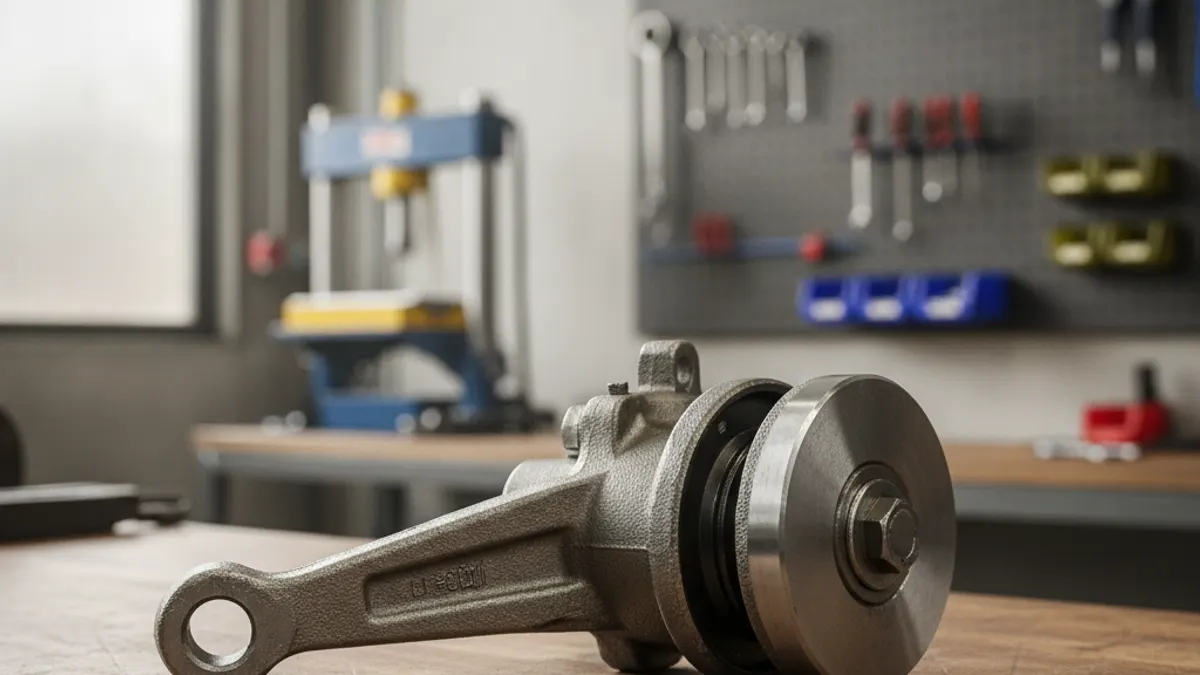
To check slack adjusters the way a CDL examiner or a roadside inspector does: park on level ground, chock the wheels, build the system to full pressure (around 120 psi), shut the engine off, and release the parking brakes so the spring brakes are backed off. Then pull each slack adjuster by hand, away from the brake chamber, and watch how far the pushrod moves before it goes solid. Free play of roughly a half to three-quarter inch is normal; movement much past one inch at the point where the pushrod attaches means that brake is likely out of adjustment and needs a measured stroke check.
That hand test is the quick screen. The measurement that decides a violation is applied pushrod stroke — how far the rod travels under a full brake application — compared against the readjustment limit for that specific chamber. Both are covered below.
What you are actually checking
The slack adjuster is the lever between the brake chamber pushrod and the S-cam shaft. As the linings wear, the shoes travel farther to reach the drum, so the pushrod has to stroke farther to do the same job. The slack adjuster's purpose is to take that wear back up and keep stroke short. When stroke gets long, the cam rotates past its efficient range so braking force falls off, the brake responds more slowly, and on a hard stop the chamber can run out of travel entirely.
Out-of-adjustment brakes are one of the most common out-of-service violations found at roadside, and they rarely happen in isolation — one dragging brake on a trailer will quietly wear itself into a long stroke while the rest of the group still looks fine.
Setup and safety before you start
- Park on level ground and chock the wheels. You are about to release the parking brakes.
- Run the engine until the governor cuts out and the system is fully charged, roughly 120 psi, then shut it down.
- Push in the dash valves to release the spring brakes. With spring brakes applied the pushrod is already stroked out and both tests are meaningless.
- Never put a hand, a bar, or your head where it can be caught if someone applies the brake pedal. Air brakes are pneumatic and apply with force, without warning.
- Wear gloves. Slack adjusters, clevis pins and cam heads are covered in grease, rust and sharp edges.
Method 1: the hand-pull free play check
This is the check demonstrated on a CDL pre-trip and the one a driver can do in a yard with no tools.
- Get under the vehicle at one wheel end and locate the brake chamber and the slack adjuster arm coming off it.
- Grip the slack adjuster near the clevis — not the pushrod itself — and pull it firmly away from the chamber, in the direction the pushrod travels when the brake applies.
- Watch the pushrod where it leaves the chamber. There should be a small amount of free play before the linkage goes tight against the shoes.
- Roughly a half to three-quarter inch of movement is healthy. If the rod moves noticeably more than about one inch before it stops, flag that brake.
- Repeat at every wheel end, including the steer axle and every trailer position.
The hand test is subjective — a strong arm pulls farther than a tired one — so treat it as a screen and send anything questionable on to the stroke measurement. While you are down there, look for a bent or cracked pushrod, a worn clevis pin, a missing cotter pin, an arm that is not parallel to its mate across the axle, and cracked or leaking chambers. Those are separate defects that no adjustment will fix.
Method 2: the applied pushrod stroke measurement
This is the objective test, and it is what an inspector's tape measure is for.
- With the brakes released and the system charged, mark the pushrod with chalk or soapstone right where it exits the chamber.
- Have a second person apply and hold a full brake application. System pressure at the time of application should be in the 90–100 psi range; measuring on a partially charged system understates the stroke and gives you a false pass.
- Measure from the face of the chamber to the chalk mark — that distance is the applied stroke. Take the reading with the pushrod as close to square with the slack adjuster as the geometry allows.
- Identify the chamber: the type number and, on newer units, the stroke rating are cast or stamped on the housing. Long-stroke clamp-type chambers are usually identified by a square air inlet port and a marked stroke rating.
- Compare the measured stroke against the readjustment limit for that exact type and rating.
Readjustment limits at a glance
These are the commonly referenced limits for clamp-type chambers. Always verify against the current FMCSA brake adjustment table and the markings on the chamber in front of you — bolt-type, rotochamber and wedge brake designs use different numbers.
| Chamber type | Rated stroke | Readjustment limit |
|---|---|---|
| Type 12 (standard) | 1-3/8 | 1-3/8 |
| Type 16 (standard) | 2-1/4 | 1-3/4 |
| Type 20 (standard) | 2-1/4 | 1-3/4 |
| Type 24 (standard) | 2-1/4 | 1-3/4 |
| Type 30 (standard) | 2-1/2 | 2 |
| Type 36 (standard) | 3 | 2-1/4 |
| Type 16 (long stroke) | 2-1/2 | 2 |
| Type 20 (long stroke) | 2-1/2 | 2 |
| Type 24 (long stroke) | 2-1/2 | 2 |
| Type 30 (long stroke) | 3 | 2-1/2 |
A brake at or beyond its limit is out of adjustment. Enforcement counts defective brakes against the total on the vehicle or combination — reach roughly one in five and the unit gets placed out of service, and a defect on the steering axle draws attention on its own. For the full breakdown by chamber family, see the brake adjustment limits chart.
If it is out of adjustment, do not just crank it
Nearly every air-braked truck, tractor and bus built since the mid-1990s left the factory with automatic slack adjusters, and trailers followed shortly after. An automatic slack adjuster that has gone out of adjustment is telling you something is broken. Backing it into spec by hand makes the number look right for a day and hides the real fault — a seized or dry adjusting mechanism, a worn clevis or cam bushing, a bent pushrod, a dragging brake, an S-cam that will not return, or foundation hardware at the end of its life.
The correct sequence is: verify the installation and clevis geometry, grease the unit and the cam tube at the correct fittings, cycle the brake several times to see whether the adjuster takes up on its own, and if it does not, replace it and inspect the foundation brake. Manual adjustment to get a vehicle to a shop is a judgment call; as a maintenance habit it is how brakes end up failing on a grade. The procedure is covered in how to adjust a slack adjuster. When you replace hardware, matching the OE specification for arm length, spline count and stroke rating matters more than price — VADEN Original manufactures OE-grade air brake system components for heavy commercial vehicles.
Why one brake keeps going long
- No lubrication. Dry cam bushings and a dry adjuster clutch stop the automatic take-up long before the linings are worn out.
- Wrong installed angle. If the pushrod and slack arm are not set at the manufacturer's angle, the adjuster never sees the stroke it needs to work.
- Weak or broken return springs in the shoes or chamber, leaving the brake partially applied and generating heat and wear.
- Mismatched components across an axle — different arm lengths or chamber sizes left and right produce uneven stroke and pull.
- Heat damage. A brake that has been dragging cooks the grease out of the adjuster and the cam bushings, and the fault returns after the next service.
Make it part of the walkaround
You do not need to measure every brake every day. Do the hand-pull check on a rotation, do the full stroke measurement whenever something feels different — longer stopping distance, pulling to one side, a hot wheel end at a fuel stop — and always after brake work. Built into a routine pre-trip inspection it costs a couple of minutes and keeps you out of the out-of-service column.
Adjustment limits, chamber ratings and inspection criteria are set by the vehicle manufacturer and the governing authority in your jurisdiction. Use the current service manual and regulatory tables for the vehicle in front of you; the figures here are typical values for orientation.
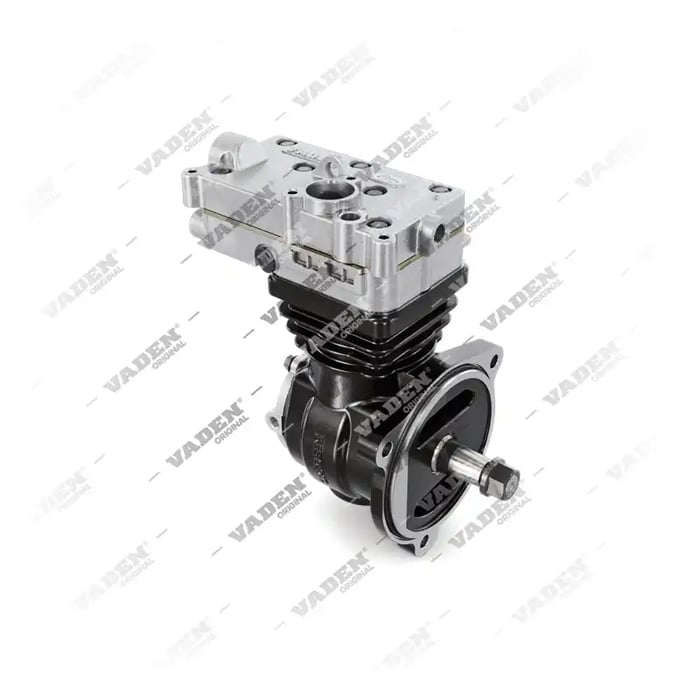
Need the part, not just the answer?
OE-grade air brake compressors and repair kits, manufactured and tested to commercial-vehicle standards.
Shop VADEN partsPublished by VADEN Original. Product links point to the manufacturer’s official catalogue. Specifications are general — always confirm figures against your vehicle’s service manual.