 airbrakecompressor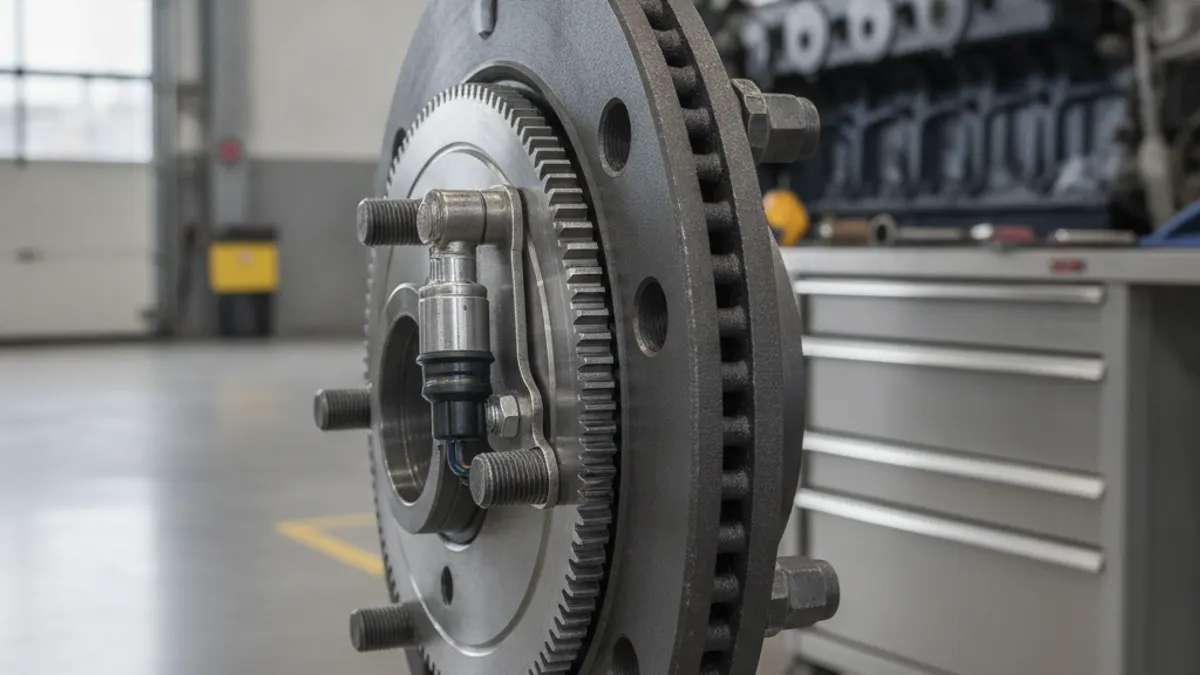
ABS on air brakes is an electronic layer added on top of the normal pneumatic system: wheel-speed sensors watch each wheel, and when the electronic control unit (ECU) sees a wheel about to lock, it commands a modulator valve to rapidly vent and re-apply air to that brake. That pulsing keeps the tire rolling instead of skidding, so the driver keeps steering control and the rig stays straight. Importantly, ABS does not replace or weaken your base air brakes — it only intervenes at the moment of impending lockup, and if it fails the foundation brakes still stop the truck.
If you already understand how air brake systems work, ABS is easier to grasp: it taps into the same service line and reservoirs, just adding sensors, valves, and a computer between the foot valve and the brake chambers.
What ABS Actually Does
A locked wheel is a skidding wheel, and a skidding tire can't steer or hold a lane. On a heavy combination vehicle, a locked steer axle means no steering, and a locked trailer axle invites a trailer swing or jackknife. ABS prevents that by momentarily reducing brake application at any wheel that starts to lock, then restoring it dozens of times per second.
Understand what ABS does not do: it does not shorten your stopping distance on clean, dry pavement. On dry roads a controlled skid can sometimes stop a hair sooner. What ABS buys you is steering control and directional stability on wet, icy, gravel, or split-traction surfaces — exactly where an uncontrolled lockup turns into a wreck.
Related guides: EBS Brake System: Electronic Braking Explained
The Core Components
| Component | What it does |
|---|---|
| Exciter / tone ring | Toothed ring pressed onto the hub or spindle; passes teeth in front of the sensor to generate a signal. |
| Wheel-speed sensor | Magnetic pickup that reads the passing teeth and sends an AC signal proportional to wheel speed. |
| ABS modulator valve | Electro-pneumatic valve near each controlled wheel that holds, vents, or re-applies air on command from the ECU. |
| ECU (control unit) | The computer that reads all sensors, detects impending lockup, and pulses the modulators; also runs self-diagnostics. |
| ABS warning lamp | Dash lamp (and a separate trailer lamp) that reports system status and stored faults. |
Most tractors run a 4-channel/4-sensor or 6-channel layout; trailers commonly use a 2S/1M or 4S/2M arrangement (sensors/modulators). The modulator valve is the muscle — it sits between the service air supply and the brake chamber, so when the ECU says "release," it dumps a controlled shot of air to ease that chamber, then re-applies.
How a Cycle Works
- Driver presses the foot valve; service air flows to the brake chambers and the brakes apply normally.
- A wheel starts to decelerate faster than the others — the sensor signal drops sharply, signaling impending lockup.
- The ECU commands that wheel's modulator to hold pressure, then vent to release the brake slightly.
- The wheel spins back up; the ECU re-applies air. This hold-release-apply loop repeats many times per second until the driver eases off or the wheel stops slipping.
The ABS Warning Lamp: Reading the Self-Test
Every key-on, the ECU runs a self-test. On a tractor the ABS lamp should illuminate briefly and then go out once the system checks good — typically within a few seconds or after the vehicle rolls a short distance. A trailer's ABS lamp works the same way and is required to signal its status to the driver.
A lamp that comes on and stays on after the self-test means the ECU has found a fault, logged a code, and shut ABS off for the affected channel or the whole system. Your normal air brakes still work — you just lose anti-lock protection until it's repaired.
This is a frequent point on the CDL air brake test: on newer vehicles the malfunction lamp is your indicator, and a steady lamp is a defect that needs attention, not something to ignore.
Common ABS Faults Technicians See
| Fault | Typical symptom | Usual cause |
|---|---|---|
| Sensor air gap too large | Intermittent ABS lamp, code at low speed | Sensor backed out of its bushing, worn wheel bearing, or debris packed behind the sensor. |
| Damaged tone/exciter ring | Erratic or missing signal from one wheel | Cracked, rusted, or teeth broken off the ring; ring loose on the hub. |
| Sensor wiring / connector | Steady lamp, open- or short-circuit code | Chafed harness, corroded pins, road-salt intrusion, vibration fatigue. |
| Modulator valve fault | Lamp on, valve won't cycle | Electrical coil failure, contamination, or internal sticking. |
| Low voltage | Random faults, lamp flicker | Weak batteries, bad grounds, corroded power feed. |
By far the most common culprits are the wheel-speed sensors and their wiring. A sensor is a simple magnetic pickup, but it lives in the worst possible environment — heat, spray, salt, and vibration right at the hub. Correcting the air gap often means pushing the sensor back in until it lightly touches the tone ring; the spring clip in the bushing lets it self-adjust as the ring runs. Always inspect the tone ring for missing teeth while you're in there, and check for wheel-bearing play, which changes the gap dynamically.
Diagnosing It Right
Pull codes with a diagnostic tool rather than guessing — an ECU stores which channel faulted and whether it's an open, short, or air-gap issue. Check sensor output with a meter (a spinning wheel should produce a small AC voltage) and compare left-to-right. Confirm supply voltage and grounds before condemning an expensive modulator or ECU; low voltage throws misleading, wandering faults. Remember that ABS is largely independent of what's charging the tanks, so a lit ABS lamp is not the same problem as a system that's losing air pressure — those are separate diagnostic paths.
ABS and the Rest of the Brake System
ABS sits on top of a healthy foundation. If your slack adjusters are out of stroke, your linings are worn, or a chamber is weak, ABS can't fix any of that — it can only modulate the air that's already being delivered. Keep the base system in spec first, then ABS has something good to work with. Many trailers also integrate ABS with roll-stability or traction functions using the same sensors and modulators, so a single failed sensor can disable more than just anti-lock.
Bottom line for the tech: ABS is a bolt-on electronic safety net on a proven pneumatic system. When the lamp lights, you still have brakes — but you've lost your skid protection, and the fix is almost always a sensor, a tone ring, a connector, or a valve, in that order of likelihood.
When the diagnosis does land on the valve, it is a replacement rather than a repair: the solenoids and seats inside ABS solenoid modulator valves are sealed units, not something you rebuild at the wheel end.
Need the part, not just the answer?
OE-grade air brake compressors and repair kits, manufactured and tested to commercial-vehicle standards.
Shop VADEN partsPublished by VADEN Original. Product links point to the manufacturer’s official catalogue. Specifications are general — always confirm figures against your vehicle’s service manual.