 airbrakecompressor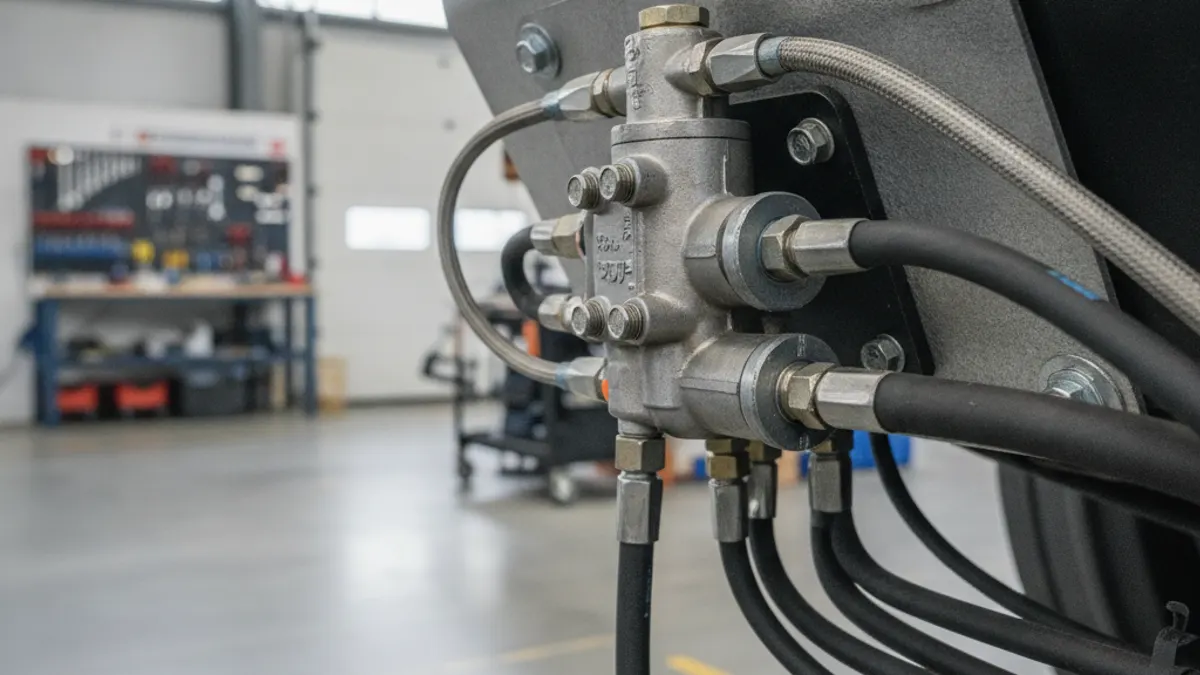
The foot brake valve, also called the treadle valve or brake application valve, is the pedal-operated valve mounted under the cab floor that meters compressed air from the reservoirs to the service brake chambers. When you push the pedal, the valve opens in proportion to your foot pressure and delivers a matching air-pressure signal; when you lift off, it closes the supply and exhausts the delivered air so the brakes release. In short, it is the driver's throttle for braking, giving you fine control over how much braking force reaches the wheels.
Everything downstream of the foot valve, the relay valves, brake chambers, and slack adjusters, only acts on the signal the treadle valve sends. That is why a worn or leaking foot brake valve shows up as vague pedal feel, dragging brakes, or air loss even when the rest of the system checks out.
What the foot brake valve does
Air brakes are pneumatic, not hydraulic like a car. In a car, the pedal pushes fluid directly. On a truck, the reservoirs already hold air at roughly 120 psi when the system is fully charged, and the foot valve simply decides how much of that stored air gets released to the brakes. The pedal does not build pressure; it modulates pressure that is already there.
The valve is a balanced, self-lapping design. As you press, it delivers air until the delivery pressure balances against your pedal force, then it "laps" and holds that pressure steady. Press harder and it delivers more; ease off and it exhausts some back to atmosphere. This proportional behavior is what lets a driver feather the brakes on ice or haul the rig down smoothly from highway speed.
The foot valve meters air on demand. It is not a pressure source and it is not an on/off switch; it is a proportioning control between the tanks and the brakes.
Dual-circuit design and why it matters
Modern trucks and buses run a dual air brake system, and the foot valve reflects that with two stacked sections, often called the primary and secondary circuits. Each section draws from its own reservoir and feeds a separate part of the brake system, typically one to the rear axles (and trailer) and one to the steer axle.
The two sections work together under normal use but are pneumatically independent. If one circuit loses air, the other still applies brakes through the foot valve. You will feel a longer pedal and reduced braking, and the low-air warning will sound near 60 psi, but you retain stopping ability on the surviving circuit. This redundancy is a core reason air brakes are trusted on heavy vehicles.
| Section | Typical circuit served | Fed from |
|---|---|---|
| Primary (lower) | Rear drive axles and trailer | Primary reservoir |
| Secondary (upper) | Front steer axle | Secondary reservoir |
| Failure behavior | Remaining circuit still brakes; longer pedal travel | Independent tanks |
Note that exact circuit assignments vary by manufacturer and vehicle. Always confirm against the OEM schematic before diagnosing, because some designs split front/rear differently.
How the foot valve fits in the system
The compressor and governor keep the reservoirs charged; the foot valve draws from those charged tanks. On the delivery side, its signal usually goes to relay valves mounted near the axles rather than piping all the way to each brake chamber. The relay valve uses the foot valve's small control signal to dump a large, fast volume of local air into the chambers, which is what gives long trucks quick, even brake timing front to rear.
Understanding this chain helps with diagnosis. If braking is slow or uneven, the fault may be the foot valve's delivered pressure, or it may be a relay valve reacting to a correct signal. Putting a gauge on the delivery port of the foot valve separates the two.
Where it sits in the airflow
- Compressor builds pressure; governor cuts out near 120 to 135 psi.
- Air is stored in the supply and service reservoirs.
- Driver presses the pedal; the foot valve meters a proportional signal.
- Relay valves and brake chambers apply the wheels.
- Releasing the pedal exhausts the delivered air and the brakes release.
Symptoms of a failing foot brake valve
Because it cycles on every stop, the treadle valve wears at its seals, exhaust seat, and plunger. Watch for these signs:
- Audible leak at the pedal. A steady hiss under the cab, especially with the pedal applied or released, often points to a worn exhaust seat or inlet seal.
- Brakes drag or release slowly. If the valve does not fully exhaust, delivered air stays trapped and the brakes stay partially applied, causing heat and premature lining wear.
- Mushy, spongy, or inconsistent pedal. Worn internals lose the crisp self-lapping feel, giving vague modulation.
- Uneven front-to-rear braking. If one section delivers less pressure, the truck may nose-dive or the rear may do most of the work.
- Continuous air loss. A leaking foot valve can bleed a charged system down, forcing the compressor to cycle often, related to a broader air brake system losing pressure problem.
Any dragging-brake or air-loss symptom is a safety issue. Take the vehicle out of service until the cause is confirmed.
Testing the foot brake valve
Basic checks a technician can perform with the system charged and wheels chocked:
- Applied leak test. Charge to governor cut-out, shut off the engine, make a full brake application, and hold. Listen and use soapy water at the valve body and exhaust. Delivery-side leakage points to internal valve wear.
- Delivery pressure check. Tee a gauge into each delivery circuit. A full application should deliver close to reservoir pressure, and both circuits should read within a few psi of each other.
- Crack and release feel. The valve should begin delivering with light pedal effort and exhaust fully and quickly on release, with no trapped pressure holding the brakes.
Compare readings against the OEM specification for that valve. Never invent a target number; the correct crack pressure and delivery values come from the manufacturer's service data.
Replacement and service
Replacing a foot brake valve is a moderate job for an experienced air-brake tech but demands care with fittings and post-install verification. General guidance:
- Drain the reservoirs completely so no line is under pressure before disconnecting anything.
- Label every air line, supply and delivery for each circuit, so the new valve is plumbed identically.
- Inspect the pedal linkage, plunger, and mounting for wear or corrosion; a worn linkage can mimic a bad valve.
- Fit the new valve, torque fittings to spec, and use the correct thread sealant on tapered fittings only.
- Recharge, then leak-test and verify balanced delivery on both circuits before road use.
Match the replacement to the vehicle. A quality OE-grade treadle valve, such as the units in VADEN's foot brake valve product range, restores correct crack pressure and dual-circuit balance that a mismatched aftermarket part may not. Because this valve is a safety-critical control, cutting corners on quality or skipping the post-install gauge check is a false economy.
Foot brake valve versus other brake controls
Drivers sometimes confuse the foot valve with the hand valve or the park control. The foot valve controls the service brakes on all axles proportionally. The trailer hand valve applies only the trailer service brakes. The yellow park control operates the spring brakes, which apply mechanically around 20 to 45 psi as air is released. Keeping these straight matters, because a symptom blamed on the foot valve sometimes traces to one of these other controls or to a tractor protection valve issue in the trailer circuit.
In practice, if you have vague pedal feel, dragging brakes, or an audible leak at the pedal, the treadle valve is a prime suspect, but confirm with gauges before you condemn it. It is the one component the driver touches on every single stop, so keeping it healthy is central to safe, predictable braking.
Need the part, not just the answer?
OE-grade air brake compressors and repair kits, manufactured and tested to commercial-vehicle standards.
Shop VADEN partsPublished by VADEN Original. Product links point to the manufacturer’s official catalogue. Specifications are general — always confirm figures against your vehicle’s service manual.